
What if a policy labelled cyber insurance doesn’t cover the ransomware-related costs you expect? The name alone won’t tell you what ransomware attack insurance coverage includes. That depends on the policy wording, limits, exclusions and conditions, including any security requirements your business must meet.
Policies can be difficult to compare because their response services and claim requirements differ. Reviewing the details before an incident can help you ask specific questions and avoid relying on assumptions.
This guide explains expense categories a policy may cover, the terms and conditions to compare, and what to prepare for a broker conversation. It also outlines how to discuss your business risks and incident readiness when assessing whether cover may suit your circumstances.
Key Takeaways
- Ransomware attack insurance coverage may include response, investigation, restoration or interruption costs. Check the policy wording before relying on any benefit.
- Compare covered event definitions, limits, sublimits and waiting periods to see where cover may be restricted.
- Review exclusions, security conditions, notification deadlines and insurer consent requirements before choosing a policy.
- Keep policy details, insurer contacts and response procedures accessible so you can follow the required steps if an incident occurs.
What can ransomware attack insurance coverage include for an Australian business?
After a ransomware incident, restoring systems and keeping the business operating can become urgent. A cyber policy may respond to specified incident costs, but ransomware attack insurance coverage depends on its wording, limits, exclusions and conditions. A benefit listed in a policy won’t necessarily apply to every incident or expense.
Cyber insurance can cover different digital risks, but each insurer sets out its own terms. Check how the policy defines a ransomware event and which response or recovery costs it addresses.
This video shares an example of a ransomware-related insurance claim:
Which ransomware-related costs might a policy address?
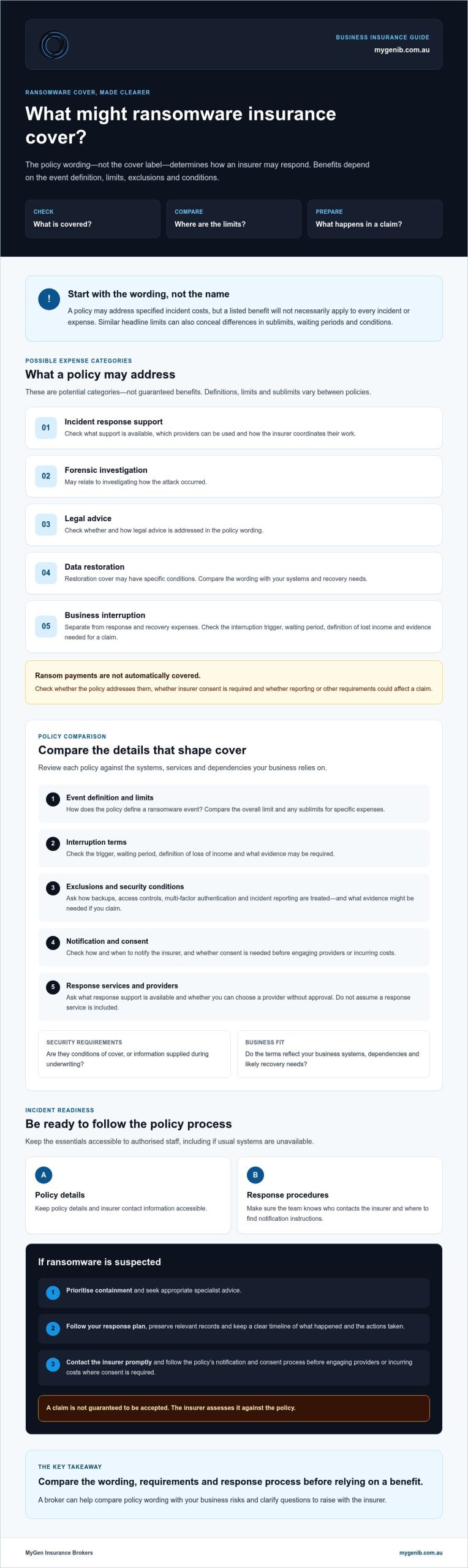
Possible expense categories include incident response support, forensic investigation into how the attack occurred, legal advice, data restoration and business interruption. These are not guaranteed benefits. Definitions, limits and sublimits vary, and restoration cover may have specific conditions. Business interruption is separate from response and recovery expenses. Check what counts as interruption under the policy, how any waiting period applies and what evidence may be needed to support a claim.
The policy wording, not the cover label, determines how an insurer may respond. Ransom payments are not automatically covered. Check whether the wording addresses them, whether insurer consent is required and whether reporting or other requirements may affect a claim. Before relying on any benefit, compare the wording with your business’s systems, dependencies and likely recovery needs.
How to compare ransomware attack insurance coverage before choosing a policy
Similar headline limits can conceal significant differences in cover. Start by comparing how each policy defines a ransomware event, then check the overall limit and any sublimits for specific expenses. For business interruption, note the trigger, any waiting period and how the policy defines loss of income. Consider whether these terms reflect the systems and services your business relies on.
Read exclusions and conditions as closely as the benefits. Check how and when to notify the insurer, and whether you need its consent before engaging response providers or incurring costs. Ask what incident response support is available, which providers can be used and how the insurer coordinates their work. Don’t assume a response service is included or that you can choose a provider without approval.
What policy wording and security conditions should you review?
Ask how the policy treats backups, access controls, multi-factor authentication and incident reporting. Are these conditions of cover, or information you provided during underwriting? What evidence might be needed if you make a claim? Requirements differ between insurers and policies, so a general security checklist is not a promise of cover. The Australian Government’s Ransomware Playbook can help inform your response planning.
For broader context, see this guide to business insurance in Australia and the discussion of expert insurance brokers. A broker can help you compare policy wording with your business risks and clarify questions to raise with the insurer. You can also explore MyGen’s insurance brokerage services as a starting point for that discussion.
After a ransomware attack: prepare your response and review your cover
Preparation can make the response less confusing when systems are disrupted. Before an incident, keep policy details, insurer contact information and response procedures somewhere authorised staff can access them, even if usual systems are unavailable. Make sure the team knows who is responsible for contacting the insurer and where to find the policy’s notification instructions.
What should a business do first if ransomware is suspected?
Prioritise containment and seek appropriate specialist advice. Follow your response plan, preserve relevant records and keep a clear timeline of what happened and the actions taken. Contact the insurer promptly, then follow the policy’s notification and consent process before engaging providers or incurring costs where consent is required. A claim is not guaranteed to be accepted. The insurer assesses it against the policy and circumstances.
Reporting duties depend on what happened and your business’s circumstances. Check current guidance from the Australian Cyber Security Centre (ACSC), the Office of the Australian Information Commissioner (OAIC) and other relevant authorities. Notifying your insurer does not necessarily meet a separate reporting obligation. Decisions about a ransom payment require case-specific advice. This guidance doesn’t recommend making one.
Once the immediate response is under control, review the incident against your ransomware attack insurance coverage. Record the systems affected, the costs incurred, how long operations were disrupted and where the policy wording or response process was unclear. This can help you identify questions to resolve at renewal or when circumstances change. A broker can discuss how your business risks relate to policy terms, subject to insurer requirements and eligibility. If you’re reviewing your options, discuss business insurance options with MyGen.
Turn policy questions into a clearer plan
Ransomware attack insurance coverage depends on the policy wording, not just the product label. Compare the events and expenses that may be covered, along with limits, exclusions, security conditions and claim requirements. Before an incident, keep policy details and response procedures accessible, and know how to notify your insurer.
A considered review can help you identify gaps and prepare questions based on your business’s actual risks. MyGen Insurance Brokers takes a personalised approach to insurance brokerage and risk assessment rather than relying on instant automated quotes. Anthony Simpson brings over 20 years of industry experience to conversations about suitable options, subject to insurer terms, eligibility and your circumstances.
Discuss your business risks and insurance options with MyGen to take the next step towards greater clarity. A well-informed review can help you feel more prepared.
Frequently Asked Questions
Does cyber insurance cover a ransomware attack?
It may, depending on the policy wording, the incident and whether you meet the policy conditions. Ransomware attack insurance coverage may address specified response or recovery expenses, such as forensic investigation or data restoration, and may include business interruption cover. Check the definitions, exclusions, limits and notification requirements in your policy. A cyber insurance label alone doesn’t confirm what an insurer will cover.
Will insurance cover a ransom payment?
Not automatically. Policies may exclude ransom payments or make any response subject to specific terms, insurer consent and applicable requirements. Don’t assume a payment will be reimbursed or make one expecting insurance cover. Seek appropriate legal and specialist advice, check the policy and contact the insurer promptly before taking action where possible.
What should I check in ransomware insurance policy wording?
Review how the policy defines a ransomware event and which costs it may cover. Compare limits and sublimits, business interruption triggers and any waiting period. Read exclusions and security-related conditions, including requirements for backups or access controls. Check how quickly you must notify the insurer, what information it requires and whether you need consent before engaging response providers or incurring costs.
Do Australian businesses have to report a ransomware attack?
Not every attack creates the same reporting obligation. Under the Cyber Security Act 2024, businesses with annual turnover of A$3 million or more in the previous financial year must report a ransomware or cyber extortion payment to the Australian Signals Directorate within 72 hours of payment, including payments made on their behalf. Separate privacy obligations may apply if personal information is involved. Check current ASD and OAIC guidance for your circumstances.