
A safer fleet is built through a repeatable risk-management cycle, not a single policy. Effective fleet management risk reduction strategies identify hazards, assess their likelihood and potential impact, apply controls, then monitor and review results. That means looking at driver behaviour, vehicle condition, scheduling and compliance together.
Preventing collisions is important, but breakdowns, fatigue, theft and missed obligations can also disrupt fleet operations. This guide explains fleet risk management, common risks to address and how telematics can help monitor drivers and vehicles. It also covers practical controls, clear safety policies and regular reviews that turn separate concerns into a consistent approach to fleet safety.
Key Takeaways
- Use incident and near-miss records to spot recurring hazards, then prioritise them by likelihood and potential impact.
- Look beyond collisions: vehicle condition, driver fatigue, theft and compliance can all disrupt fleet operations.
- Link inspections and preventive maintenance to vehicle use so developing faults are less likely to become breakdowns.
- Use telematics trends, such as harsh braking or route deviations, to guide timely coaching and maintenance decisions.
What are some common fleet risks?
Fleet risks include collisions, vehicle faults, regulatory gaps and operational disruption. Review incident and near-miss records alongside daily operations to spot recurring hazards. For instance, repeated speeding reports on a particular route may point to scheduling pressure or unsafe driving. A risk matrix helps prioritise issues by comparing their likelihood with the severity of possible harm or damage.
Vehicle condition is another key risk. Schedule preventive maintenance based on mileage, operating hours or elapsed time, and keep records of inspections and completed work. Checks should cover tyres, brakes, engine performance and diagnostic alerts. A warning light, worn tyre or brake fault can signal a problem before a breakdown disrupts operations. Regular monitoring helps managers address developing faults and keep vehicles suitable for their intended use.
Regulatory risks include gaps in meeting transport laws, driver licensing rules or training requirements. In Australia, fleet managers need to consider applicable state or territory work health and safety laws and road transport requirements. These may cover driver fitness, vehicle condition, fatigue and safe work practices. Obligations depend on fleet activities and operating locations, so document responsibilities, procedures and compliance checks clearly.
How do fleet safety strategies compare in cost and effectiveness? Realistic schedules, driver training and preventive inspections address common hazards directly. Costs depend on the fleet’s needs and the controls selected. Compare effectiveness by reviewing collision and near-miss records, maintenance compliance and vehicle downtime.
Account for weather and fatigue when planning routes. For example, managers can reconsider a route when severe conditions make driving unsafe. Fleet management risk reduction strategies work best when incident reviews lead to practical changes, such as revised schedules, targeted driver coaching or earlier servicing.
Telematics for monitoring driver behaviour and vehicle performance
Telematics gives fleet managers a clearer view of driving behaviour and vehicle performance. Reports can support timely coaching, maintenance decisions and reviews of safety controls.
Distraction monitoring and driver coaching
Telematics can flag driving patterns that may indicate distraction or unsafe habits. Reports may show speeding, harsh braking, rapid cornering, acceleration and route deviations. Managers can review recurring events with drivers, discuss contributing conditions and agree on focused coaching. Defensive driving training can reinforce hazard recognition, distraction prevention, fatigue awareness and safe driving in poor weather. Sharing trends and follow-up actions helps drivers understand how the safety plan applies to their work.
Preventing theft, fuel fraud and misuse
GPS tracking can show vehicle locations and route deviations, while geofencing can flag movement outside designated areas or times. Fuel-consumption data can help managers investigate unusual patterns alongside trip records and vehicle assignments. To reduce theft and misuse, combine monitoring with secured depots, clear vehicle-use rules and training in secure practices. In addition, managing vehicle key security and having reliable access contingencies—such as the rapid response models offered by mobile providers like KeysKev Auto Locksmith—can help avoid prolonged disruption when keys are lost or compromised. Review exceptions promptly and document the response. An alert alone does not establish wrongdoing or prove fuel fraud.
Measuring risk reduction and safety
Australian fleets can measure performance through accident rates, driver safety scores, compliance violations, vehicle utilisation and unplanned maintenance compared with scheduled servicing. Reviewing reports alongside incident history, driver feedback and maintenance records can show whether controls are working. Share findings with drivers and fleet stakeholders, then adjust coaching, routes or maintenance priorities where patterns persist. A regular review turns telematics reporting into proactive decisions. You can also review your broader fleet risk plan alongside operational measures.
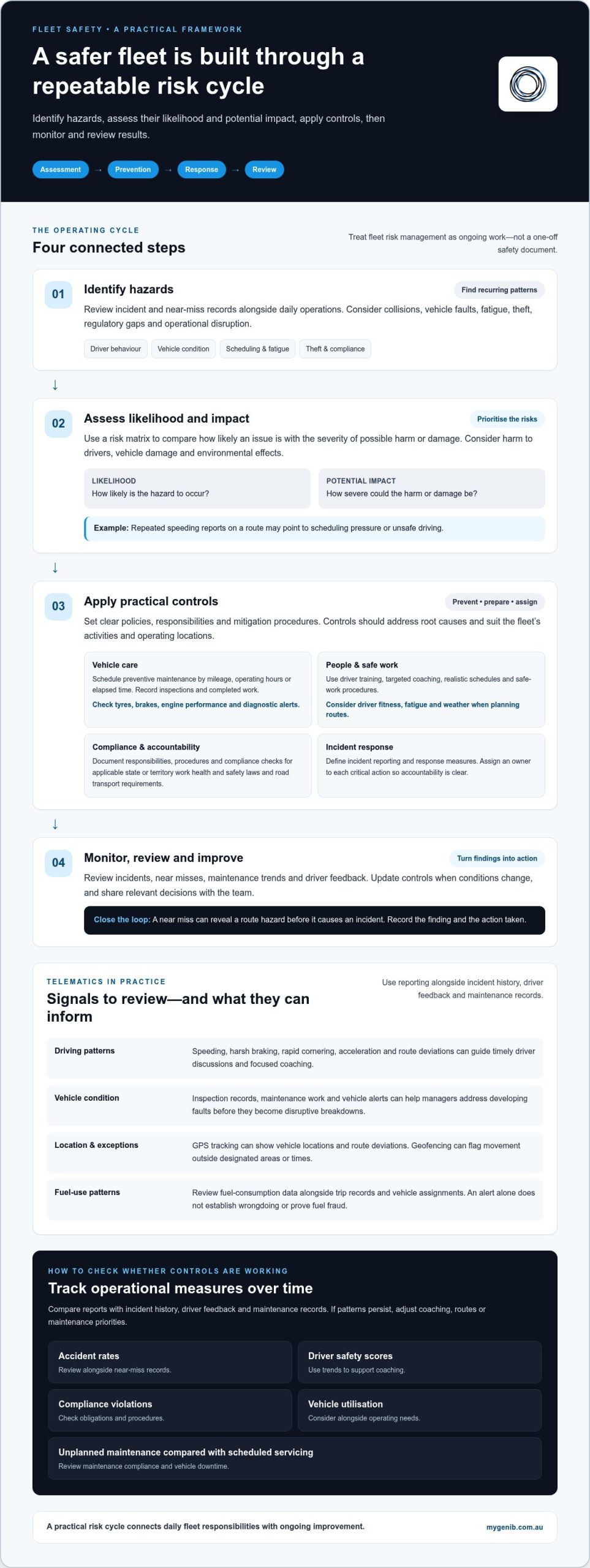
Fleet risk management definition and core pillars
Fleet risk management is an ongoing process, not a one-off safety document. Its value comes from turning identified hazards into controls, then checking whether those controls improve fleet operations.
The cost of fleet risk-reduction technology depends on the specific requirements. Fleet size, equipment, software functions and implementation all affect the price, which is provided after a quote request.
Meaning of fleet risk management
Fleet risk management identifies hazards, assesses their potential impact, applies controls, then monitors and reviews results. Managers can assess severity by considering possible harm to drivers, vehicle damage or environmental effects. A near miss, for example, can reveal a route hazard before it causes an incident. Recording the finding and resulting action supports learning and helps direct improvement efforts.
Core risk management pillars
The core pillars are assessment, prevention, response and review. A written policy sets goals, responsibilities and mitigation procedures, including driver training, vehicle maintenance, incident reporting and legal compliance. Preventive controls address root causes, while response measures limit the impact of an incident. Assigning an owner to each critical action makes accountability clear across the fleet.
Keep the process practical: document business vehicles, define who completes checks, and record how managers analyse results. A risk rating can help prioritise hazards by likelihood and severity, but it should lead to an action, not sit unused in a register. Review incidents and maintenance trends, update controls when conditions change, and share relevant decisions with the team. These fleet management risk reduction strategies connect daily responsibilities with ongoing improvement. To align operational risk planning with protection for your business, discuss your business risk and insurance needs.
MyGen Insurance Brokers: Business Insurance
MyGen Insurance Brokers helps businesses consider insurance alongside the operational controls used to manage fleet risks. If vehicles support your daily operations, Commercial Motor Insurance may be relevant to the financial risks associated with business vehicles. Business Insurance can also form part of a broader review of your business exposures.
Insurance complements prevention; it does not replace driver training, maintenance or safe procedures. A tailored review can help you consider how your business activities, vehicles and existing controls relate to your insurance needs. This can be useful when fleet operations change or you reassess how business risks are managed.
For a considered discussion about your business insurance needs, contact MyGen Insurance Brokers or visit mygenib.com.au.
Plan your fleet’s next stage with confidence
Your next review can bring day-to-day risk decisions into line with the financial protection your business needs. Fleet management risk reduction strategies are strongest when operational planning and insurance considerations are viewed together, taking your vehicles, business activities and responsibilities into account.
MyGen Insurance Brokers offers Business Insurance, Professional Indemnity Insurance and Commercial Motor Insurance. Each addresses different business exposures. A useful conversation starts with how your fleet supports your work and which risks your business wants to consider.
Revisit your approach as your vehicles, routes or business responsibilities change. To discuss your insurance needs, contact MyGen Insurance Brokers. A considered next step can help you move forward with greater clarity.
Frequently Asked Questions
What is fleet risk management?
Fleet risk management makes risk ownership part of everyday business decisions involving vehicles. It connects choices such as vehicle selection, driver allocation and incident follow-up, rather than treating safety as a separate task. For example, managers can assign someone to check whether a vehicle suits its regular work before giving it a new role.
What are the main fleet management risks for Australian businesses?
The most relevant risks depend on how a business uses its vehicles. A trades business may need to manage tools and equipment in vans, delivery platforms such as Gonje focus on multi-stop urban routing, while a site-based operation may focus on vehicle movements around workers and visitors. Consider load security, reversing areas, vehicle suitability and interactions with contractors when mapping risks specific to your work.
Which fleet safety strategies reduce crashes and driver injuries?
Plan safer vehicle movements at depots and work sites, not just on public roads. Separate pedestrian walkways from vehicle lanes, mark loading areas and set a clear reversing plan for confined spaces. For example, a delivery site can designate an unloading zone away from customer access to reduce conflict between vehicles and pedestrians.
How can telematics and driver monitoring reduce fleet risk?
Set clear expectations about what telematics data is collected, who reviews it and how findings are used. Explain the purpose to drivers and give them a way to add context to a flagged event, such as a road closure or urgent vehicle issue. These safeguards support fair, consistent decisions and help staff understand how monitoring contributes to fleet safety.
What vehicle maintenance practices prevent breakdowns and accidents?
Match each vehicle to its workload, including passengers, cargo and equipment. After repairs, record what was completed and who cleared the vehicle for its next assignment. If a fault returns, escalate it for a deeper assessment rather than treating each repair as an isolated job. This creates a clearer handover between operations and maintenance staff.