
A small cyber incident can create costs well beyond restoring systems. Cyber security insurance for healthcare providers may help cover eligible response expenses and certain liability costs, depending on the policy. Patient records, practice operations and sensitive information can all be affected, so the impact may reach beyond the initial technical problem.
It’s understandable to focus first on preventing an attack. But if an incident happens, knowing how investigation, recovery and potential claims may be handled can also help you plan with greater confidence. This article explains the costs a healthcare practice may face, what cyber insurance may help with, and which policy details matter when considering protection.
Key Takeaways
- Identify the sensitive patient and identity information your practice holds, and consider how its exposure could affect patients and day-to-day care.
- Email inboxes are the origin of 40% of cyber attacks, making staff awareness and careful handling of messages important parts of your risk planning.
- Consider the potential investigation, recovery and third-party liability costs of a breach when assessing your practice’s financial exposure.
- Review how cyber cover responds to incidents affecting your operations, and speak with MyGen Insurance Brokers about Business Insurance suited to your business risks.
Sensitive patient, biometric, financial, and identity data
Healthcare providers hold records that can reveal intimate details about patients. Protecting them means considering both the information and the systems used to access it.
Sensitive information held by providers
Healthcare records can include diagnoses, treatment histories, identity details, payment information and biometric data. This combination can make a breach especially harmful: Australian health information can be more attractive to cyber criminals than financial details alone. For a practice, identify where each type of information is stored, who can access it, and how it moves between systems. Limiting access to what each role needs can reduce unnecessary exposure.
Connected care systems and patient data
Patient portals, telemedicine platforms and connected medical devices create additional points where information may be accessed or transferred. Map how these tools connect to practice systems, then restrict accounts and permissions to appropriate users. Email deserves particular attention: inboxes are the origin of 40% of cyber attacks. Staff training can help people recognise suspicious messages before they expose access credentials or patient details. The Australian Digital Health Agency’s cyber security team works with the healthcare sector to safeguard health information and secure digital health assets.
Insurer requirements differ between policies, so there is no single checklist for every Australian provider. Be prepared to describe safeguards such as access restrictions, staff awareness, backups and incident response arrangements. These details help explain how your practice protects patient data and manages cyber risk.
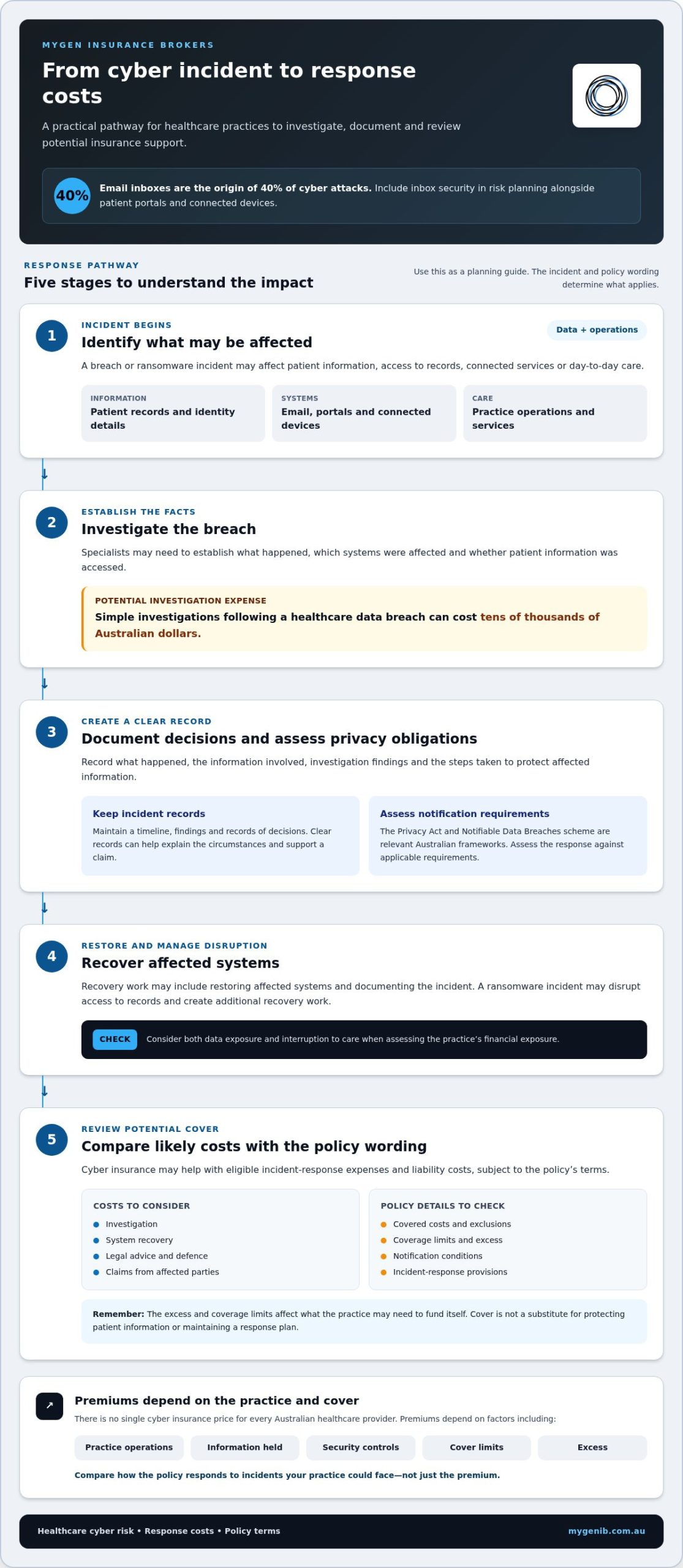
Medical practices, clinics and hospitals face risks involving exposed records, compromised email accounts and disruption to connected services. The 40% email-origin figure highlights one route into an organisation; assess inbox security alongside portal access and device connections when reviewing your exposure.
Breach response costs and third-party liability
A healthcare data breach can trigger investigation costs before the full impact is clear. Simple investigations following a healthcare data breach can cost tens of thousands of Australian dollars. Specialists may need to establish what happened, which systems were affected, and whether patient information was accessed. The work can also involve restoring affected systems and documenting the incident.
Financial exposure may extend beyond the investigation. Affected patients or other parties could bring claims connected with exposed information or disrupted services. Legal advice, responding to allegations and defending a claim can add pressure while a practice is already managing operational disruption. These expenses depend on the incident and policy wording, including applicable limits, exclusions and excesses.
These figures show why a practice should assess both data exposure and interruption to care. A ransomware incident, for example, may affect access to records and create recovery work, while a data breach can lead to investigation and third-party claims.
Cyber insurance may help with eligible incident-response expenses and liability costs, subject to the policy’s terms. Before choosing cover, map likely costs against the policy wording: investigation, system recovery, legal defence and claims from affected parties. Consider how the excess and coverage limits affect the amount the practice would need to fund itself. Clear incident records can help explain what happened and support a claim. Coverage is not a substitute for protecting patient information or maintaining a response plan.
Why healthcare providers need cyber insurance
A cyber incident can create financial pressure alongside privacy, operational and patient-care concerns. Cyber cover may help address eligible costs, while clear incident records support an organised response. Consider cyber security insurance for healthcare providers alongside the practical risks of keeping a practice operating.
Privacy and breach notification obligations
The Privacy Act and Notifiable Data Breaches scheme are Australian frameworks relevant to healthcare privacy and breach notification. A practice should identify the information involved, record what happened and assess its response against applicable notification requirements. For example, an incident involving patient records needs careful documentation, not just technical restoration. This helps the practice manage its responsibilities and explain its actions.
Privacy rules and insurance claims
Privacy obligations and OAIC guidance shape how a practice handles an incident; policy terms determine how insurance responds. Keep a timeline, investigation findings and records of decisions, including steps taken to protect affected information. These materials can help establish the circumstances when presenting a claim. The policy wording also matters: covered costs, exclusions, limits and notification conditions affect the response. Reviewing cyber security insurance for healthcare providers against these factors can help practices understand how cover relates to their obligations.
There is no single cyber insurance price for every Australian healthcare provider. Premiums depend on factors such as the practice’s operations, information held, security controls, cover limits and excess. Compare the policy’s response provisions with the incidents your practice could face, rather than focusing on the premium alone.
Australian insurers’ cyber policies differ in terms and suitability for medical practices, clinics and hospitals. A broker can help assess available cover against your operations and risks. Discuss cyber cover options as part of your practice’s risk planning.
MyGen Insurance Brokers: Business Insurance
MyGen Insurance Brokers helps Australian businesses consider insurance in light of their risks and operations. If a cyber incident has prompted a broader review of your practice’s protection, MyGen’s tailored approach can help you assess suitable business insurance options, including Business Insurance and Professional Indemnity Insurance.
Consider how an incident could affect patient services, business operations and professional responsibilities. Reviewing these exposures can help clarify which forms of cover are relevant and where policy terms need close attention. The right fit depends on the risks your practice faces and the protection you need.
Contact MyGen Insurance Brokers to discuss your practice’s insurance needs, or visit mygenib.com.au.
Make your cover part of the plan
Use your next insurance review to connect cyber risk with the wider demands of running a healthcare practice. Consider how cover aligns with your operations, professional responsibilities and the work required to keep patient services running. Asking the right questions can make a complex decision clearer, including what cyber security insurance for healthcare providers may address alongside other business risks.
MyGen Insurance Brokers offers Business Insurance, Professional Indemnity Insurance and Commercial Motor Insurance. Discussing these needs together can help you take a considered view of the protection relevant to your practice, without treating cyber risk in isolation.
Contact MyGen Insurance Brokers to discuss your insurance needs and take a thoughtful next step towards protecting your practice.
Frequently Asked Questions
What does cyber insurance for healthcare providers in Australia cover?
Cyber insurance may cover eligible costs arising from an incident, depending on the policy wording. Potential areas include incident investigation, data recovery, legal support, third-party claims and business interruption. For example, a clinic might need help restoring access to appointment systems after an attack. Check whether the policy covers the services and costs your practice would rely on, and note any limits or excesses.
What policy limits and coverage options should Australian healthcare providers compare?
Compare the overall limit and any separate sublimits for response costs, liability and interruption. Consider how long your practice could manage reduced operations and whether the limit reflects the sensitivity and volume of information held. Check the excess that applies to each claim type, and whether legal defence, system restoration and external response specialists fall within the same limit or have separate caps.
Does cyber insurance cover ransomware, data breaches, business interruption and incident response?
These events and costs may be covered when the policy includes them and the claim meets its terms. Ransomware cover, for example, may address eligible response and recovery costs, while interruption cover may respond to lost income during disruption. A data breach may involve investigation and liability expenses. Compare each protection separately in the policy wording rather than assuming one automatically includes all the others.
What exclusions and conditions commonly apply to healthcare cyber insurance policies in Australia?
Exclusions and conditions differ between policies, so read the wording for relevant limits and requirements. Pay particular attention to requirements about security controls, incident notification, consent before engaging response specialists, and costs arising from known events. Check how the policy treats outsourced systems and third-party platforms used by your practice. These details can affect whether a specific expense or claim is covered.
How can an Australian healthcare provider assess, buy and renew cyber insurance?
Start by mapping the systems your practice relies on, the information it holds and the operational impact of downtime. Use that assessment to compare policy limits, exclusions, excesses and response provisions. At renewal, update details about changes such as new patient portals, telemedicine services or providers. Keep a copy of the current wording and record who manages incident reporting and insurer communication.