
A long-term lease doesn’t guarantee rent will keep arriving. Rent default insurance for long term tenants may cover unpaid rent when a tenant falls behind, stops paying or leaves in circumstances covered by the policy. Some landlord policies also cover lost rent while repairs are completed after an insured event. What’s included, and for how long, depends on the policy’s limits, waiting periods and exclusions.
It’s understandable to want clear protection when rental income is part of your plans. This article explains what loss of rent cover may include, how your responsibilities as a landlord can affect a claim, and which records may support it. Following the correct tenancy process and keeping evidence organised can matter when arrears or property damage disrupt a long-term tenancy.
Key Takeaways
- Loss-of-rent cover may respond to unpaid rent or other insured tenancy disruptions, but policy terms determine what qualifies.
- Review your policy’s limits, waiting periods and exclusions to understand how a claim could be assessed.
- Following the correct tenancy process and taking reasonable steps to prevent arrears can affect claim acceptance.
- Keep clear records, including the rental agreement, rent ledger, condition reports and notices, to help support a claim.
What can loss of rent cover?
Loss of rent cover may help protect rental income when an event listed in the policy disrupts rent payments or prevents a tenant from staying in the property. The specific events covered and claim limits depend on the policy wording.
Tenant Default and Optional Protection
Tenant default cover may respond when a tenant stops paying rent or falls behind under the rental agreement. Australian landlord insurance policies have different terms, and some include rent default cover. A policy that excludes rent arrears won’t cover missed payments for that reason, though it may cover other insured events. Compare the listed events, exclusions and limits to see how each policy treats unpaid rent. Optional Tenant Protection cover, where offered, is an additional policy feature; its terms explain which tenant-related losses it addresses. This distinction matters when deciding whether the protection suits your rental property and tenancy.
Rent Loss Limits and Payment Duration
Rent loss limits set the maximum amount or period a policy may pay after an accepted claim. The payment period can vary depending on the cause, such as tenant default or repairs after an insured event. The amount recoverable may also depend on what you’re legally entitled to claim under the rental agreement. Check the Product Disclosure Statement for waiting periods, excesses, exclusions and maximum claim limits. These details explain how long payments may continue and what could reduce the amount you can recover.
Other Covered Circumstances
Some policies may cover lost rent if a tenant abandons the property, breaks the lease, or an insured event prevents access. Cover may also apply while repairs are completed after an insured event. Tenant damage is a separate consideration: policies can treat accidental damage and theft differently, while pet damage may be included, excluded or capped. Review the relevant policy terms to understand which event must occur for a claim to qualify. A pet-related loss, for example, won’t automatically be treated like unpaid rent.
Landlord responsibilities and claim acceptance
Landlord insurance is designed for rental-property risks linked to tenants and rental income. Home insurance may not cover tenant-related losses, so the type of policy matters if a tenant stops paying rent or damages the property.
For landlords with long-term tenants, rent default insurance for long term tenants may be worth considering if a gap in rental income would strain your cash flow. Its value depends on the policy’s covered events, exclusions and limits, weighed against your ability to manage missed payments without that support.
Some property owners also examine alternative tenancy structures, such as flexible or serviced accommodation models exemplified by flexiestays.com, which operate under different occupancy terms and cash-flow profiles compared to standard residential agreements.
Claim acceptance can depend on how you respond to arrears. Take reasonable steps to prevent rent debt from growing, follow the tenancy process and issue the correct notices. In Victoria, landlords must comply with the Residential Tenancies Act when addressing breaches, including giving tenants the required opportunity to remedy certain breaches.
Residential tenancy reforms have changed how landlords manage pets, rent increases, minimum standards, bond claims, lease terminations and minor modifications. Requirements vary across states and territories. Keep records of relevant decisions and communications to show how you handled a tenancy issue and whether you followed applicable requirements, or work with a specialist agency like RealHelp Real Estate to oversee day-to-day property management and tenancy compliance.
After an insured event damages a property, lost rent may be covered while repairs are completed. However, delays in repairing or re-letting a damaged or vacated property within a reasonable timeframe can affect a claim. Keep evidence of repair work and re-letting efforts. Whether rent default insurance for long term tenants suits your circumstances also depends on how its terms address the risks you’re seeking to manage. A focused rental property risk review can help clarify how insurance fits your circumstances.
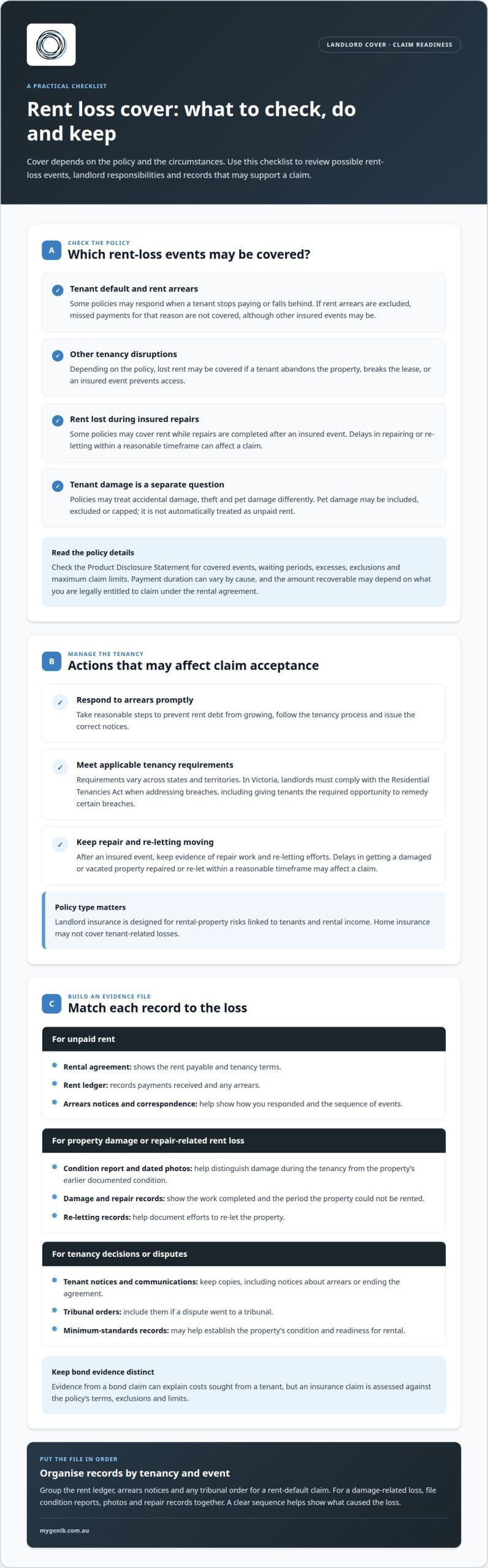
Evidence needed to support insurance claims
A clear evidence trail helps connect a rental loss to an event covered by your landlord insurance policy. For unpaid rent, keep the rental agreement and rent ledger together. The agreement shows the rent payable and tenancy terms; the ledger records payments received and any arrears.
For a claim involving property damage, retain the condition report and dated photos of the damage. These records help distinguish damage that occurred during the tenancy from the property’s documented earlier condition. If repairs cause a loss of rent, keep records of the damage, repair work and period the property could not be rented.
Keep copies of every tenant notice, including notices about arrears or ending the agreement. A timeline of notices and correspondence can show how you responded and whether you followed the required tenancy process. If a dispute went to a tribunal, include its orders with the claim documents.
Evidence from a bond claim can help explain the costs you sought to recover from the tenant. Keep it separate from an insurance claim, which is assessed against the policy’s terms, exclusions and limits. Records showing the property met minimum standards can also help establish its condition and readiness for rental.
Organise documents by tenancy and event, then match each item to the loss it supports. For example, group the rent ledger, arrears notices and tribunal order for a rent-default claim. For a damage-related loss, file condition reports, photos and repair records together. This makes the sequence easier to assess and clarifies what caused the loss.
For help considering how landlord insurance fits your rental risks, discuss landlord insurance options.
MyGen Insurance Brokers
MyGen Insurance Brokers helps Australians understand insurance choices through a personalised, consultative approach to identifying risks and considering suitable cover. If you’re weighing rent default protection, consider how a policy treats unpaid rent, which exclusions apply and whether its limits reflect the income you rely on.
Bring together the details of your rental arrangement and the concerns that matter most to you. MyGen can help you review your risks and understand how insurance fits alongside your wider personal or business needs, with recommendations tailored to your circumstances.
To discuss your insurance needs, contact MyGen Insurance Brokers.
Take the next step towards suitable cover
If you’re weighing rent default insurance for long-term tenants, consider how rental income fits into your wider financial picture. This can help you identify the questions that matter most before choosing cover for your property.
MyGen Insurance Brokers offers Business Insurance, Professional Indemnity Insurance and Commercial Motor Insurance for a range of business risks. A conversation about your circumstances can put your insurance considerations in context and help clarify a practical way forward.
Contact MyGen Insurance Brokers today to discuss your insurance needs. Taking a considered next step can help you approach your decision with greater confidence.
Frequently Asked Questions
Does landlord insurance cover long-term tenants who stop paying rent in Australia?
Some Australian landlord insurance policies cover unpaid rent when a tenant stops paying, while others exclude rent arrears. A long tenancy doesn’t automatically determine whether cover applies. For example, a policy may require missed payments to result from a listed insured event and may set a waiting period or claim limit. The Product Disclosure Statement explains the specific terms.
What are the eligibility rules and waiting periods for rent default cover in Australia?
Eligibility rules and waiting periods are set out in each policy’s terms, rather than under one rule that applies across Australia. A policy may define which tenancies qualify and when a rent-default claim can begin. Read the Product Disclosure Statement alongside the policy schedule, paying attention to conditions that apply before cover starts and the steps required after rent becomes overdue.
How many weeks or months of unpaid rent does Australian landlord insurance cover?
There’s no single duration that applies to every Australian landlord insurance policy. The maximum payment period and claim amount depend on the policy and the circumstances causing the rent loss. Check whether the limit is expressed as a period, an amount, or both, and whether a waiting period or excess reduces what you can claim.
What exclusions apply to rent default cover, including tenant arrears or lease breaches?
Exclusions depend on the wording of the landlord insurance policy. Existing arrears, a lease breach or a tenancy issue may not qualify unless the policy’s covered events and conditions are met. Read the exclusions and claims requirements together to distinguish an event the policy covers from a loss it specifically rules out.
What steps must Australian landlords take to claim for tenant rent default?
Start by following the claims procedure in your policy and the tenancy process that applies in your state or territory. Notify the insurer as directed, then provide the rental agreement, rent records and relevant tenant notices. Keep copies of communications and any tribunal documents, and record payments received after the claim begins. These details help explain the arrears and the claim timeline.