
Imagine the sinking feeling of walking into your investment property to find smashed tiles and holes in the plaster. It’s the phone call every property owner dreads, and the first question that usually follows is: does landlord insurance cover tenant damage? You’ve invested your hard-earned money into this asset, so it’s natural to feel anxious about out-of-pocket repair costs or the fear of a claim being rejected because of complex policy wording. At MyGen Insurance Brokers, we want to replace that stress with a sense of certainty. You’ll discover the critical differences between accidental, malicious, and deliberate damage to ensure your Australian investment is truly protected. We will guide you through what is actually claimable, how to identify wear and tear versus genuine damage, and the exact steps you need to take to document your evidence for a successful outcome.
Key Takeaways
- Determine how motive influences your claim by answering the question, does landlord insurance cover tenant damage, when distinguishing between accidental spills and malicious intent.
- Learn to apply the ‘single event’ rule to clearly separate claimable property damage from the gradual wear and tear that insurers view as a standard maintenance cost.
- Understand the documentation required to meet Australian tenancy tribunal requirements, ensuring you have the evidence needed for a successful claim.
- Identify the risks of relying on automated ‘tick and flick’ quotes and how a tailored assessment ensures your sub-limits are high enough to cover major repairs.
Accidental vs Malicious: Why Motive Matters in Landlord Insurance
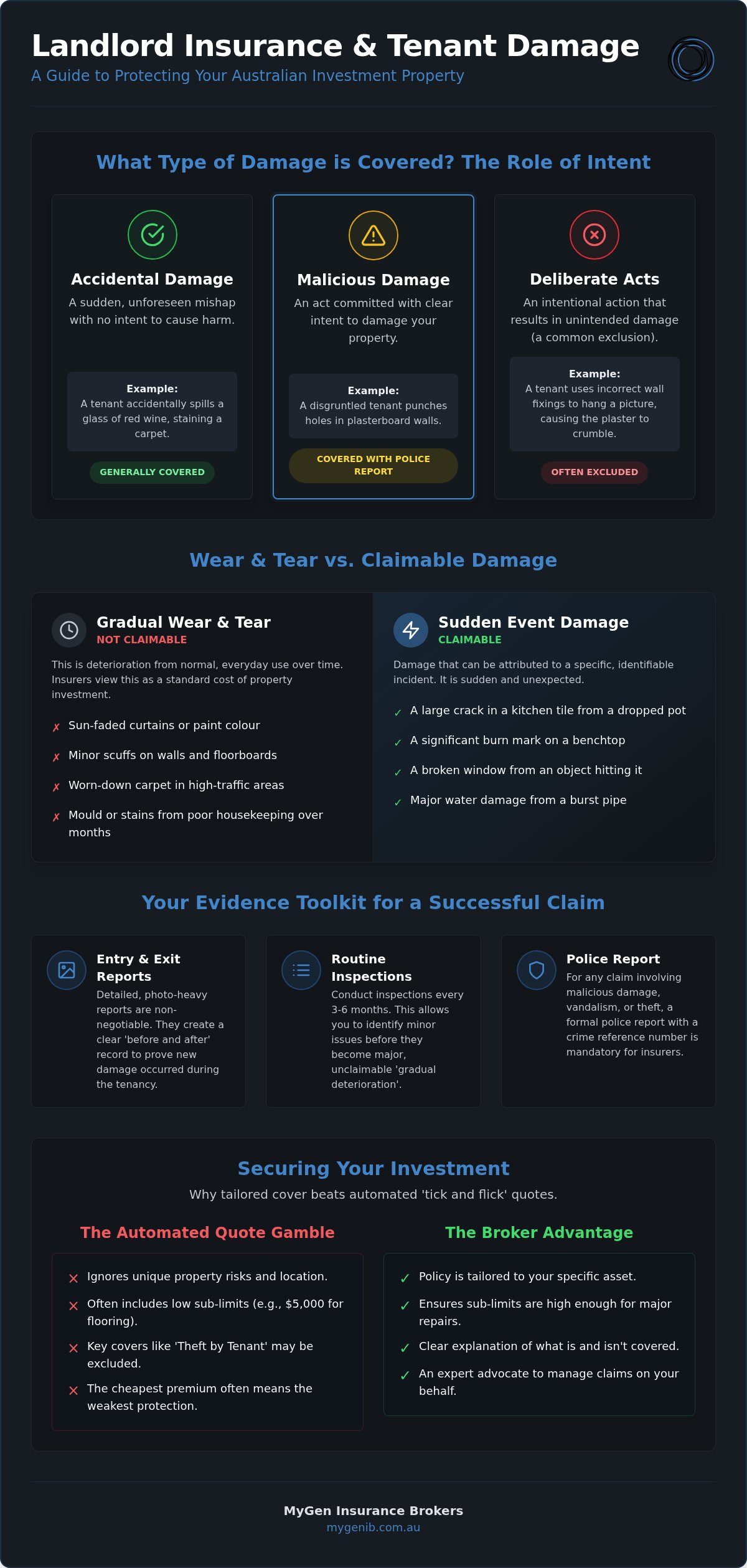
When you discover damage in your rental property, your first instinct is often frustration mixed with a pressing question: does landlord insurance cover tenant damage? The answer isn’t a simple yes or no; it depends heavily on the motive behind the destruction. Insurers look for intent to categorise the event. Accidental damage is defined as a sudden, unforeseen mishap, such as a tenant tripping and spilling a glass of red wine on a cream wool carpet. These are genuine accidents where there was no intent to cause harm.
To help clarify how insurers view these events, watch this brief guide:
In contrast, malicious damage involves a clear intent to harm your property. This might include a tenant punching holes in the plasterboard or spray-painting walls during a dispute. While Renters’ Insurance Explained highlights how tenants protect their own belongings, your landlord policy is there to safeguard the building and your fixtures. However, you must be wary of the ‘Deliberate Act’ exclusion. If you gave a tenant permission to hang pictures and they used the wrong fixings, causing the wall to crumble, many insurers will reject the claim. They view this as a deliberate action with an unsatisfactory outcome, rather than an accident or malice.
The Fine Print: When “Theft by Tenant” is an Optional Extra
Don’t assume that vandalism or theft by a tenant is automatically included in every standard policy. Many basic covers treat these as optional extras that require a specific premium loading. To trigger a malicious damage claim, most Australian insurers require a formal police report and a crime reference number. Without this documentation, your claim may be stalled or rejected entirely, leaving you to foot the bill for expensive repairs out of your own pocket.
Wear and Tear vs Claimable Damage: Navigating the Grey Areas
Distinguishing between heavy use and claimable damage is often where property owners feel the most friction. Insurers view gradual deterioration, such as sun-faded curtains or minor scuffs on floorboards from foot traffic, as standard wear and tear. Since these are considered the “cost of doing business” in the rental market, they won’t trigger a payout. We understand how frustrating it is to see your asset lose its lustre, but insurance is designed for sudden loss rather than the slow march of time.
To answer the core question of does landlord insurance cover tenant damage, we have to look for a specific moment in time. Insurers typically apply the “single event” rule. This means you must be able to point to a specific cause and date for the damage. A sudden impact that cracks a kitchen tile is claimable. Conversely, a kitchen floor that looks “generally tired” after a three-year tenancy is not. If you’re concerned about how these exclusions might impact your investment, it’s worth taking a moment to review your landlord insurance with a broker who can explain the nuances.
We also see many claims rejected due to “poor housekeeping.” If a tenant’s failure to clean leads to mould or permanent staining over several months, insurers often classify this as a maintenance issue rather than an insurable event. Regular inspections are your best defence against these preventable losses.
The Role of Entry and Exit Reports in Proving Your Claim
Proving that damage is “new” requires meticulous documentation. Without a comprehensive, photo-heavy entry report, you’ll likely struggle at a tribunal or with an insurer’s assessor. We recommend conducting routine inspections every three to six months. This proactive approach allows you to identify issues before they evolve into gradual deterioration, which is a common exclusion that leaves many landlords out of pocket.
Securing Your Investment: Why Tailored Cover Beats Automated Quotes
Choosing a policy based on a thirty-second online form is a gamble many Australian investors unknowingly take. While automated platforms offer speed, they often rely on a “tick and flick” model that ignores the unique risks of your specific property type. When you ask, does landlord insurance cover tenant damage, the reality is that the cheapest premium often comes with restrictive sub-limits. You might think you’re covered for A$50,000 in malicious damage, only to find a hidden cap of A$5,000 for specific items like floor coverings or cabinetry. Investing in personalised landlord insurance ensures your safety net is actually strong enough to hold when you need it most.
How an Insurance Broker Acts as Your Advocate During a Claim
We’ve seen how stressful it is to sit on hold with a generic call centre while trying to explain a complex damage claim to a faceless entity. This is where an expert insurance broker provides a distinct advantage. Rather than leaving you to navigate the fine print alone, we manage the insurer on your behalf. We understand how to “translate” the motive and cause of damage into the specific industry language that assessors require for approval. By looking beneath the surface of a policy before you sign, we ensure that when you ask, does landlord insurance cover tenant damage, you already have the confidence and the documentation to secure a successful payout. Our methodical approach turns a high-friction experience into a managed, secure outcome.
Moving from Uncertainty to Investment Security
Owning an investment property shouldn’t keep you awake at night. We’ve explored how understanding the motive behind a loss is essential when asking, does landlord insurance cover tenant damage. By distinguishing between accidental mishaps and malicious intent, and keeping a sharp eye on the “single event” rule to avoid wear and tear exclusions, you put yourself in a position of strength. However, the most robust protection comes from looking beneath the surface of generic policies. As an Authorised Representative of Community Broker Network with over 20 years of industry experience, MyGen Insurance Brokers provides the diligent, personalised advocacy you need. We don’t believe in “tick and flick” solutions; we offer a consultative approach that secures your long-term peace of mind. Contact MyGen Insurance Brokers for a Personalised Landlord Risk Assessment today. You deserve to feel confident that your investment is truly protected.
Frequently Asked Questions
Is accidental damage covered by all landlord insurance policies?
Accidental damage is not a standard feature in all Australian policies. While premium covers often include it, budget-friendly options frequently require you to pay an additional premium for this specific protection. We recommend checking your Product Disclosure Statement (PDS) to confirm if sudden mishaps, like a cracked ceramic cooktop, are included in your current level of cover.
What is the difference between malicious damage and deliberate damage?
The key difference lies in the intent to cause harm. Malicious damage involves a tenant purposely destroying property, such as smashing windows or doors during a dispute. Deliberate damage occurs when a tenant performs an intentional act, like drilling holes for shelving, that results in a loss. Most insurers exclude deliberate acts while covering malicious ones, provided there is sufficient evidence.
Does landlord insurance cover damage caused by a tenant’s pet?
Pet damage is typically treated as an optional extension rather than a standard inclusion. If a tenant’s dog chews the skirting boards or stains the carpet, you’ll need a policy that specifically includes pet-related damage. Many Australian insurers also apply a separate, often higher, excess for these types of claims to manage the increased risk associated with domestic animals.
Will my insurance pay for a professional clean if the tenant leaves the property a mess?
Insurers do not cover the cost of professional cleaning if a tenant simply leaves the property in a messy state. This is categorised as a maintenance or “poor housekeeping” issue rather than an insurable event. You should use the tenant’s bond to cover these cleaning costs, as insurance is designed for sudden, physical damage rather than hygiene-related restoration or general tidying.
How much is the typical excess for a tenant damage claim in Australia?
Excess amounts vary significantly between providers, but you can typically expect to pay between A$250 and A$500 per claim. Some policies apply a higher, specific excess for malicious damage caused by tenants. It’s vital to understand these costs upfront, as a high excess can make smaller claims for minor repairs financially unviable for many property owners across the country.
Can I claim for loss of rent if the property is uninhabitable due to tenant damage?
You can often claim for loss of rent if the property becomes truly uninhabitable due to a covered damage event. When asking, does landlord insurance cover tenant damage, it’s important to ensure your policy includes a “Loss of Rent” provision. This provides a vital financial buffer while repairs are being completed, ensuring your mortgage commitments are met during the vacancy period.