
The true value of your cover isn’t found in the policy schedule, it’s proven during the high-stakes moment you actually need to use it. When a crisis occurs, the anxiety over financial loss and the fear of a claim being rejected on a technicality can feel quite heavy. You’ve likely stared at your Product Disclosure Statement and felt more confused by the jargon than when you started. We understand that you need to know exactly how to make a business insurance claim without the stress of navigating complex requirements alone.
We believe you should focus on your recovery while a seasoned expert handles the heavy lifting. This guide details a methodical, broker-led approach that ensures your interests are protected and your settlement is fair. We’ll outline the essential steps to minimise disruption and help you move from the initial shock of a loss to a state of calm certainty.
Key Takeaways
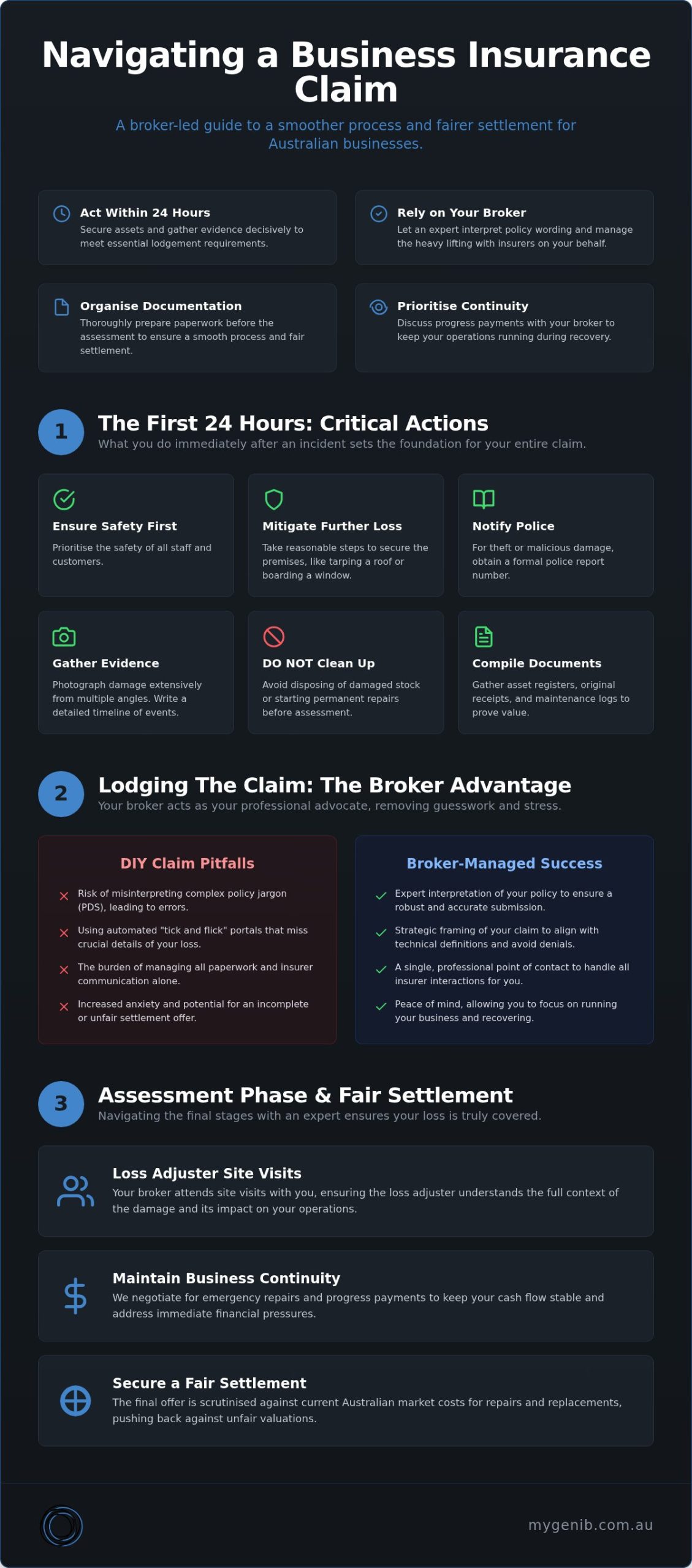
- Act decisively within the first 24 hours to secure your assets and gather evidence, ensuring you meet the essential requirements for a successful lodgement.
- Learn how to make a business insurance claim with the guidance of a dedicated broker who interprets complex policy wording and manages the heavy lifting with insurers.
- Organise your documentation thoroughly before the assessment phase to facilitate a smoother interaction with loss adjusters and secure a fair settlement.
- Prioritise your business continuity by discussing emergency funds or progress payments with your broker to keep operations running throughout the recovery process.
Immediate Actions and Evidence Gathering: The 24-Hour Window
The moments following an incident are often a blur of adrenaline and concern. Your primary focus must be the safety of your staff and securing the premises to prevent further damage. The first 24 hours are critical for capturing the reality of the scene. Take reasonable steps, like boarding up a broken window or tarping a leaking roof, to mitigate loss. If you’ve experienced a break-in or malicious damage, notify the police immediately to obtain a formal report number. This is a non-negotiable step in understanding how to make a business insurance claim that stands up to scrutiny. While it’s tempting to start the cleanup, you should avoid disposing of damaged stock or starting permanent repairs until an assessor provides the green light.
Create a robust digital trail by photographing the damage from multiple angles. Capture the context of the room as well as close-ups of specific points of entry or equipment failure. This evidence acts as your voice during the assessment phase, providing a clear narrative that prevents disputes later. A methodical approach now saves weeks of back-and-forth negotiation.
The “Deep-Dive” Approach to Documentation
Building a strong case requires looking beneath the surface. Gather your asset registers, original purchase receipts, and maintenance logs to substantiate the value of what’s been lost. We recommend writing a detailed timeline while the events are fresh, noting witness names and specific times. For service-based businesses, consider if the event involves professional indemnity insurance triggers, such as a breach of professional duty or an alleged error. This thoroughness ensures your broker has the ammunition needed to advocate for your full entitlement and priority recovery.
Lodging Your Claim: Why Your Insurance Broker is Your Best Advocate
Once you’ve gathered your evidence, the next step is the formal lodgement. Many business owners feel a sense of trepidation at this stage, wondering if a single misplaced word might lead to a technical rejection. This is where the distinction between a direct-to-insurer claim and a broker-managed process becomes clear. When you work with us, we act as a protective mentor, interpreting the dense language of your Product Disclosure Statement (PDS) to ensure your submission is both accurate and robust. We’ll meticulously review your business insurance schedule to confirm which sub-limits and excesses apply to your specific event. This methodical approach removes the guesswork and ensures you don’t inadvertently prejudice your claim during the initial filing.
Centralising all communication through your broker is vital. It creates a clear, professional record and prevents the insurer from bypassing your advocate. We handle the heavy lifting, allowing you to focus on your staff and customers while we manage the insurer’s requirements. This partnership ensures that the process of understanding how to make a business insurance claim remains transparent and manageable rather than overwhelming.
Strategic Lodgement and Avoiding Common Pitfalls
The rise of “tick and flick” automated portals has prioritised insurer efficiency over policyholder protection. These systems often miss the subtle nuances of your business’s unique risk profile. By avoiding these generic forms, we ensure the description of your loss aligns perfectly with your policy’s technical definitions. Experienced insurance brokers know how to frame a case to avoid technical denials. We have the expertise to push back if an initial assessment feels unfair or incomplete. If you’re feeling overwhelmed by the paperwork, speaking with a specialist broker can provide the clarity you need to move forward with confidence.
The Assessment Phase and Achieving a Fair Settlement
The arrival of a loss adjuster is often the most stressful part of the journey. To ensure a fair outcome, you must have all your gathered evidence organised and ready for their inspection. We act as your steady hand during these site visits, ensuring the adjuster understands the full context of the damage. This professional advocacy is a vital component of how to make a business insurance claim that truly reflects the reality of your loss. Having a broker present ensures that technical details aren’t overlooked and that the insurer’s representatives see the human impact on your operations.
While the assessment proceeds, we prioritise your business continuity. We frequently negotiate emergency repair payments or progress payments with insurers to keep your cash flow stable. You shouldn’t have to wait months for a final cheque to address immediate financial pressures like temporary equipment hire or urgent site security. These interim funds are often the difference between a business that recovers and one that struggles to reopen.
When the final settlement offer arrives, we review it against actual replacement or repair costs in the current Australian market. Inflation and supply chain issues mean old estimates often fall short of reality. If the insurer’s decision doesn’t align with your policy expectations, we’ll guide you through the formal dispute resolution process, ensuring you remain confident in how to make a business insurance claim that delivers a fair result.
Managing Business Interruption and Recovery
A significant loss is often more than just physical damage. We’ll determine if your claim triggers Business Interruption cover, which is essential for managing ongoing costs like staff wages and rent during a forced closure. This thorough investigation often exposes gaps in previous coverage that may have gone unnoticed. By identifying these vulnerabilities now, we can implement more robust risk management strategies, turning a difficult experience into a foundation for long-term security and resilience.
Securing Your Business Future Through Expert Advocacy
Navigating the aftermath of a loss is a test of resilience, but you don’t have to face it alone. By acting decisively within the first 24 hours and building a robust digital trail, you set the foundation for a successful recovery. Understanding how to make a business insurance claim is less about filling out forms and more about strategic representation. We ensure your policy’s technical definitions are met while pushing for interim payments that keep your doors open.
With over 20 years of industry experience and as a member of the Community Broker Network, we provide a personalised consultative approach that moves beyond automated systems. Let MyGen Insurance Brokers manage your next claim with professional advocacy and reclaim your peace of mind. Your business deserves a steady hand during its most challenging moments.
Frequently Asked Questions
How long does a business insurance claim usually take in Australia?
Standard claims are typically acknowledged within 10 business days according to the General Insurance Code of Practice. While simple settlements might occur within a few weeks, complex commercial claims often take between 3 months and 9 months to resolve. When you are learning how to make a business insurance claim, having a broker ensures the insurer adheres to these timeframes and provides regular updates.
Do I have to pay my excess upfront when making a claim?
You generally don’t pay your excess as an upfront fee when you first lodge. Instead, the amount is usually deducted from the final settlement payment or paid directly to the authorised repairer once the job is finished. Understanding how to make a business insurance claim involves checking your policy schedule to see if multiple excesses, such as age or location loadings, apply to your specific situation.
What happens if my business insurance claim is rejected?
If your claim is declined, the insurer must provide the reasons in writing and outline their Internal Dispute Resolution (IDR) process. We’ll review the rejection against your policy wording to identify any technical errors or misinterpretations by the assessor. If the internal review doesn’t yield a fair result, we guide you through escalating the matter to the Australian Financial Complaints Authority (AFCA).
Can I choose my own repairer for a commercial motor insurance claim?
Your ability to select a specific mechanic depends on whether your commercial motor insurance policy includes a “choice of repairer” clause. Some insurers prefer their own network to manage costs and guarantee repairs, while others allow you to use your preferred local specialist. We recommend verifying this feature before an incident occurs to ensure your business vehicles are maintained by experts you already trust.