
True operational resilience is an active habit, not a hundred-page binder gathering dust on an office shelf. For most founders, practical business continuity planning for small business operations often feels buried beneath dense corporate jargon and unrealistic disaster recovery templates. We recognise the pressure: you don’t have weeks to spend parsing theoretical paperwork, nor spare capital to pour into cumbersome emergency manuals.
You can safeguard your livelihood without drowning in administrative complexity. In this practical guide, you will discover how to build a sensible continuity plan that protects your staff, daily trading, and cash flow from sudden disruptions. We break down your core operational risks, set clear recovery priorities, and outline a straightforward roadmap to keep your enterprise trading when unexpected shocks strike.
Key Takeaways
- Effective business continuity planning for small business replaces unwieldy corporate manuals with agile, practical playbooks designed for immediate operational action.
- A focused Business Impact Analysis clarifies your most vital dependencies, helping you allocate limited recovery resources directly where they protect revenue.
- Routine tabletop simulation exercises prepare your team for realistic disruptions, including cyber incidents, supply chain failures, and sudden infrastructure outages.
- Sustainable operational resilience requires pairing practical internal response protocols with tailored business insurance to defend cash flow during prolonged trading halts.
What Is Business Continuity Planning for Small Business?
At its heart, business continuity planning for small business is about keeping your essential operations alive when unforeseen crises occur. Many enterprise-level guides push bloated manuals and expensive software platforms that small teams simply don’t need. Real resilience isn’t found in a complex software suite; it lives in a lean, actionable roadmap that your staff can execute under pressure without hesitation.
To grasp how these core concepts come together practically, watch this concise overview of continuity principles:
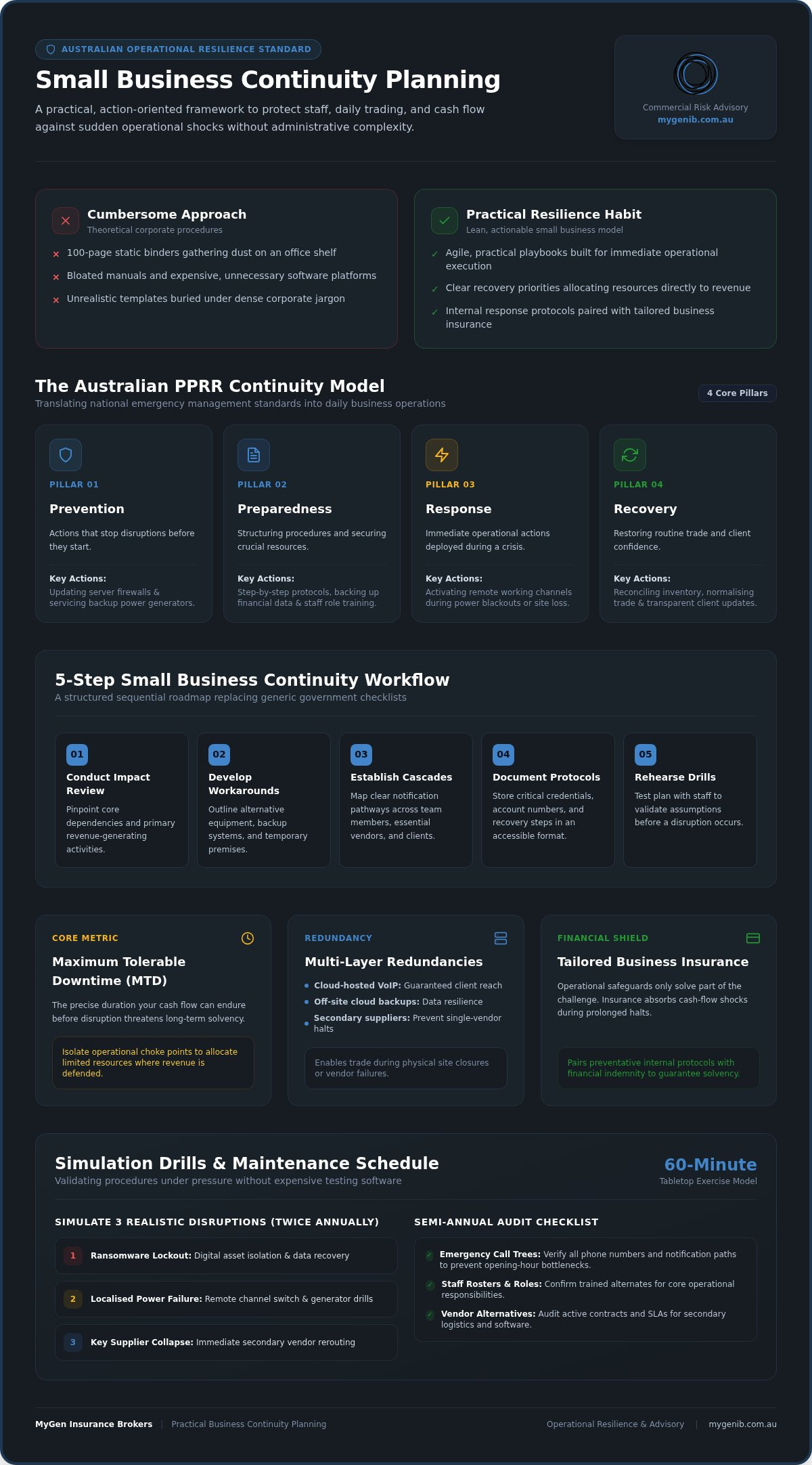
Rather than adopting dense overseas frameworks, Australian organisations typically follow the standard emergency management structure. Citing a recognized business continuity planning framework, this approach divides resilience into four straightforward pillars: Prevention, Preparedness, Response, and Recovery (PPRR).
Adapting the Australian PPRR Model to Daily Operations
Translating the PPRR model into daily operations ensures practical protection without administrative burden:
- Prevention: Actions that stop disruptions before they start, like updating server firewalls and servicing backup generators.
- Preparedness: Developing step-by-step procedures, backing up financial data, and training staff on emergency responsibilities.
- Response: Immediate operational actions during a crisis, such as activating remote working channels during a power blackout.
- Recovery: Restoring normal trading, reconciling damaged inventory, and communicating transparently with affected clients.
Setting up digital redundancies, such as cloud-hosted VoIP phones and off-site cloud backups, guarantees your clients can always reach you, even if your physical premises face sudden closure.
How to Build a Small Business Continuity Plan in 5 Steps
Generic government checklists often leave owners staring at broad questions without clear implementation steps. Structured business continuity planning for small business succeeds when you follow an actionable, sequential workflow:
- Conduct an impact review: Pinpoint your core dependencies and primary revenue-generating activities.
- Develop practical workarounds: Outline alternative equipment, backup systems, and temporary premises.
- Establish contact cascades: Map clear notification pathways across team members, essential vendors, and clients.
- Document key protocols: Store critical credentials, account numbers, and recovery steps in an easily accessible format.
- Rehearse realistic drills: Test your plan with staff to validate assumptions before a disruption occurs.
Executing the Business Impact Analysis and Resource Mapping
A thorough Business Impact Analysis (BIA) starts by determining your Maximum Tolerable Downtime (MTD), which is the precise duration your cash flow can endure before the disruption threatens your solvency. Aligning your internal assessments with proven Ready Business preparedness guidelines helps you isolate operational choke points without getting lost in unnecessary paperwork.
Document secondary suppliers for vital materials, logistics, and software platforms so a single vendor failure cannot halt ongoing trade. Operational safeguards only solve part of the equation; true resilience connects preventative protocols with targeted business insurance to absorb unforeseen cash-flow shocks. Engaging with dedicated commercial risk advisory ensures your trading continuity remains intact when unexpected events unfold.
How to Test, Maintain, and Fund Your Continuity Strategy
A plan is only as dependable as its last rehearsal. You don’t need complex testing software to build genuine confidence; simple 60-minute tabletop exercises work brilliantly. Gather your core staff twice a year to simulate realistic crises, such as a localized power failure, a ransomware lockout, or a key supplier collapse. Referencing established SBA emergency preparedness resources offers practical scenario prompts to verify that everyone knows their exact responsibilities under pressure.
Schedule semi-annual audit routines to review emergency contact numbers, staff rosters, and vendor alternatives. Outdated call trees create severe bottlenecks during the crucial opening hours of an incident.
Aligning Operational Protocols with Business Interruption Cover
Operational workarounds keep your doors open, but they don’t cover ongoing payroll, fixed lease liabilities, or lost operating profit while facilities recover. Seeking guidance from small business financial advisers like The Bucket List Accountant can help you quantify these obligations and structure cash flow buffers. This is where business continuity planning for small business must directly connect to robust risk transfer. An operational playbook guides immediate logistics; business interruption insurance protects your underlying cash flow.
Algorithmic quote engines often overlook critical indemnity periods and unique supply dependencies. Partnering with seasoned, licensed insurance brokers provides a dedicated human review that uncovers hidden vulnerabilities before a crisis occurs, ensuring your financial bridge holds firm until normal trading resumes.
Securing Your Operational Resilience for the Future
Building lasting operational resilience doesn’t require overwhelming corporate frameworks. When you establish clear emergency priorities and rehearse simple practical workarounds, business continuity planning for small business becomes an approachable, dependable habit that actively protects your team and ongoing trade.
Operational checklists alone won’t replace lost trading revenue during extended interruptions. True peace of mind comes from pairing sensible workplace procedures with comprehensive risk transfer. Backed by over 20 years of specialist commercial risk experience, our team provides tailored risk assessments rather than automated computer quotes, ensuring your cover reflects the everyday reality of your business. Speak with our experienced brokers to protect your business continuity and face unexpected disruptions with total confidence.
Frequently Asked Questions
What is the difference between a disaster recovery plan and a business continuity plan?
Disaster recovery focuses narrowly on restoring technology systems and data, whereas business continuity planning for small business oversees your total operational survival. A disaster recovery plan rebuilds servers and retrieves lost records. In contrast, continuity planning ensures that your staff, trade facilities, supply logistics, and customer communications continue operating without severe financial disruption.
How often should an Australian small business review its business continuity plan?
You should review your continuity plan at least every six to twelve months, or immediately following any significant operational change. Onboarding critical new software, changing key suppliers, altering physical premises, or hiring core staff alters your operational risk profile. A swift bi-annual review ensures essential contact numbers, vendor workarounds, and recovery roles remain completely accurate.
Can a sole trader or micro business benefit from business continuity planning?
Yes, micro enterprises and sole operators often benefit the most because they lack surplus staff to absorb unplanned downtime. Practical business continuity planning for small business at this scale doesn’t require dense documentation. Simple preparations, like immutable cloud backups, secondary mobile failovers, and reciprocal supplier agreements, safeguard your trading reputation and personal income during emergencies.