
What if your business has outgrown its insurance before renewal comes around? Reviewing insurance policies annually can help you spot changes to your activities, assets or risks that may affect your cover. Policy wording, exclusions and declared values can be hard to assess at a glance, especially when the business has changed since the policy began. And renewal isn’t the only reason to review your cover: a major change may be a prompt to reassess sooner.
This checklist will help you identify changes to raise, gather useful information before renewal discussions and consider whether your declared values and limits still reflect the business. It also covers when a broker can help you understand policy wording and discuss options, so you can approach the review with clearer questions.
Key Takeaways
- Treat renewal as a suitability check, and reassess sooner if your business changes.
- When reviewing insurance policies annually, compare your policy details with current activities, turnover, locations, assets, vehicles and staffing.
- Gather your policy schedules, relevant Product Disclosure Statements and renewal documents before the review.
- Note questions and potential gaps, then compare wording, limits, exclusions and service, not just the premium.
Why reviewing insurance policies annually matters for your business
Renewal can bring uncertainty: does your policy reflect the business you run today, or the details you provided when cover began? Reviewing insurance policies annually gives you a regular opportunity to compare your current operations and assets with the information recorded in your policy, then raise questions before renewal.
An insurance policy sets out the terms of an agreement, but both the wording and your circumstances matter. Changes to services, turnover, property, vehicles or contractual work may affect what you need to declare or the cover you want to discuss. A review can help you identify differences, but it doesn’t guarantee that a particular event will be covered. Check the policy terms and ask for clarification if the wording is unclear.
For a simple overview of what an annual insurance review can involve, watch:
Which business changes should prompt an earlier insurance check?
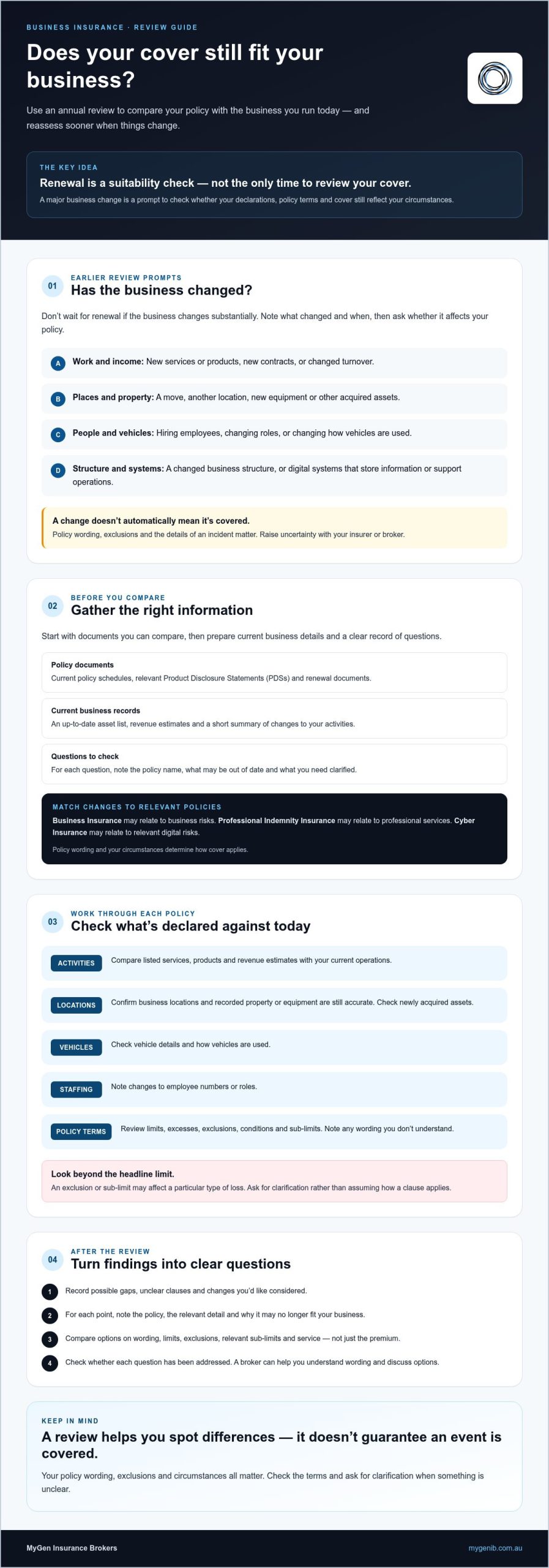
Don’t wait for renewal if the business changes substantially. Consider whether you’ve added services or products, taken on new contracts, moved or opened another location, hired employees, or changed your business structure. These changes may alter your risks or make existing declarations incomplete.
Also check whether you’ve acquired equipment or other assets, changed how vehicles are used, or introduced digital systems that store information or support operations. Keep a record of what changed and when, then ask whether it affects your policy.
An annual review is a regular check-in; a material business change is a reason to check in sooner. The review date alone doesn’t determine cover. Policy wording, exclusions and the details of an incident all matter, so raise uncertainties with your insurer or broker rather than assuming a change is automatically included.
Reviewing insurance policies annually: a practical business checklist
Start with documents you can compare. Gather your current policy schedules, relevant Product Disclosure Statements (PDSs) and renewal documents. The Australian Government’s guidance to review your policies regularly also recommends checking whether your cover still suits your business.
Work through each policy and compare what’s declared with how the business operates now:
- Activities and turnover: Check listed services, products and revenue estimates against your current operations.
- Locations and assets: Confirm business locations and recorded property or equipment are still accurate. Check whether newly acquired assets are recorded, or conversely, if surplus valuables have been sold through services like Gold Buyers Sydney CBD so you avoid paying cover on items you no longer hold.
- Vehicles and staffing: Check vehicle details and use, and note any changes to employee numbers or roles.
- Policy terms: Review limits, excesses, exclusions, conditions and sub-limits. Consider whether they relate to the risks you’ve identified, and note any wording you don’t understand.
Don’t focus on the headline limit alone. An exclusion or sub-limit may affect a particular type of loss. Record questions and ask for clarification rather than assuming how a clause applies.
What information should you have ready before renewal?
Prepare an up-to-date asset list, revenue estimates and a short summary of changes to your business activities. Match each change to the policies that may be relevant. For example, Business Insurance may relate to business risks, Professional Indemnity Insurance to professional services, and Cyber Insurance to relevant digital risks. The policy wording and your circumstances determine how cover applies.
Before speaking with your insurer or broker, write down the details you want checked. Include the policy name, the information that may be out of date and the question you need answered. Accurate declarations and current records make for a more informed insurance review. If wording or changing risks are difficult to assess, a broker conversation can help you explore questions and options. You can learn more about business insurance advice through MyGen Insurance Brokers.
What to do after your annual business insurance review
A review is most useful when it leads to clear questions and decisions. Before discussing renewal options, make a short record of possible gaps, unclear clauses and changes you’d like considered. Be specific: note the policy, the relevant detail and why it may no longer fit your business. This keeps the conversation focused and helps you check whether each point has been addressed.
Compare options on more than premium alone. Consider how the wording relates to your circumstances, the limits and exclusions, any relevant sub-limits, and the service available. A lower premium may not be the right fit if other terms differ in ways that matter to your business. Ask for differences to be explained, and make sure you understand any proposed changes before deciding. To explore how comprehensive policies are evaluated across commercial and personal portfolios, you can learn more about The Lewis Agency.
When can an insurance broker help with a policy review?
If a clause is difficult to interpret or you’re unsure how a business change affects your risks, a broker can help explain the wording and discuss available options. Recommendations depend on your business circumstances, insurer terms and the wording of each policy, so don’t assume any option will provide a particular outcome. A consultative conversation can help turn your review notes into clear questions.
After reviewing insurance policies annually, take your questions to a broker to discuss your current needs. MyGen Insurance Brokers provides tailored, consultative insurance advice, and its guide, The Value of an Insurance Broker, may offer further context. Confirm any agreed changes and check the resulting policy documents before relying on them.
Make your next renewal conversation more informed
Reviewing insurance policies annually gives you a regular opportunity to check whether your declared details, limits and policy terms still reflect your business. Keep your records current, note changes and questions, and look beyond the premium when weighing renewal options. If the business changes between renewals, consider whether an earlier check-in is needed.
You don’t have to interpret every clause alone. MyGen Insurance Brokers offers personalised, consultative insurance advice, with Anthony Simpson bringing over 20 years of industry experience. A conversation can help you explore questions and discuss options in light of your business circumstances, without assuming a particular policy outcome.
Talk with MyGen about reviewing your business insurance and take your checklist into the discussion. A clearer understanding of your cover can help you approach renewal with greater confidence.
Frequently Asked Questions
How often should a business review its insurance policies?
Review your business insurance policies at least annually, commonly before renewal, and sooner after a meaningful business change. New activities, assets, contracts or staffing may affect the information declared or the cover that may suit your circumstances. Reviewing insurance policies annually provides a regular check-in, but the right timing and action depend on the policy wording and situation. Confirm uncertainties with your insurer or broker.
What should I check when reviewing a business insurance policy?
Compare your policy schedule and relevant Product Disclosure Statement with your current business activities, assets, turnover and staffing. Check limits, excesses, exclusions, conditions and any sub-limits relevant to your risks. For example, if you’ve acquired equipment, check how it’s recorded and whether the relevant limit remains suitable. List unclear terms or possible changes and ask your insurer or broker how they apply to your circumstances.
Can I change my business insurance during the policy period?
Whether you can make a change during the policy period, and how it affects cover, depends on the policy and insurer. Contact your insurer or broker promptly if your circumstances change, rather than assuming the existing policy automatically responds. Explain what’s different and ask what adjustments may be available. Before relying on a change, request written confirmation of any agreed adjustments and check the updated policy documents.
Does reviewing insurance policies annually mean I need to change insurers?
No. A review helps you assess whether your current cover still suits your business; it doesn’t automatically mean you need a new insurer or policy. If you compare options, look at relevant wording, limits, exclusions, service and terms, not just the premium. Where the trade-offs aren’t clear, a broker can explain options in the context of your business. The decision should reflect your circumstances and the policy details.