
What if a contract asks you to accept a risk your insurance won’t cover? A hold harmless clause can shift responsibility between parties, but it doesn’t change your policy wording. That distinction is central to hold harmless agreement insurance requirements, and a certificate of currency alone may not make it clear whether your policy responds.
Before signing, identify exactly what responsibility the clause gives your business and compare it with your policy documents. This guide explains what to check in the agreement, schedule and policy wording, and when to ask a lawyer, insurer or insurance broker for advice. The aim is to understand the obligations you’re accepting and how they compare with your current cover.
Key Takeaways
- Identify who the clause applies to and what losses or responsibilities it covers before agreeing to its terms.
- Compare the hold harmless agreement insurance requirements with your policy schedule, wording, exclusions and endorsements.
- Don’t assume a certificate of currency or a policy name confirms cover for every contractual obligation.
- Give a broker the complete agreement and current policy documents. Ask a lawyer about the contract wording and the insurer about policy response.
What a hold harmless agreement means for your Australian business insurance
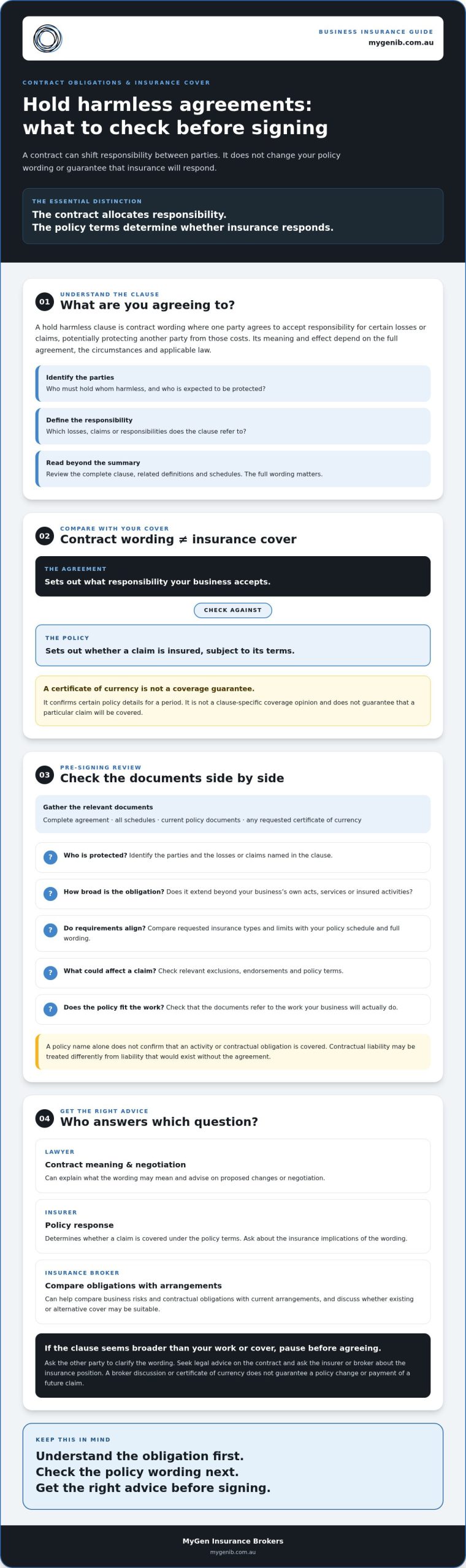
A hold harmless clause is contract wording in which one party agrees to accept responsibility for certain losses or claims, potentially protecting the other party from those costs. It allocates risk between the parties, but its meaning and effect depend on the full agreement, the circumstances and applicable law. The indemnity concept helps explain the basis of this type of promise.
The promise is separate from insurance. A contract can require your business to hold another party harmless, but that requirement doesn’t create or expand cover under your policy. Consider the hold harmless agreement insurance requirements alongside the actual policy terms, rather than treating the contract as proof that a claim will be insured.
For a brief overview of how these clauses work, watch:
Does a hold harmless clause mean your insurer must pay?
No. An insurer assesses a claim against the policy wording. That includes whether the relevant activity is insured and whether exclusions, limits or other terms affect the response. Contractual liability may be treated differently from liability that would exist without the agreement, so don’t assume your policy covers every obligation you accept.
A certificate of currency confirms certain policy details for a period. It isn’t a clause-specific coverage opinion or a guarantee that a particular claim will be covered. A contract can allocate responsibility, but only the policy terms determine whether insurance responds. If the wording is unclear, ask a lawyer to consider the contract and speak with your insurer or broker about cover before signing.
How to check hold harmless agreement insurance requirements before signing
Review the obligation and your cover side by side before you sign. Start with the complete clause, not just a summary. Identify each party, the losses or claims mentioned, and what your business is being asked to accept. Read related definitions and schedules too, then note any requested insurance types and limits. Clauses can transfer different levels of responsibility; IRMI outlines the types of hold harmless clauses to help clarify what the wording may ask you to accept.
Next, compare the contract requirements with your policy schedule and full wording, including exclusions and endorsements. Check whether the policy documents refer to the work your business will actually do and the obligations in the clause. A policy name alone doesn’t confirm that those activities or contractual obligations are covered. If a requirement is unclear or appears broader than your own work, ask the other party to explain or clarify it. A lawyer can advise on the contract wording and negotiation; an insurance broker can discuss potential insurance implications.
What documents and questions should you take to a review?
Gather the complete agreement, all schedules, current policy documents and any certificate the other party has requested. Then check:
- Who must be protected, and what losses or claims does the clause refer to?
- Does the obligation extend beyond your business’s own acts, services or insured activities?
- Do the required insurance types and limits match what your policy documents say?
- Could any exclusions or endorsements be relevant to the work or responsibility described?
These checks help you assess the hold harmless agreement insurance requirements without relying on a summary document alone. To discuss how your contractual obligations compare with your insurance arrangements, you can talk through your business insurance needs with a broker. Bring the full agreement and current policy documents so the discussion can focus on the wording that matters.
When to involve a lawyer, insurer or insurance broker
Choose the right professional for the question you need answered. A lawyer can explain what the contract wording may mean and advise on negotiation. The insurer determines whether a claim is covered under the policy terms. An insurance broker can help compare your business risks and contractual obligations with your current arrangements, and discuss whether existing or alternative cover may be suitable.
If a clause appears broader than your work or current cover, pause before agreeing to it. Ask the other party to clarify the wording and seek legal advice about any proposed changes. For the insurance side of the hold harmless agreement insurance requirements, ask the insurer to explain its position in writing where appropriate. A broker discussion or certificate of currency doesn’t guarantee that a policy will be amended or a future claim paid.
How to prepare for a contract and cover discussion
Make the conversation focused. Bring the complete agreement and current policy documents, then summarise:
- The work or services you’ll provide and the parties involved.
- The obligations the clause places on your business, including any responsibility beyond your own acts or services.
- The insurance types, limits or other specifications requested in the agreement.
Ask what options may be available if the contract asks you to accept obligations beyond your existing cover. For broader context, see the complete guide to business insurance in Australia or the professional indemnity insurance guide. To compare your business risks and insurance arrangements with the contract, discuss your business insurance with MyGen.
Take a careful next step before you sign
A hold harmless clause can assign contractual responsibility, but it doesn’t automatically mean your insurance will respond. Compare the complete wording with your policy schedule and terms, and clarify obligations that seem broader than your business’s work. This helps separate questions about what the contract requires from questions about what your insurance may cover.
MyGen Insurance Brokers takes a personalised, consultative approach to business risk and insurance. Broker Anthony Simpson brings over 20 years of insurance industry experience. For guidance on your hold harmless agreement insurance requirements, bring the agreement and current policy documents to a discussion with a broker. Seek advice from a lawyer about the contract’s meaning or negotiation.
Discuss your business insurance needs with MyGen and take a more informed step towards understanding your cover.
Frequently Asked Questions
Does a hold harmless agreement require public liability insurance?
Not automatically. A hold harmless clause allocates responsibility between contracting parties; it doesn’t, by itself, require a particular insurance policy. The agreement may separately specify public liability insurance and a minimum limit. Check the full contract, including schedules, and compare any stated requirements with your policy documents. If the clause or insurance specification is unclear, ask the other party to clarify it before signing.
Does a certificate of currency prove a hold harmless clause is covered?
No. A certificate of currency provides summary information about an insurance policy, but it doesn’t confirm that a particular contractual obligation or future claim is covered. For hold harmless agreement insurance requirements, compare the complete clause with the policy wording, schedule, exclusions and endorsements. If you need to know how the policy may respond, ask the insurer and request written clarification where appropriate.
Can an insurer refuse a claim involving a hold harmless agreement?
An insurer may decline or limit a claim if the policy terms don’t respond to the circumstances or liability involved. The insurer assesses the claim against the wording, including insured activities, exclusions, limits and any relevant terms about liability assumed under contract. The outcome depends on the specific policy and claim. Ask your insurer about the wording rather than assuming the agreement ensures payment.
Should a business sign a hold harmless agreement before checking its insurance?
Review the full agreement and relevant policy documents before signing. Identify the parties, the responsibility you’re accepting, and any specified insurance types or limits. If the clause seems broader than your work or cover, ask the other party for clarification, seek legal advice on the contract, and discuss insurance implications with your insurer or broker. Don’t rely on a certificate alone.