
A pop-up may trade for a weekend, but the risks don’t begin and end at the till. A customer could be injured, stock damaged or equipment stolen during set-up, trading or pack-down. Insurance for a pop-up shop should reflect the full event, not just its opening hours.
Whether your existing business cover applies to a temporary space depends on your policy wording and the details of your event. The options to consider will also depend on what you sell, how you trade and what the venue agreement requires.
This guide explains the cover types to consider, from liability to stock and equipment, and what to review in your venue agreement and policy wording before trading.
Key Takeaways
- Map risks across delivery, set-up, trading, pack-down and stock removal, not just the hours your pop-up is open.
- Compare insurance for a pop-up shop by considering customer and product claims, stock and contents, and possible interruption to trading.
- Read the venue agreement alongside the policy wording to identify required cover, event dates, limits and exclusions.
- Prepare details of your event, activities and stock so a broker can help you compare options for your circumstances.
Pop-Up Shop Insurance: What to Consider Before Opening
A pop-up shop is temporary retail, operating for a defined period in a market stall, vacant space or event setting. Pop-up retail takes different forms, but a short trading period doesn’t remove the risks of serving customers, handling products or moving stock.
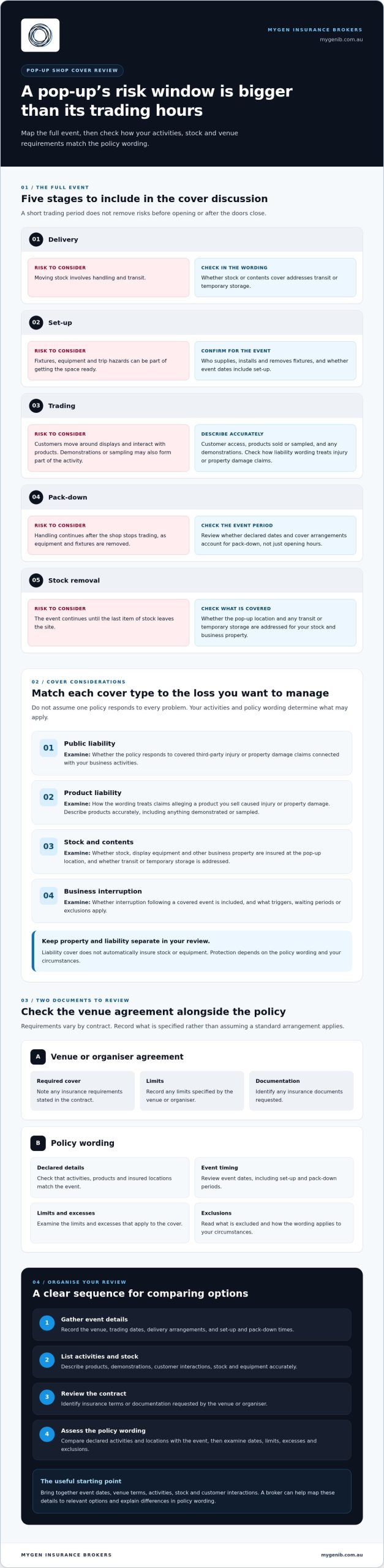
Consider the whole event, from delivery to the last item of stock leaving the site. Moving stock involves handling and transit; set-up can involve fixtures, equipment and trip hazards; trading brings customer access and product-related risks; and pack-down means more handling after the doors close. Include each stage when discussing insurance for a pop-up shop.
For broader context on business cover, read our Australian business insurance guide.
Which pop-up shop activities and event details affect your risk?
A market stall may have limited space and shared public access. A temporary shop may involve leased premises, fixtures and longer customer visits, while an event activation could include demonstrations or product sampling. Describe what you’ll actually do, as these activities can involve different risks.
- Venue and dates: Note the venue and the full event period, including set-up and pack-down.
- Customer access: Explain how visitors enter, move around and interact with displays or products.
- Products sold: List what you’ll sell, demonstrate or sample.
- Set-up responsibilities: Record who supplies, installs and removes fixtures and equipment.
Read the venue or organiser agreement to identify its insurance requirements. Requirements vary by contract, so note any specified cover, limits or documentation instead of assuming a standard arrangement applies.
How to compare insurance for a pop-up shop and identify the right cover
Compare cover against the specific loss you want to manage. Don’t assume one policy responds to every problem. This overview of essential types of business insurance provides broader context, while your activities and policy wording determine what may apply to your pop-up.
| Cover to consider | What to examine |
|---|---|
| Public liability | Whether the policy responds to covered claims for third-party injury or property damage connected with your business activities. See our public liability insurance explanation. |
| Product liability | How the wording treats claims alleging that a product you sell caused injury or property damage. Describe products accurately, including anything you demonstrate or sample. |
| Stock and contents | Check whether stock, display equipment and other business property are insured at the pop-up location, and whether transit or temporary storage is addressed. |
| Business interruption | Review whether interruption following a covered event is included, and what triggers, waiting periods or exclusions apply. |
What should you check in a pop-up shop insurance policy?
Check the policy details against your event. Declared activities and products should match what you’ll sell or demonstrate. Review insured locations, event dates, set-up and pack-down periods, limits, excesses and exclusions. Liability cover doesn’t automatically insure stock or equipment. Property and liability are separate considerations, and protection depends on the policy wording and your circumstances.
A broker can help map your event details to relevant options and explain differences in policy wording. MyGen Insurance Brokers provides tailored business insurance advice through a personalised, consultative approach. Explore MyGen Insurance Brokers.
How to arrange pop-up shop insurance with fewer surprises
A clear picture of the event helps you discuss cover that reflects your business activities. Before arranging insurance for a pop-up shop, gather the practical details and compare them with the policy wording. Don’t rely on assumptions about what cover for a short event includes.
What information should you prepare before discussing cover?
Gather your event dates and venue terms, including any requirements in the organiser’s agreement. Note how the site will be set up, what you’ll sell or demonstrate, the stock you expect to take and how customers will interact with your displays. Include any staff or contractors involved, and check workers compensation requirements that apply in the relevant state or territory.
Use this sequence to organise your review:
- Gather event details: Record the venue, trading dates, delivery arrangements, and set-up and pack-down times.
- List activities and stock: Describe products, demonstrations, customer interactions, stock and equipment as accurately as possible.
- Review the contract: Identify insurance terms or documentation requested by the venue or organiser.
- Assess the policy wording: Compare declared activities and locations with the event, then examine dates, limits, excesses and exclusions.
A broker can discuss your circumstances, map the event’s activities and risks, and help you compare relevant insurance options. MyGen’s personalised, consultative approach focuses on understanding your business rather than relying on instant automated quotes. This gives you a considered basis for reviewing how proposed cover aligns with your pop-up plans.
For tailored guidance, discuss pop-up shop insurance with MyGen before trading begins.
Get your cover discussion-ready before opening
A temporary shop still needs a careful look at its risks. Map insurance for a pop-up shop to the full event, from set-up and customer activity through to pack-down. Compare liability, stock and interruption considerations against the policy wording, and take account of your venue agreement and the products or demonstrations involved.
Preparing your event dates, activities, stock and contract terms gives you a stronger starting point for a tailored discussion. Anthony Simpson brings over 20 years of insurance industry experience, and MyGen’s personalised consultation focuses on your business’s specific risks and circumstances rather than a one-size-fits-all assumption.
Discuss your pop-up shop insurance needs with MyGen before trading begins. With the event details in hand, you can review your options with greater clarity.
Frequently Asked Questions
Do I need public liability insurance for a pop-up shop?
It depends on your activities, venue agreement and existing policy arrangements. Organisers may set their own insurance requirements, so read the contract before trading and note any specified cover or limits. Public liability is one option to discuss for covered third-party injury or property damage, but it doesn’t automatically protect your stock, address product claims or cover every business risk.
Does business insurance cover a temporary pop-up shop?
Business insurance may be arranged for temporary retail, but whether it responds depends on the policy wording, declared activities, insured locations and event dates. Check that the pop-up venue is included and whether cover applies during set-up and pack-down as well as trading hours. A broker can compare your planned event with suitable policy options and explain key conditions.
What insurance should a pop-up shop consider?
Consider public liability for potential third-party injury or property damage, product liability for claims related to goods sold, and property cover for stock, displays or equipment. Business interruption may also be worth discussing if a covered event could disrupt trading. Which options fit depends on your activities and circumstances, so compare limits, exclusions, dates and conditions rather than relying on policy labels.
Does pop-up shop insurance cover set-up and pack-down?
Set-up and pack-down may be covered only if the policy wording and event arrangements include those activities and periods. Don’t assume protection starts at opening time or continues after closing. Check the insured dates, declared activities and location against your schedule and venue agreement before work begins, and discuss any gaps with a broker.