
What if “personal grievance insurance” points you towards the wrong cover for an Australian business? If you’ve searched for personal grievance insurance for employers, it’s understandable to want clarity before a workplace claim puts pressure on your time and finances. The phrase is associated with New Zealand employment processes; in Australia, employers are more likely to encounter employment practices liability (EPL) cover, often offered within management liability insurance. The labels aren’t interchangeable, so check the policy wording rather than relying on the product name.
This guide explains the distinction and outlines how Australian employment-related cover may respond to claims involving matters such as dismissal, discrimination or harassment, including potential legal defence costs. It also explains what to look for in policy limits, exclusions and notification conditions, and how this cover differs from workers’ compensation. Reviewing your business risks alongside your wider insurance programme can help you make a more considered decision about the protection you need.
Key Takeaways
- Personal grievance insurance for employers is a phrase commonly associated with New Zealand; Australian employers may encounter different employment-claim terminology.
- Compare the policy wording, including who is insured, which allegations are covered and when a claim must be notified.
- Look beyond the policy limit: defence costs, excesses and exclusions can all affect how cover responds.
- Map your workforce risks, review existing policies and identify potential gaps before an employment issue arises.
What does personal grievance insurance mean for Australian employers?
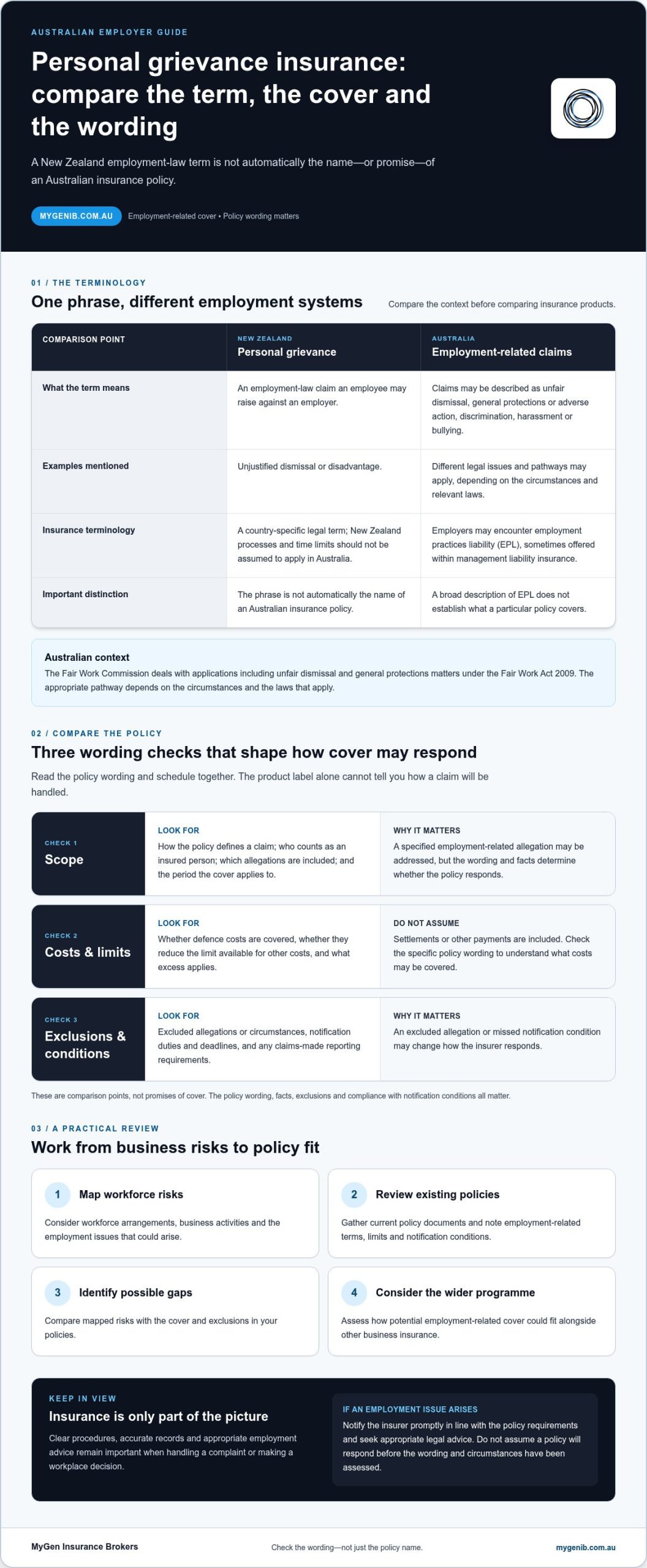
If you’re searching for personal grievance insurance for employers, the terminology can be confusing. In New Zealand, a personal grievance is an employment-law claim an employee may raise against an employer, including claims about unjustified dismissal or disadvantage. It’s a country-specific legal term, not automatically the name of an Australian insurance policy.
Australian employers may instead encounter allegations described as unfair dismissal, general protections or adverse action, discrimination, harassment or bullying. These terms relate to different legal issues and pathways. Under the Fair Work Act 2009, for example, the Fair Work Commission deals with applications including unfair dismissal and general protections matters. The appropriate pathway depends on the circumstances and the laws that apply.
How does a New Zealand personal grievance differ from an Australian workplace claim?
“Personal grievance” is a New Zealand employment-law term; it isn’t a standard Australian policy name. New Zealand processes and time limits shouldn’t be assumed to apply in Australia. Here, employment-related cover may be described as employment practices liability (EPL), sometimes as part of management liability insurance. The broader concept of Employment Practices Liability includes employee-related allegations, but a general description can’t establish what a particular policy covers.
Whether insurance responds depends on the policy wording and the facts of the matter. Check how the policy defines a claim, who is insured and which costs may be covered. Exclusions, the period of cover and notification requirements can also affect the outcome. A missed notification condition or an excluded allegation may change how the insurer responds, so the product label alone isn’t enough to judge protection.
How should employers compare insurance for employment-related claims?
A policy label won’t tell you how a claim may be handled. To compare options for personal grievance insurance for employers, read the policy wording and schedule together. Then match the terms against your business’s workforce arrangements and likely risks.
Which policy details deserve close attention?
- Scope: Check how the policy defines a claim, who counts as an insured person, which allegations are included and what period the cover applies to.
- Costs and limits: See whether defence costs are covered, whether they reduce the limit available for other costs, and what excess applies. Don’t assume settlements or other payments are included.
- Exclusions and conditions: Look for excluded allegations or circumstances, plus notification duties and deadlines. If the wording is claims-made, read its reporting requirements carefully rather than assuming how they apply.
Use these as comparison points, not promises of cover. For example, a policy might address a specified employment-related allegation, but the wording, facts, exclusions and compliance with notification conditions determine how it responds. MyGen Insurance Brokers’ personalised, consultative broking approach can help you review your business risks and consider how your insurance fits together, including your wider Australian business insurance programme.
Insurance doesn’t replace sound workplace practices. Clear procedures, accurate records and appropriate employment advice remain important when handling a complaint or making a workplace decision. Reviewing these controls alongside your insurance arrangements gives you a clearer view of your risk. Learn more about MyGen Insurance Brokers’ personalised insurance broking support.
How can an Australian employer review cover and prepare for a claim?
A useful review starts with your business, not the label on a policy. If you’re considering personal grievance insurance for employers, work through these steps:
- Map workforce risks: consider your workforce arrangements, business activities and the types of employment issues that could arise.
- Review existing policies: gather current policy documents and note any employment-related terms, limits and notification conditions.
- Identify possible gaps: compare the risks you’ve mapped with the cover and exclusions in your policies.
- Consider the wider programme: assess how potential cover could fit alongside your other business insurance.
If an employment issue arises, notify the insurer promptly in line with the policy’s requirements and seek appropriate legal advice. Don’t assume a policy will respond before its wording and the circumstances have been assessed.
What information helps make an insurance review more useful?
Bring together your current policy documents, a summary of business activities, workforce arrangements and relevant risk controls, such as complaint-handling procedures and staff training. This gives the review a practical foundation. MyGen takes a personalised, consultative approach, first understanding a business’s risks before discussing suitable insurance solutions. Read more about expert insurance broker guidance and how different forms of cover serve different purposes in this professional indemnity insurance guide.
A careful review can bring workforce risks and policy fit into sharper focus. Explore MyGen’s business insurance support for a considered approach to your business’s insurance needs.
Take a considered approach to employment-related cover
“Personal grievance” is commonly used in New Zealand, so Australian employers should look beyond the label when considering personal grievance insurance for employers. The policy wording, exclusions and notification conditions matter when assessing whether cover may respond to a particular employment-related claim.
A careful review can help you understand how potential cover fits your workforce risks and wider business insurance programme. Keep workplace processes and records in order. If an employment issue arises, follow the policy’s notification requirements and seek appropriate legal advice.
Anthony Simpson brings more than 20 years of industry experience to MyGen’s personalised, consultative approach. Discuss a tailored review of your business insurance with MyGen to take a clearer, more considered next step towards protecting your business.
Frequently Asked Questions
Is personal grievance insurance available to Australian employers?
“Personal grievance” is terminology associated with New Zealand employment law, rather than a standard Australian policy name. Australian employers searching for personal grievance insurance for employers may encounter employment-related cover described as employment practices liability or management liability. Whether a policy responds to a particular matter depends on its wording and the business’s circumstances.
What insurance can help with employment-related claims in Australia?
Employment practices liability cover may help with certain employment-related claims and is often offered within a broader management liability policy. Depending on the wording, it may cover defence costs for specified allegations, but this isn’t automatic. Review the policy definition of a claim, insured persons, limits, exclusions and notification requirements. A broker can help interpret terms and consider how cover fits your wider business insurance programme.
Does employment-related insurance cover every personal grievance or workplace dispute?
No. A policy won’t necessarily cover every workplace dispute or allegation. The response depends on whether the matter falls within the policy’s definition of a claim and covered allegations, as well as applicable exclusions, limits, excesses and notification conditions. For example, an allegation may be excluded or fall outside the relevant period. Read the policy documents carefully rather than relying on a product name or general description of cover.
Can insurance replace fair workplace processes and legal advice?
No. Insurance is not a substitute for fair workplace procedures, clear records or appropriate employment advice. Good documentation of decisions, complaints and the steps taken to address them can help your business manage issues responsibly. If a claim or employment concern arises, seek suitable legal advice and notify the insurer promptly in line with your policy’s requirements. Don’t assume cover applies until the wording and circumstances are assessed.