
A claim can be paid before anyone pursues the person responsible. In Australia, subrogation allows an insurer that has paid a covered claim to use the insured’s legal rights to seek recovery from the at-fault party or their insurer. This guide to subrogation in insurance explains what can happen to the claim, the costs and the insured’s rights.
It’s understandable to wonder whether an insurer taking over those rights could leave you out of pocket or limit your ability to act. The process is intended to recover what the insurer paid, not to compensate you twice for the same loss.
This article explains how insurers pursue recovery, when your cooperation matters and how a waiver of subrogation can affect the process. It also covers how insurance advice can help you understand how your policy responds.
Key Takeaways
- An insurer may use your legal rights to seek reimbursement from the party responsible for a loss covered by your policy.
- In a motor claim, recovery from the at-fault driver’s insurer may help address repair costs and other covered expenses.
- Tell your insurer about any settlement discussions or legal action, as these can affect recovery rights.
- Understanding how your cover responds can help you make informed decisions about business, professional indemnity, commercial motor or home insurance.
Does Subrogation Affect the Insured Victim?
Yes. In Australia, subrogation can affect how an insured’s claim, settlement and legal rights are handled.
Recovering accident costs from at-fault parties
After paying a covered motor claim, an insurer may pursue the at-fault driver or their insurer for reimbursement. If the other insurer delays, your insurer may pay covered repair costs and other bills, then seek recovery. This can reduce your immediate financial burden, but fault and the losses covered by your policy shape the claim. Recovery depends on you retaining a claim against the responsible party. Where personal injuries are also sustained in a collision, claimants often seek independent representation—such as Scotland Claims Injury Lawyers for incidents subject to Scottish law—to pursue their separate losses from the responsible driver.
Recoveries from parties outside the contract
Subrogation can involve an insurer recovering funds from an entity outside the insurance contract. Under Division 78, it covers an insurer receiving funds from a non-party while exercising rights the insured would otherwise exercise. That matters when a third party caused the loss, even though they never agreed to the policy. The insurer’s rights concern covered losses, and recovery proceedings must protect the other party’s rights.
The insured’s prior recovery of damages
If you’ve already recovered damages from the responsible party, the insurer may claim a financial benefit that reduces the loss it covered. Subrogation aims to prevent you receiving compensation from both the insurer and the at-fault party for the same loss. Can an insurer recover money from its own policyholder? Usually, it seeks recovery from the responsible party, but a direct contractual claim may arise if the insured’s conduct prevents recovery. Tell your insurer about any settlement.
Subrogation disputes and risks in Australia
Common disputes involve fault, the amount recoverable, settlement without the insurer’s consent, or the effect of a waiver. A waiver gives up an insurer’s right to pursue a negligent third party, but some state laws limit its validity. The Supreme Court of Victoria has said a waiver can arise from a contract clause or an insurer’s conduct. What are the time limits? The applicable timeframe depends on the claim and its circumstances, so report accidents and legal action promptly. If you’re asked to settle, tell your insurer first, as compromising its recovery rights can lead to a dispute.
How insurers step into policyholders’ legal rights
In Australia, subrogation allows an insurer to exercise rights the policyholder would otherwise use, as set out in the insurance policy. Those rights apply to losses covered by the policy.
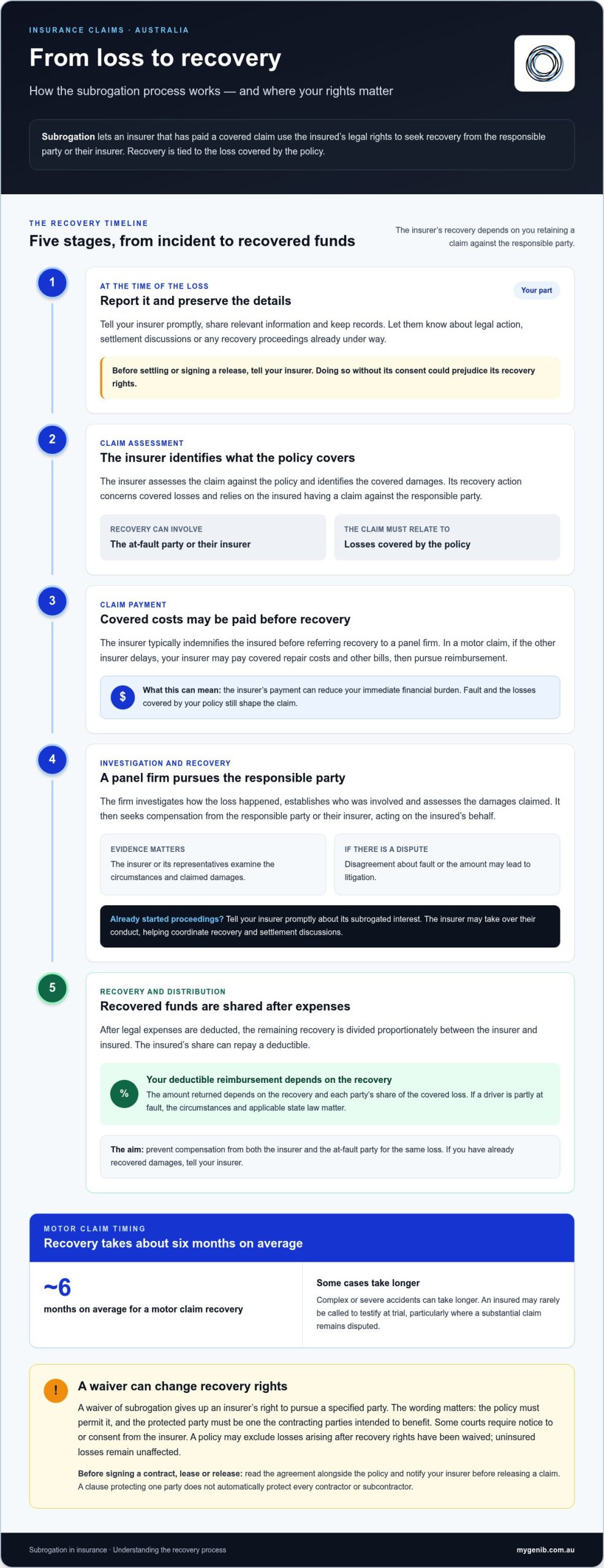
The insurer’s recovery action depends on the policyholder having a claim against the responsible party. Report the incident promptly, share relevant information and tell your insurer about proposed legal action or settlement. Signing a release without the insurer’s consent could prejudice its recovery rights.
Exclusions and waivers of recovery rights
A waiver of subrogation is an agreement that gives up an insurer’s right to pursue a specified party for compensation. The wording matters: the policy must permit the waiver, and the protected party must be one the contracting parties intended to benefit. Some courts require notice to or consent from the insurer. A policy may exclude losses arising after the insured has waived recovery rights, while uninsured losses remain unaffected.
Deductible reimbursement and recovered funds
When an insurer recovers money after paying a claim, it must divide the recovery, after expenses, proportionately with the insured to repay any deductible. The amount returned depends on the recovery and each party’s share of the covered loss. If a driver is partly at fault, deductible recovery depends on the accident’s circumstances and applicable state law. Legal expenses are deducted before the remaining funds are divided.
Construction contracts and leases may name several insured parties and include a waiver clause. The wording determines who the clause protects; a release for one party doesn’t automatically protect every contractor or subcontractor. Read the agreement alongside the policy before signing, and notify your insurer before releasing a claim.
Reviewing insurance policy terms can help clarify how cover and recovery rights fit together.
How insurers handle the subrogation process
After an accident or other loss, the insurer assesses the claim against the policy and identifies which damages are covered. It typically indemnifies the insured before referring recovery to a panel firm. The firm investigates how the loss occurred and seeks compensation from the responsible party or its insurer, acting on the insured’s behalf. Understanding subrogation in insurance starts with knowing how this handover works.
Recovery often happens behind the scenes, but it still depends on evidence. The insurer or its representatives examine the circumstances, establish who was involved and assess the damages claimed. If the parties dispute fault or the amount, recovery may lead to litigation. The insurer’s rights remain tied to the insured’s claim against the responsible party.
If you’ve already started recovery proceedings, the insurer may take over their conduct. Tell your insurer promptly about its subrogated interest so the matter can be referred to a panel firm as soon as possible. Coordinated handling helps prevent conflicting claims or settlement discussions. This practical explanation of subrogation in insurance also shows why timely communication matters.
For a motor claim, recovery takes about six months on average. Complex or severe accidents can take longer. An insured may rarely be called to testify at trial, particularly where a substantial claim remains disputed. Report the accident promptly, keep relevant records and tell the insurer about legal action or settlement talks. If you’re reviewing how your cover responds to a loss, review your insurance options.
MyGen Insurance Brokers: Business Insurance
MyGen Insurance Brokers helps businesses assess their risks and suitable insurance cover through a personalised, consultative approach. If a claim or potential recovery raises questions about what your policy covers, reviewing the wording and relevant exclusions can help clarify how your cover responds.
Business Insurance can address a range of business risks, while Professional Indemnity Insurance may suit businesses facing risks linked to professional services. Commercial Motor Insurance may be relevant for vehicles used in business. The right cover depends on your circumstances, activities and policy terms, including any conditions that affect recovery rights.
Clear advice before a loss can help you understand your cover and the responsibilities that may arise during a claim. Contact MyGen Insurance Brokers to discuss your insurance needs.
Make your cover part of a wider risk plan
Understanding subrogation in insurance helps you look beyond a single claim and consider how your policy fits your broader risk decisions. Contract terms, releases and settlement choices can affect recovery rights, so understand how they relate to your cover before a disagreement arises. Keep policy documents accessible and revisit them when your work, assets or contractual commitments change. This gives you a clearer starting point for discussing protection and responsibilities.
MyGen Insurance Brokers can help you consider insurance options in light of your circumstances and the risks you want to manage. If you’re ready to discuss your needs, contact MyGen Insurance Brokers. A considered conversation can help you take your next step with greater clarity.
Frequently Asked Questions
What Is Subrogation?
Subrogation allows an insurer to pursue another party for a loss it has covered. For example, if a contractor’s actions damage insured business equipment, the insurer may assess the claim under the policy and seek recovery from the responsible party. The process concerns the covered loss, not unrelated expenses or damage outside the claim.
How Do Insurance Companies Handle Subrogation?
Insurers assess the claim, policy terms and available evidence before deciding whether recovery is appropriate. For property and vehicle damage, evidence might include repair invoices, photographs and correspondence about how the damage occurred. In motor claims, obtaining itemised repair quotes from an experienced mechanic Landsborough motorists trust ensures thorough documentation for your insurer. The insurer may then manage recovery discussions or proceedings. Keep copies of the documents you provide so you can refer to the same evidence if questions arise.
How Does Subrogation Affect Claims Payments?
Subrogation is separate from assessing what your policy covers. The insurer considers your claim under the policy, while recovery seeks funds from a responsible party. If money is recovered, you may receive a share that repays some or all of an excess you paid, depending on the recovery and related expenses. Recovery does not expand your policy’s cover.
Should I discuss subrogation with my claim representative?
Yes. Ask whether your insurer is pursuing recovery, what information it needs from you and whether you should refer any approach from a third party to it. If the other party offers a settlement, discuss it with your representative before accepting or signing a release. This helps clarify how the offer may affect the insurer’s recovery rights and your claim.
What Can I Do to Protect Myself, and How Does This Affect the Policyholder?
Keep claim-related records together, including photographs, invoices and messages with the other party. Give your insurer accurate information and respond to reasonable requests for cooperation. Before signing an agreement or releasing a claim, discuss its effect with the insurer. These steps help avoid misunderstandings about responsibility, the losses claimed and any recovery being pursued.