
A bank transfer can appear legitimate even when a criminal initiates it using stolen banking details. Funds transfer fraud insurance may help reimburse a business for money unlawfully transferred from its account, subject to the policy’s definitions, limits and exclusions. A payment an employee authorises after being deceived may be treated differently.
That distinction matters when a transfer seems routine but leaves the business facing an unexpected cash-flow gap. This article explains funds transfer fraud, how criminals access accounts or manipulate payment processes, and how crime insurance may respond to fraudulent transfers from Australian business bank accounts. You’ll also learn why funds transfer fraud and social engineering aren’t always treated alike, and which policy details affect whether a loss is covered. Understanding how the fraud works can help you assess your protection and recognise what matters if suspicious activity appears.
Key Takeaways
- Learn how stolen banking credentials and manipulated payment details can lead to unauthorised transfers from a business account.
- See why cyber policy exclusions, sublimits and definitions can affect whether a fraudulent transfer is covered.
- Understand how crime insurance may respond differently when criminals access an account than when an employee is deceived into approving a payment.
- Explore how MyGen Insurance Brokers’ Business Insurance can help businesses consider cover in the context of their broader risks.
What is Funds Transfer Fraud?
Funds transfer fraud occurs when a criminal causes money to move electronically from a business bank account without proper authority. In Australia, funds transfer fraud insurance may respond through cyber or crime cover, depending on the policy wording.
Cyber policies may cover losses from unauthorised electronic transfers, but cover varies. Crime insurance may also respond when a criminal uses stolen banking credentials or sends false instructions directly to a financial institution.
Transfer Losses and Response Costs
Transfer-loss cover may reimburse stolen business funds. Response-cost cover may help with investigations, legal fees related to recovery, or returning money to its rightful owner. Some policies may also cover lost income caused by fraud, business interruption, or computer system repairs. These costs matter because restoring banking access and operations can involve more than replacing the transferred funds.
Definitions and Coverage Triggers
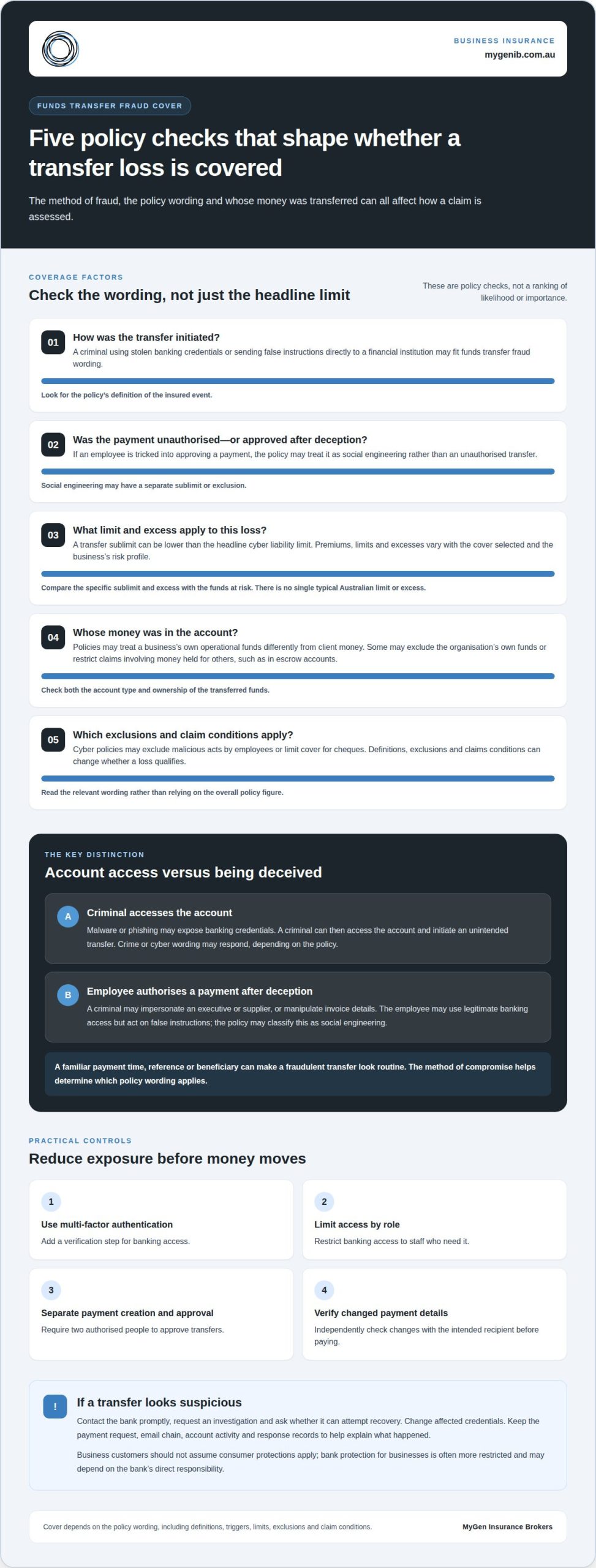
A policy definition explains what counts as funds transfer fraud, while a coverage trigger identifies the event that activates cover. Commercial crime wording commonly focuses on false transfer instructions sent to a financial institution by a cybercriminal. A transfer an employee approves after being deceived may instead fall under social engineering wording, which can have a separate sublimit or exclusion.
Client funds and a business’s own operational funds may be treated differently. Some policies cover money held for clients but exclude the organisation’s own funds; others may restrict claims involving money held for others, such as in escrow accounts. Check how the wording treats the account and whose money was transferred.
Cyber policies may exclude malicious acts by employees or limit cover for cheques. Limits can also be lower than the headline cyber liability limit, so compare the transfer sublimit, exclusions and claims conditions rather than relying on the overall policy figure.
To reduce exposure, use multi-factor authentication, restrict banking access to staff who need it, and require two authorised people to approve transfers. Verify changed payment details with the intended recipient; the FBI advises businesses not to make payment changes without that verification. For cross-border commercial transactions, dedicated solutions like KeyBS Pay assist with supplier verification and secure settlement to prevent invoice redirection. These controls support security and help insurers assess risk.
Crime insurance for fraudulent transfers from business bank accounts
Crime insurance can protect a business against certain financial losses caused by dishonest acts, including fraudulent transfers. The policy wording specifies which events and accounts qualify.
Scams Targeting Business Transfers
Payment scams manipulate staff into sending money to criminals or revealing banking credentials. A phishing email might impersonate a supplier and request an urgent payment to a replacement bank account; invoice manipulation can redirect a genuine payment by changing the vendor’s details. The FBI advises businesses to verify payment changes with the intended recipient. That independent check can interrupt a convincing scam before funds leave the account.
Crime Cover for Business Accounts
Crime policies can cover losses from unlawful transfers, computer fraud, forgery and, where included, employee theft or phishing. Social engineering is different: a victim may willingly authorise a payment after being deceived, and policies may exclude it or apply a separate sublimit. For unauthorised electronic transfers, notify the bank promptly, request an investigation and ask whether it can attempt recovery. Business customers shouldn’t assume consumer protections apply: bank protection for businesses is often more restricted and may depend on the bank’s direct responsibility.
Policy Pricing, Limits and Excesses
Crime policy premiums, limits and excesses vary with the cover selected and the business’s risk profile. There is no single typical Australian limit or excess for transfer fraud: the relevant amount is the specific sublimit and excess shown in the policy, not necessarily its headline limit. Compare these with the funds at risk and check whether client money, operational funds and social engineering are treated separately. A structured review of payment controls and insurance wording can support business risk management before a claim arises.
How funds transfer fraud works
Funds transfer fraud can start with a compromised business account. Malware may capture online banking credentials, while a phishing message may trick staff into disclosing them. Criminals can then use the stolen details to access the account and initiate an unintended transfer.
Once inside, an attacker may study payment patterns, beneficiaries and staff roles. That knowledge can make a fraudulent transaction look routine. For example, a transfer using familiar timing or reference details may be harder to spot before the money leaves the account.
Not every fraud involves account hacking. In a social engineering attack, a criminal may impersonate an executive or supplier and pressure an employee to make a payment. The employee may use legitimate banking access but act on false instructions. This can affect whether an insurer treats the incident as funds transfer fraud or social engineering.
That distinction matters when a claim is assessed. The policy wording, coverage trigger and limits help determine whether the method of compromise fits the insured event. Records of the payment request, email chain, account activity and response can help explain what happened. If a transfer looks suspicious, contact the bank promptly and change affected credentials.
Businesses can reduce exposure by separating payment creation from approval, restricting online banking access by role, and independently verifying changed account details. These controls address both stolen credentials and deceptive instructions. Brokers can help businesses understand how their risk controls relate to policy wording and limits. Discuss your business risks as part of reviewing the protection your organisation needs.
MyGen Insurance Brokers: Business Insurance
MyGen Insurance Brokers helps Australian businesses consider insurance in light of their risks, including exposure to fraudulent payments and online banking compromise. If you’re reviewing how your business could manage these threats, its Business Insurance and Cyber Insurance offerings provide a starting point for discussing suitable protection.
Policy wording matters: definitions, exclusions, sublimits and conditions can affect how a fraudulent transfer is treated. MyGen takes a tailored approach to business risk and insurance, helping bring those details into focus alongside how your organisation handles payments and sensitive account access. This can be useful when arranging cover or reassessing protection after changes to operations, payment processes or risk profile.
For a considered discussion about your business insurance needs, visit mygenib.com.au.
Make your next review count
Use your next insurance review to connect payment controls with your business risks. Consider who can create and approve transfers, how changes to account details are verified, and whether your protection reflects how money moves through your organisation. A clear view of these details can help you discuss the role of funds transfer fraud insurance in your wider risk planning.
MyGen Insurance Brokers offers Business Insurance, Professional Indemnity Insurance and Commercial Motor Insurance. A tailored discussion can help you explore relevant insurance options and policy details in the context of your business risks.
Contact MyGen Insurance Brokers to discuss your business insurance needs. A considered next step can help you move forward with greater clarity.
Frequently Asked Questions
How does this compare to FTF coverage on a cyber policy?
Crime and cyber cover can overlap, but their wording may treat a transfer differently. Crime insurance commonly addresses dishonest acts and direct financial loss, while cyber insurance may combine transfer protection with incident response. If your business holds both, compare how each policy responds to scenarios such as hacked credentials or a deceived employee, including limits, excesses and coordination wording.
What is social engineering fraud?
Social engineering fraud uses deception to persuade someone to transfer money or disclose sensitive information. For example, a fraudster might impersonate a supplier and send a convincing message asking staff to update the supplier’s bank details. The payment may follow legitimate business processes, which is why the policy’s definition of social engineering and any separate limits matter.
Who Needs FTF Coverage?
Businesses that rely on electronic payments should consider whether a fraudulent transfer could disrupt cash flow or scheduled obligations. This may be especially relevant to organisations with several staff involved in payments, frequent supplier transfers, or client money passing through their accounts. Reviewing who can create, change and approve payment details can help identify where a transfer loss could have the greatest operational impact.
What exclusions and conditions apply to funds transfer fraud cover in Australia?
Common restrictions may involve losses caused by employee dishonesty, funds held for others, cheques, or payments an employee authorised after being deceived. A policy may also set security conditions or apply a separate sublimit to social engineering. Read the definitions, exclusions, excess and claims requirements together: the method used and ownership of the transferred funds can affect how cover applies.
How much does funds transfer fraud insurance cost for Australian businesses?
The premium depends on the business and selected cover, and is set after a quote request. Factors may include business activities, payment exposure, security controls, selected limits and excess. Compare the transfer sublimit with the funds potentially at risk, rather than relying only on the overall cyber or crime policy limit. No single price applies across Australian businesses.