
An Australian recruitment agency’s insurance needs are often shaped by its contracts, rather than a blanket legal requirement. Insurance is generally not legally required for recruitment consultants, but a work contract may require Professional Indemnity or Public Liability cover. Choosing insurance for a recruitment agency means looking beyond the policy limit to what the wording actually protects.
It’s understandable to want clarity about what’s covered, particularly when agency staff, contractors and candidates each bring different risks. This guide explains common cover, how to choose limits, and how policy scope, vicarious liability and retroactive cover can affect protection. Use these points to compare your options and spot potential gaps.
Key Takeaways
- Set cover limits around the contracts you want to win and the scale of potential claims, not just your agency’s current size.
- Review policy wording for exclusions, sub-limits and who is covered, especially where staff, contractors or labour hire placements are involved.
- Understand how the retroactive date affects cover for work completed before the current policy began.
- Build your insurance decisions around your placement model, operations and contractual requirements so the cover fits the risks you actually face.
Choosing cover limits and avoiding underinsurance
To compare insurance quotes, match the cover limits, policy scope, exclusions and excesses against the contracts your agency accepts. Choose limits that meet those contract requirements and reflect the potential scale of claims arising from your placements.
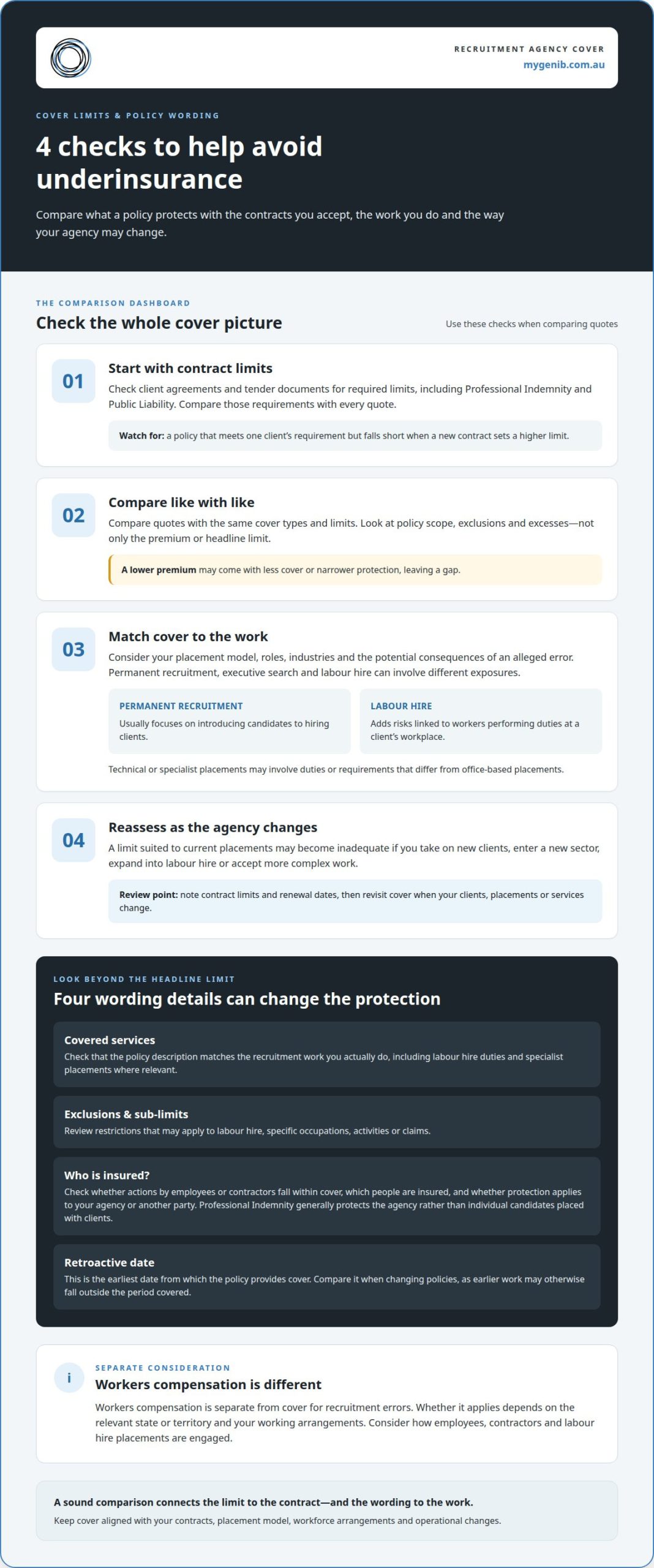
Start with client agreements and tender documents. Note the required limits for Professional Indemnity and Public Liability, then compare them with the limits in each quote. A lower premium may come with less cover or narrower protection, leaving a gap. For example, a policy might meet one client’s requirements but fall short when a new contract sets a higher limit.
Next, match the policy to the work your consultants actually perform. Permanent recruitment, executive search and labour hire can involve different exposures. Consider the roles you place, the industries you serve and the potential consequences of an alleged error. Technical roles, for example, may involve duties or specialist requirements that differ from office-based placements. Review exclusions and sub-limits as well as the headline limit, since they can restrict cover for specific activities or claims.
- List contract limits and renewal dates.
- Compare quotes with the same cover types and limits.
- Identify exclusions affecting your placements or services.
- Reassess limits when you enter a new sector or accept larger contracts.
Finally, consider how the agency could grow during the policy period. A limit suited to current placements may become inadequate if you take on new clients, expand into labour hire or accept more complex work. Discuss changes with your insurance broker before renewal so your cover remains aligned with your contracts and operations.
How to buy recruitment insurance
Professional Indemnity insurance is generally not legally required for recruitment consultants in Australia. However, work contracts may require Professional Indemnity or Public Liability cover, so include client agreements in your insurance review.
Workers compensation is separate from cover for recruitment errors. Whether it applies depends on the relevant state or territory and your working arrangements. Consider how employees, contractors and labour hire placements are engaged, then identify the obligations relevant to each arrangement.
Before arranging a policy, prepare a clear description of your agency’s work. Include the roles you recruit for, the industries your clients operate in, and whether you make permanent placements or provide labour hire. Explain how candidates move through your process, from skills assessment and career history checks to referral and placement. These details help your broker understand the risks involved in your services.
Organise the information in a practical sequence:
- Describe your services, client types and placement process.
- Record staffing arrangements, including dedicated consultants and contractors.
- Gather client contract requirements and existing policy documents.
- Note operational changes, such as entering a new industry or adding labour hire.
The right insurance for a recruitment agency should reflect the work it actually performs. Compare policy wording as well as limits, and make sure your description of services includes labour hire duties where relevant. Keep a record of the information supplied and the cover selected. Review your insurance for a recruitment agency at renewal to account for changes in clients, placements or services.
For a considered discussion about your business risks, explore insurance advice as part of your next steps.
Policy scope, vicarious liability and retroactive cover
Policy wording matters as much as the cover limit. Compare its definitions with your placements, staff responsibilities and client contracts.
Matching cover to recruitment services
Permanent recruitment usually focuses on introducing candidates to hiring clients. Labour hire adds risks associated with workers performing duties at a client’s workplace. Professional Indemnity cover for labour hire placements is available through some insurance partners, but occupation limits, exclusions and sub-limits can affect its scope. Compare the policy’s description of covered services with your agency’s work, including specialist placements and the duties workers perform after placement.
Reviewing policy scope and exclusions
Australian clients may set insurance requirements in their contracts, including specific policy types and limits. Check that your policy describes the recruitment services you provide and meets each relevant contract requirement. Review exclusions and sub-limits for labour hire, specific occupations, and the actions of employees or contractors. A narrow definition of covered work could leave a claim outside the policy, even if the headline limit appears suitable. Also check whether the policy protects your agency or another party.
Understanding vicarious liability and retroactive cover
An agency may need to consider how its policy applies to actions by employees or contractors. Read the policy wording to see whether those actions fall within cover and which people are insured. Professional Indemnity insurance generally protects the agency, rather than individual candidates placed with clients. A retroactive date is the earliest date from which the policy provides cover. Compare that date when changing policies, since earlier work may otherwise fall outside the period covered. This helps you assess how the policy applies to your agency’s work and hiring activities.
Discuss your recruitment insurance needs with MyGen Insurance Brokers.
MyGen Insurance Brokers
MyGen Insurance Brokers helps recruitment businesses assess their risks and consider suitable insurance options. The right approach depends on your placements, contracts, workforce arrangements and the policy wording.
For claims arising from recruitment advice or services, Professional Indemnity Insurance may be relevant. Business Insurance can also form part of a broader review of your business risks. MyGen takes a consultative approach, considering your circumstances before recommending cover rather than relying on an instant automated quote.
A review can be useful when you establish an agency, add labour hire, enter a new sector or approach renewal. Discuss your contractual requirements and policy concerns together, including limits, exclusions and how the policy treats employee or contractor actions. This can help you make a considered decision about protecting your operations.
Contact MyGen Insurance Brokers to discuss your recruitment agency’s insurance needs.
Make your next insurance decision with clarity
As your agency’s placements and hiring model evolve, review whether your insurance still reflects the work you do. Set out your current services, planned changes and the contractual requirements shaping your decisions. This gives the review a clear purpose and focuses the conversation on the risks that matter to your business.
Choosing insurance for a recruitment agency is part of managing change, not simply completing a renewal. MyGen Insurance Brokers offers Business Insurance, Professional Indemnity Insurance and Commercial Motor Insurance. These policies may suit different aspects of your agency’s operations and insurance needs.
For a considered discussion about your circumstances, contact MyGen Insurance Brokers. You can take the next step with a clearer view of the questions your agency needs answered.
Frequently Asked Questions
What does recruitment insurance cover?
Recruitment insurance can address different business risks through the policies selected. For an agency, Professional Indemnity may respond to claims alleging an error in recruitment services, while Public Liability relates to third-party injury or property damage. Other business risks may require separate cover. A candidate dispute and a visitor’s accident at your office, for example, involve different types of claims.
What’s the difference between Professional Indemnity and Public Liability insurance?
Professional Indemnity relates to claims alleging a mistake in professional services, while Public Liability relates to third-party injury or property damage. For example, a client alleging that a recruitment recommendation caused a loss raises a different issue from a visitor injured after tripping at an agency’s premises. The relevant policy wording, exclusions and limits determine how each situation is treated.
What insurance does a recruitment agency in Australia need?
There is no general legal requirement for recruitment consultants in Australia to hold insurance, but a client contract may require Professional Indemnity or Public Liability cover. Appropriate cover depends on your services, placements, contracts and business operations. Agencies employing staff should also consider workers compensation obligations separately, as requirements are administered across states and territories.
What does recruitment agency professional indemnity insurance cover?
Subject to the policy terms, Professional Indemnity insurance may cover claims against an agency arising from alleged mistakes in its professional work. A client might allege that a candidate’s experience or suitability was represented inaccurately. Cover generally protects the agency, not candidates placed with clients. Check who is insured, which recruitment activities are covered and whether staff actions fall within the policy.
What does public liability insurance cover for Australian recruitment agencies?
Subject to the policy terms, Public Liability insurance addresses claims involving third-party bodily injury or property damage connected with the agency’s business activities. For instance, a client visiting an agency office could allege an injury caused by a hazard on the premises. A landlord may also make this cover a lease condition. Review the contract requirement and policy wording for relevant exclusions.