
Jewellery can be insured through home and contents insurance. Specified items insurance for jewellery can cover named pieces that exceed the policy’s standard contents limit, particularly when they’re mainly kept at the insured address. Adding specified cover typically increases the premium. Cover, limits and exclusions depend on the policy, so read the wording as carefully as you compare premiums.
Before deciding how to protect a valued piece, it helps to understand what specified cover includes and what affects its cost. This guide explains how it differs from cover for jewellery you regularly take away from home, and how a valuation can help establish a bespoke item’s worth. You’ll be better placed to consider cover that matches how you own and wear your jewellery.
Key Takeaways
- Learn how naming valuable jewellery on a contents policy may help address standard item limits.
- Understand why jewellery you regularly wear away from home may need a different type of cover.
- See how the item’s value, where it is kept and the cover selected can affect the premium.
- MyGen Insurance Brokers can help you consider Home Insurance options in light of your jewellery and broader needs.
Jewellery cover under home and contents insurance
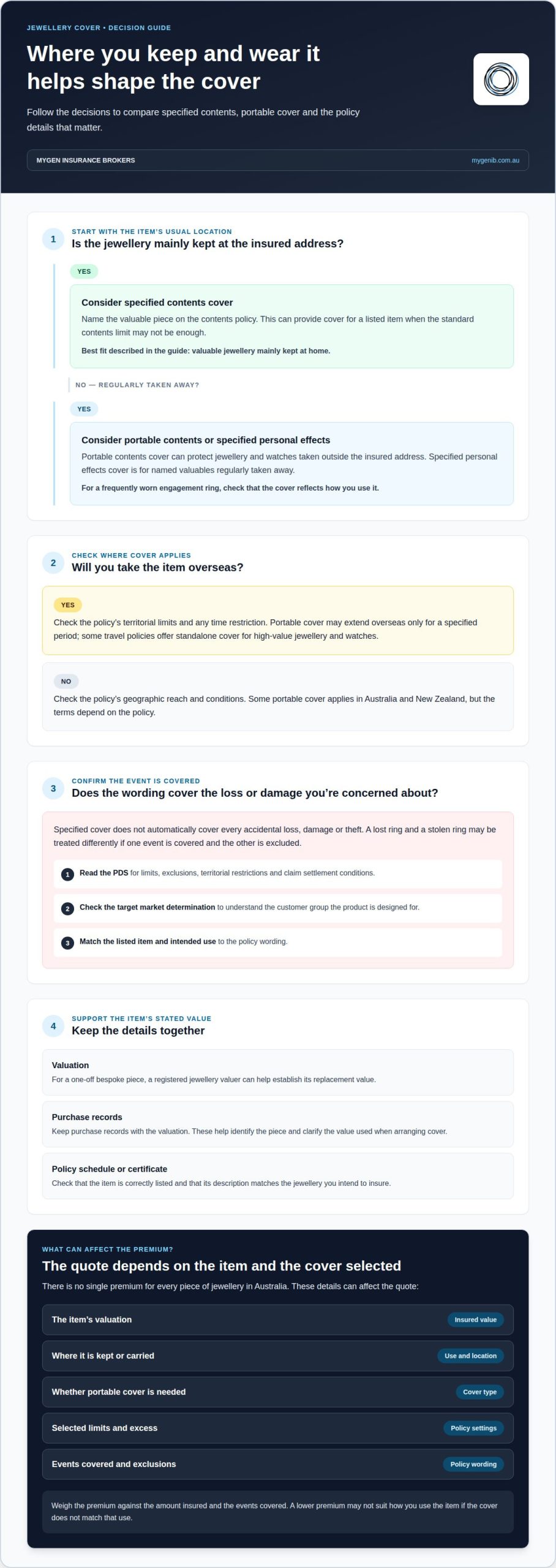
In Australia, jewellery may be covered through contents insurance rather than a standalone jewellery policy. Specified contents cover can list valuable pieces mainly kept at the insured address, while portable cover may protect items taken away from home.
Increasing cover for valuable jewellery
Specified contents cover names individual valuables, such as a ring or watch, when the standard contents limit may not be enough. It can increase the cover available for a listed item kept mainly at home.
Specified items insurance for jewellery is generally added to a contents policy, unlike standalone jewellery insurance, which is a separate policy. Cover depends on the insurer’s terms, so read the PDS for limits, exclusions and whether accidental loss is covered. Portable contents cover may apply in Australia and New Zealand, while overseas cover can be restricted to a specified period.
Proof of jewellery value
Proof of value helps establish a jewellery item’s worth when arranging cover. For a one-off bespoke piece, a valuation from a registered jewellery valuer can help establish its replacement value. Keep the valuation and purchase records together, and ensure the item is correctly listed on the policy schedule or certificate.
These records help distinguish the insured item from similar jewellery and clarify the value used when arranging cover. For example, a valuation can describe a ring’s materials and features, rather than relying only on its original purchase price. Check that the listed details match the piece you intend to insure.
Jewellery claim assessment and settlement
Insurers assess a jewellery claim against the contents insurance policy, including its limits, exclusions and the circumstances of the loss. The policy wording also explains how a covered claim may be settled, such as whether settlement is by replacement or another method.
For a claim involving a listed ring, the insurer can consider its description, valuation and purchase records alongside the policy terms. A claim for accidental loss depends on whether the policy covers that event. Keeping the certificate and valuation accessible can help you provide relevant details when lodging a claim.
Can I insure my jewellery under my home insurance?
Home contents insurance may cover jewellery away from home through portable contents or specified personal effects cover. Whether accidental loss, damage, theft or overseas travel is covered depends on the policy terms and exclusions.
Portable valuables beyond the home
Portable contents cover can protect jewellery and watches taken outside the insured address, including items worn during everyday activities. Its geographic reach and conditions depend on the policy. Some policies cover portable items in Australia and New Zealand, while overseas protection may be limited to a specified period. This distinction matters for an engagement ring worn regularly, not just valuables kept at home.
Specified personal effects for jewellery
Specified personal effects cover is for named valuable items regularly taken away from the insured address. Listing an engagement ring under this cover can distinguish it from general contents kept at home. The listed value, covered events and exclusions shape the protection. Describe the item and its value accurately so the cover reflects how you use it.
Jewellery cover during overseas travel
Overseas cover for jewellery depends on the policy’s territorial limits and any time restriction. Portable contents cover may extend overseas for a specified period, rather than covering trips of any length. Some travel policies offer standalone cover for high-value jewellery and watches.
Accidental loss, damage and theft
Specified cover does not automatically cover every accidental loss, damaged item or theft. The policy wording defines covered events, exclusions, territorial limits and how claims are assessed. For example, a lost engagement ring and a stolen ring may be treated differently if the policy covers one event but excludes the other. A valuation and accurate disclosure support the item’s details, but the policy wording determines how a claim is handled.
If you’re reviewing how valuables fit within your household cover, explore Home Insurance options.
Jewellery insurance premiums
A jewellery premium depends on the cover selected and the details of the specified item. The item’s valuation, whether it is kept at home or regularly carried, and the policy’s limits and exclusions can all affect the quote. There is no single premium for every piece of jewellery in Australia.
For example, a valued ring kept mainly at home may need different cover from a watch worn daily and taken overseas. A higher insured value can affect the premium, while portable cover may change the policy’s scope. Weigh the premium against the amount insured and the events covered, including accidental loss or damage. A lower premium may not be useful if the cover does not match how you use the item.
The product disclosure statement (PDS) sets out policy terms, including limits, exclusions and claim settlement conditions. Read it alongside the target market determination to understand the product’s intended customer group. The documents serve different purposes: the PDS describes the cover, while the target market determination outlines who the product is designed for. Check that the specified item and your intended use fit the policy wording.
To understand the cost, request a quote based on the jewellery’s valuation and the cover required. The premium depends on the case and is provided after a quote request; factors include the item’s value, where it is kept, whether it needs portable cover, and the selected limits and excess. Discuss your insurance options with MyGen Insurance Brokers if you want support considering cover alongside your wider insurance needs.
MyGen Insurance Brokers
MyGen Insurance Brokers can help you consider jewellery alongside your wider insurance needs. If you’re weighing up whether your home cover suits a valuable piece, a tailored discussion can clarify relevant factors, including how you use the item and the policy’s limits and exclusions. MyGen offers Home Insurance and takes a consultative approach to understanding individual risks and considering suitable insurance solutions.
With the item’s valuation and your questions about cover in hand, you can discuss your circumstances and what matters most to you. For a considered conversation about your insurance needs, contact MyGen Insurance Brokers.
Make your next cover decision with confidence
When reviewing your household cover, consider how your jewellery fits your life now, not only what it was worth when first insured. A piece worn daily, stored securely or taken on trips can raise different questions about suitable protection. Keeping these circumstances in mind can make a discussion about cover more focused.
Specified items insurance for jewellery may be worth considering when a particular piece needs more attention than general household cover provides. MyGen Insurance Brokers takes a personalised, consultative approach to understanding individual risks and considering insurance solutions. Contact MyGen to discuss what you own, how you use it and the cover that may suit your needs.
Contact MyGen Insurance Brokers today to discuss your insurance needs and take a considered next step.
Frequently Asked Questions
Is my jewellery covered when I’m on holiday overseas?
It depends on your policy’s overseas territorial limits and time restrictions. Before travelling, compare your trip length with the policy’s portable cover period, and check whether the pieces you’re taking are listed. For a longer trip or particularly valuable jewellery, travel insurance may be another option, with some policies offering standalone cover.
Do I need to specify all my jewellery on my Contents policy?
No. You generally need to specify individual pieces when they exceed the policy’s standard item limit or need more protection than general contents cover provides. For example, everyday earrings may fit within general contents cover, while a valuable engagement ring could need to be listed separately. Consider each item’s value and whether you regularly take it away from home.
How often should I get my jewellery valued?
Arrange a new valuation if a piece’s value may have changed materially, such as after a significant alteration or a change in the value of its materials. Keep previous valuations and purchase records to track the item’s description and value over time. A registered jewellery valuer can assess a bespoke piece.
What if my jewellery is one of a kind?
For a bespoke or one-off piece, obtain a valuation from a registered jewellery valuer to help establish its worth. Keep detailed records, including the valuation, purchase documents and clear photographs of distinctive features. For example, a custom ring’s design and materials can help identify it later.
What if my jewellery is worth more than the policy’s limit or sub-limit?
If a piece exceeds the applicable limit, the policy’s maximum payout may not match its full value. Ask for the item to be insured at an appropriate specified value, then review the schedule and policy wording to understand how that value relates to claims and settlement. Keep a current valuation and ensure the insured description matches the jewellery.