
Is your insurance broker acting as a genuine advocate for your business, or have they become a silent partner who only appears when it’s time to collect a commission? Many Australian business owners stay with the same firm for years out of habit, even as they notice a lack of proactive communication or see their premiums climb without a word of explanation. It’s a common frustration to feel like just another entry in a spreadsheet rather than a valued client whose risks are being actively managed. Understanding when to switch insurance brokers is a strategic necessity, especially as recent regulatory shifts like the 2026 Insurance Brokers Code of Practice place a higher priority on transparency and your right to informed consent.
We believe you deserve the peace of mind that comes from a partner who dives deep into your specific industry risks rather than simply skimming the surface. This guide will help you identify the critical signs of an underperforming broker and provide a clear roadmap for a transition that doesn’t leave your coverage exposed. You’ll learn how to move toward a more protective, consultative relationship where your assets are genuinely secured. We have outlined a methodical approach to ensure the process is seamless, shifting the burden of complexity away from your desk so you can focus on running your business with confidence.
Key Takeaways
- Spot the warning signs of a “tick and flick” broker who only reaches out at renewal time, leaving your business vulnerable throughout the rest of the year.
- Discover the strategic 90-day “golden window” for when to switch insurance brokers to ensure a thorough market review without risking any gaps in your protection.
- Learn how the simple Broker of Record (BOR) letter works to authorise a more diligent partner to handle the heavy lifting of your transition.
- Understand why industry-specific expertise is vital for complex risks like professional indemnity insurance, ensuring your cover is tailored to your actual exposures.
- Shift from a transactional relationship to a consultative partnership that focuses on genuine advocacy, precision, and long-term asset security.
Recognising the Signs: When Your Current Insurance Broker Is No Longer the Right Fit
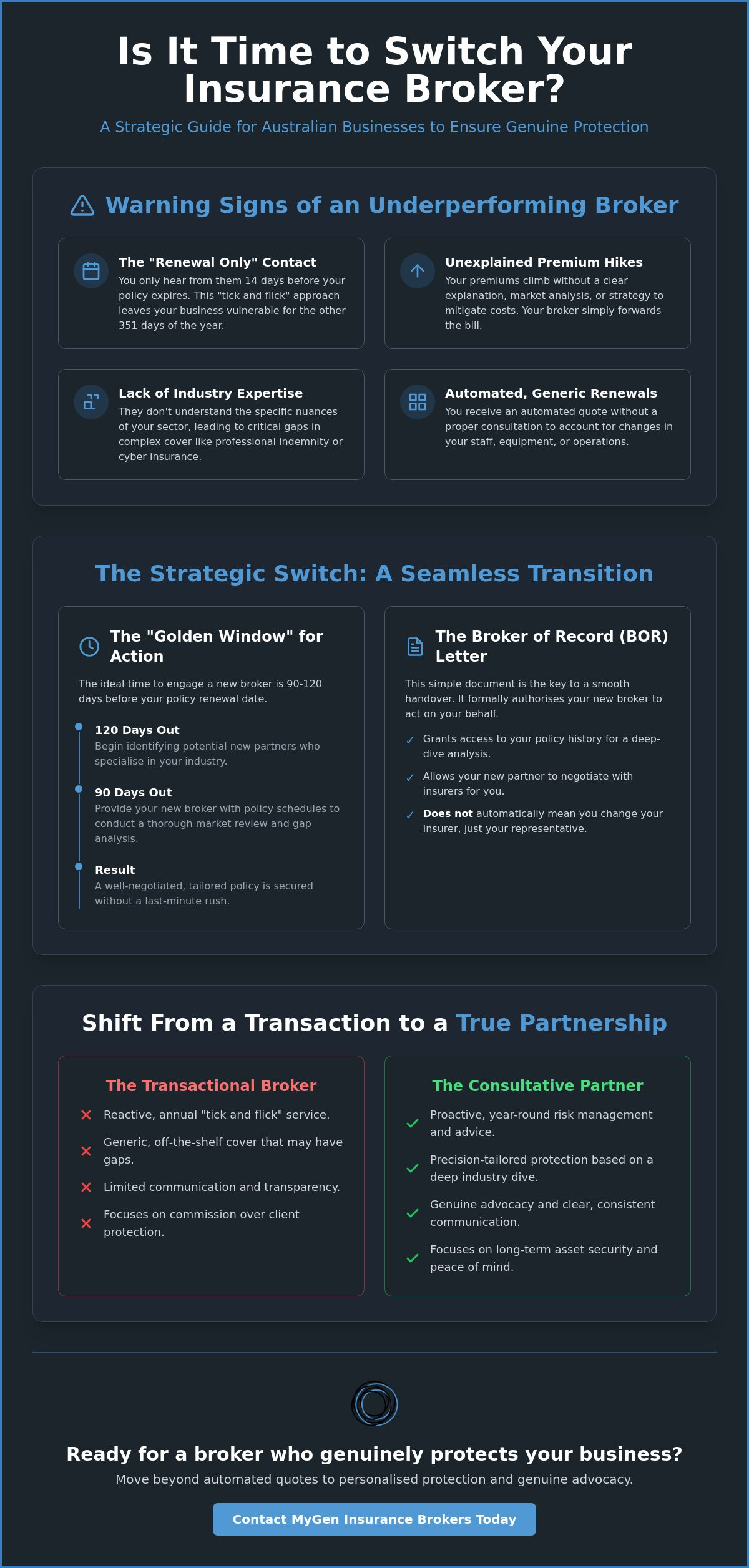
Business insurance isn’t a “set and forget” arrangement; it’s a dynamic shield that needs to evolve alongside your company. Many owners find themselves questioning what is an insurance broker? when their current provider feels more like a billing department than a strategic partner. If you only hear from your broker 14 days before your policy expires, you’ve likely fallen into the “tick and flick” trap. This transactional approach leaves your assets exposed because a generic renewal can’t account for new equipment, staff changes, or shifted operations. Identifying when to switch insurance brokers usually starts with this feeling of neglect.
To better understand the depth of cover your business actually requires, watch this helpful overview of the Australian landscape:
The Red Flag of Automated Renewals
Receiving an automated quote without a thorough consultative review is a significant risk to your business continuity. A broker who simply forwards an insurer’s premium increase without explanation isn’t doing the heavy lifting required to protect your livelihood. Proactive risk management is the standard of care every Australian business deserves. When your broker stops looking beneath the surface of your policy, they’re no longer providing the protection you’re paying for.
Communication Gaps and Transparency Issues
Specialisation matters in a complex market. If your broker doesn’t understand the nuances of your specific sector, they might miss critical gaps in your professional indemnity insurance or cyber cover. You shouldn’t feel like you’re doing the heavy lifting when making a claim or explaining your industry to a call centre. A seasoned expert prioritises your protection over their own commission, providing a direct line of contact and clear explanations for every premium change. Knowing when to switch insurance brokers becomes vital when you realise your current contact is a “skimmer” rather than a “deep-diver.”
The Logistics of Transitioning: Timing, the Broker of Record Letter, and Avoiding Gaps
Deciding when to switch insurance brokers is only the first step; the second is ensuring the handover doesn’t disrupt your daily operations. The most strategic time to act is 90 to 120 days before your policy renewal date. This “golden window” provides your new broker with enough time to conduct a thorough investigation of the market and negotiate terms that actually reflect your current risk profile. Moving too close to the deadline often results in a rushed process where you might end up with a “copy-paste” policy that doesn’t fix the underlying issues.
A common misconception is that changing your broker means you must also change your insurer. This isn’t the case. The transition is managed through a simple document called a Broker of Record (BOR) letter. This letter formally notifies insurers that you have appointed a new representative to manage your portfolio. It’s a vital part of managing your business insurance effectively, as it allows your new partner to access your policy history and start the deep-dive process without you needing to play messenger between firms.
Steps to an Effortless Switch
- Identify a partner: Look for a broker who values precision and suitability over the speed of an automated quote.
- Conduct a gap analysis: Provide your current schedules so your new broker can find where your cover is thin or outdated.
- Issue the BOR: Once you’re comfortable, this document authorises the new firm to act on your behalf, allowing them to begin underwriter negotiations.
Addressing the “Hassle” Factor
Many business owners hesitate to move because they fear the administrative burden. However, a professional broker should manage the entire process, from reviewing old documents to ensuring there are no coverage gaps. This diligence prevents future claim denials by addressing any previous non-disclosure issues head-on. If you feel your current protection is lacking, starting a conversation about a strategic review can offer the clarity you need without the stress you expect. A seamless transition ensures your old policies remain in force until the new, more protective ones are secured, keeping your assets safe throughout the process.
Choosing Your Next Partner: Moving Beyond Automated Quotes to Personalised Protection
Choosing a new partner is about moving from a state of anxiety to one of absolute certainty. While the lowest premium might seem attractive on the surface, it often hides gaps that only become visible during a claim. A consultative approach involves looking beneath the surface to identify specific industry risks. We suggest looking for a broker who upholds the professional standards of the National Insurance Brokers Association (NIBA). This commitment to transparency is a clear indicator of a broker who prioritises your security over a quick transaction. When you’re assessing when to switch insurance brokers, evaluate how they handle complex risks like professional indemnity insurance. If they can’t explain the nuances of your liability, they aren’t the right fit for your long-term protection.
What to Look for in a Modern Australian Brokerage
A modern partner should provide more than just a policy; they should offer a comprehensive protective suite. This includes everything from foundational business insurance to evolving covers like cyber protection. You should seek a firm that rejects the “automated quote” in favour of manual, diligent risk assessment. This ensures your coverage is tailored to your reality, not an algorithm. By choosing a broker with national resources but a human-centric service model, you get the best of both worlds: scale and personal accessibility.
The MyGen Difference: A Calm and Managed Outcome
We understand that the insurance industry can feel cold and detached. Our philosophy is built on turning high-friction, complex experiences into something simplified and secure. We act as a protective mentor, doing the heavy lifting so you don’t have to. Knowing when to switch insurance brokers is about recognising when you need a steady, experienced hand to guide your business through every possible scenario. We’re here to provide that relief, ensuring your assets are genuinely protected, not just “insured.” This long-term security is the cornerstone of a consultative partnership that grows alongside your business.
Securing a Future Built on Precision and Partnership
Recognising the moment your business outgrows a transactional relationship is the first step toward lasting security. We have explored the importance of identifying the “tick and flick” trap and why the 90-day golden window is essential for a seamless transition. By moving beyond automated quotes and embracing a consultative model, you ensure your coverage is a precise reflection of your actual risks rather than a generic approximation.
Deciding when to switch insurance brokers is a strategic choice that prioritises your peace of mind and long-term stability. At MyGen, we draw on over 20 years of industry experience to provide a steady, experienced hand. Our consultative, manual risk assessment process is designed to look beneath the surface, offering national coverage with the personalised service only a dedicated mentor can provide.
Experience a more personalised approach to your protection; contact MyGen Insurance Brokers today.
You don’t have to manage the complexities of insurance alone. Step into a partnership where your assets are genuinely understood, and enjoy the confidence that comes from a simplified, secure outcome.
Frequently Asked Questions
Can I switch insurance brokers mid-policy in Australia?
Yes, you can transition to a new broker at any stage of your policy cycle. While it’s common to wait for a renewal, you aren’t legally bound to stay with an underperforming partner if your business is currently exposed to unnecessary risk. We can help you manage a mid-term switch by using a formal letter to take over the management of your existing policies; this ensures your cover remains continuous while we begin a more thorough review of your requirements.
Will I be charged a fee for switching to a new insurance broker?
In most cases, a new broker won’t charge an additional fee just for the act of switching. Most Australian brokers are compensated through commissions already embedded in your premium, which typically range between 10% and 25% for standard commercial policies. It’s still important to check your current contract for any specific service fees that may have been charged by your outgoing broker. We prioritise transparency and will always discuss our remuneration clearly so there aren’t any surprises during the transition.
What is a Broker of Record (BOR) letter and why do I need one?
A Broker of Record (BOR) letter is a formal document that authorises a new broker to act on your behalf with insurance underwriters. You need this because insurers are strictly prohibited from sharing your policy data or negotiating terms with a new firm without your written permission. This document is the key to a seamless handover; it allows us to do the heavy lifting and investigate your policy history while your current insurance remains active and valid.
How long does the process of changing insurance brokers usually take?
The formal paperwork takes very little time, but a strategic transition is best handled over a 90 to 120-day period. This window allows your new partner to move beyond a surface-level review and conduct a deep-dive into your specific industry risks. Knowing when to switch insurance brokers is about timing the move so your new advocate has ample opportunity to negotiate the most protective terms possible before your next renewal date.