
Business growth can leave your assets underinsured, even if your policy hasn’t changed. Underinsurance means your cover is insufficient for the value of your business assets. The sum insured is the maximum your insurer will pay for a claim. Avoiding underinsurance for your business assets starts with keeping insured values aligned with what you own and what it would cost to replace or rebuild today.
Cover can fall behind as you buy equipment, increase stock, expand or face rising rebuilding costs. A figure that once seemed reasonable may no longer reflect the business you run today.
This article explains how to review your sums insured after growth or purchases, estimate current replacement and rebuilding costs, and spot changes that can quietly create a shortfall. A clear review process helps you make informed decisions about protecting the assets your business relies on.
Key Takeaways
- Review insured values after buying equipment, increasing stock, moving premises or changing how your business operates.
- Base building cover on the cost to rebuild, and contents cover on the cost to replace items new, rather than relying on past values.
- Check policy limits, exclusions and excesses alongside your asset values so you understand how they may affect a claim.
- A structured review of your business risks and cover can help identify where tailored Business Insurance may fit.
1. Updating sums insured after business growth or purchases
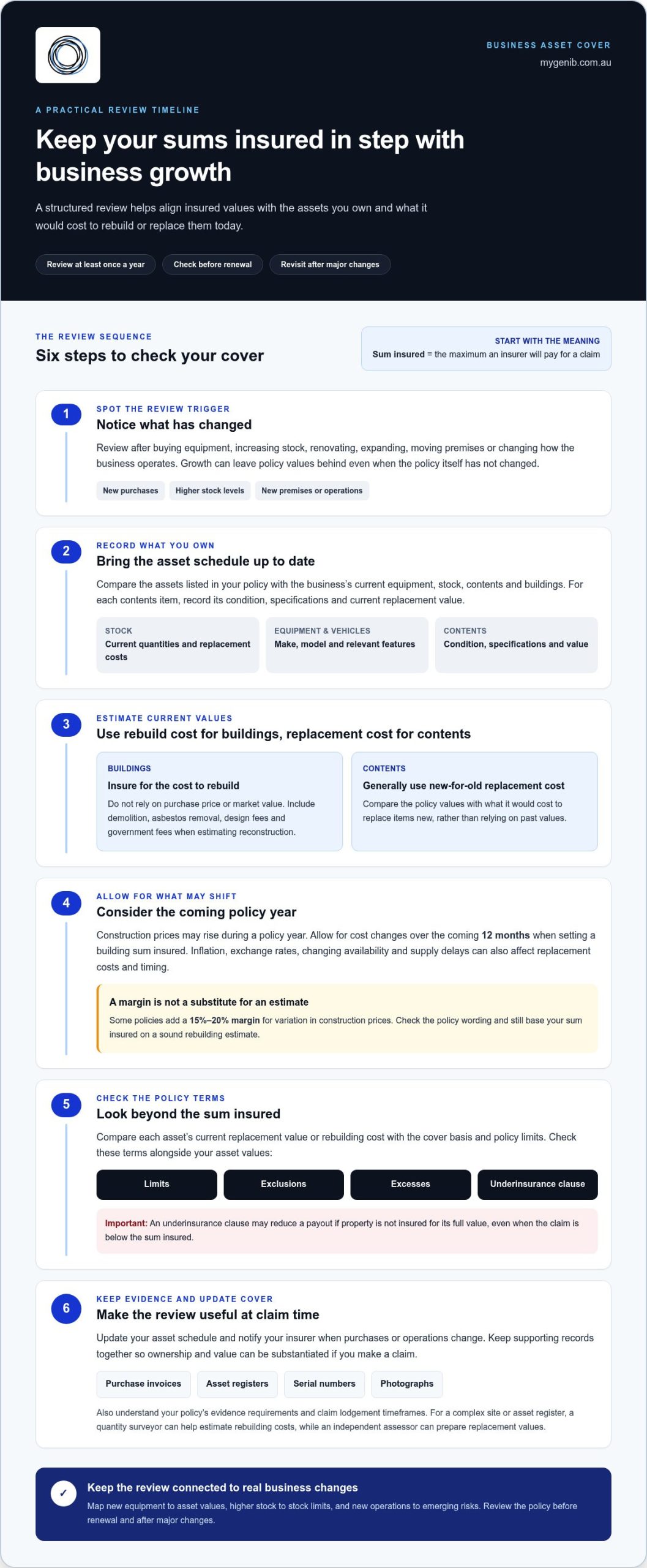
A sum insured is the maximum an insurer will pay for a claim. If you buy machinery, increase stock, renovate or expand, compare the values listed in your policy with what the business owns now. New purchases or higher stock levels can create a gap if insured values stay the same. To avoid underinsurance for your business assets, update your asset schedule and notify your insurer when purchases or operations change.
Review your cover at least once a year, before renewal, and after a major business change. Check policy limits, exclusions and excesses, and look for an underinsurance clause that could reduce a payout if your assets aren’t insured for their full value. Compare the cover basis and limits with each asset’s current replacement value and rebuilding cost. A broker can assess how equipment purchases, contracts, relocations and operational changes affect your risks and cover.
Keep a clear record of your assets for any future claim. Store purchase invoices, asset registers, serial numbers and photographs together, and understand the evidence requirements and lodgement timeframes in your policy. These records can help substantiate ownership and value when you make a claim.
Insurance gaps affect businesses and economies alike. The Insurance Council of Australia reported that 26% of Australian SMEs and 40% of sole traders operated without general insurance. Globally, 64% of economic losses in 2020 were not protected by insurance. These figures underline why businesses should identify the assets and risks their cover needs to address, rather than assuming a policy still fits.
When comparing policies, check sums insured, limits, exclusions, excesses and any underinsurance clause, as well as the specific assets and risks covered. Update asset values at least once a year and after purchases, expansion, renovations or other notable changes.
2. Building reconstruction and contents replacement costs
Insure buildings for their rebuilding cost, not their purchase price or market value. Include demolition, asbestos removal, design fees and government fees when estimating reconstruction.
Contents should generally be valued at new-for-old replacement cost. Create an asset schedule listing each item, its condition, specifications and current replacement value. For stock, record current quantities and replacement costs. For equipment and vehicles, note the make, model and relevant features. Inflation, exchange rates and changing availability can affect replacement costs.
For a complex site or asset register, a quantity surveyor can help estimate rebuilding costs, while an independent assessor can prepare replacement values. An insurance broker can use these estimates to compare declared sums with the buildings, contents and equipment your business relies on. Insurers assess information against the policy’s terms, limits and valuation basis, so keep supporting records with your asset schedule.
Construction prices may rise during a policy year, making an earlier estimate less reliable. Allow for cost changes over the coming 12 months when setting a building sum insured. Supply delays can also affect the time needed to source materials or equipment, so consider current availability when planning replacements. Some policies add a 15%-20% margin for variation in construction prices, but this does not replace a sound estimate. To value buildings and assets for business insurance, compare current rebuilding and replacement costs with the policy limits. A professional valuation can help clarify the figures; an insurance broker’s assessment of business cover can help connect those estimates to the cover selected.
3. Why business assets become underinsured
Underinsurance often develops gradually: business operations change, but recorded values and cover stay static. A 2019 QBE study suggested that 62% of Australian small and medium enterprises were probably underinsured. Growth can add equipment, stock, staff and premises costs that owners haven’t included in their insurance values. The policy may still look familiar while covering a business that no longer exists in the same form.
Purchases and expansion aren’t the only changes to consider. Changes to staffing, directors or ownership structures can alter your business’s risks and insurance needs. Moving to larger premises, adding services or introducing remote work may also create new exposures. Review your actual operations, assets and risks rather than assuming last year’s information is still adequate.
A policy limit doesn’t guarantee that every claim will be paid in full. An underinsurance clause may reduce a payout if property isn’t insured for its full value, even when the claim is below the sum insured. Exclusions, excesses and limits also affect what’s covered. Compare these terms with your assets, and consider insurance requirements in leases, supplier contracts and client agreements.
To help avoid underinsurance for your business assets, map each change to the relevant cover: new equipment to asset values, higher stock to stock limits, and new operations to emerging risks. Then review the policy before renewal and after major changes. An insurance broker can help assess how purchases, contracts and relocations affect cover. Discuss a review of your business cover when growth or changing operations make the existing values difficult to judge.
MyGen Insurance Brokers: Business Insurance
MyGen Insurance Brokers can help business owners review how their assets, operations and changing risks align with their insurance cover. Its Business Insurance offering provides a natural next step when growth, purchases or rebuilding estimates make existing sums insured difficult to assess.
A considered review brings asset values and business risks into focus, including equipment, stock and premises. MyGen Insurance Brokers takes a tailored, consultative approach to identifying risks and recommending suitable insurance solutions. This can help you understand how your current cover fits and which details may need attention as your business changes.
Ready to discuss your business cover? Contact MyGen Insurance Brokers.
Make asset reviews part of managing change
Treat your asset schedule as a working business tool, not a renewal-day formality. Assign someone to record purchases, disposals, projects and operational changes, then include those updates in your insurance review. This creates a clear link between business decisions and the cover intended to respond. A consistent process makes avoiding underinsurance for your business assets part of managing change, rather than a task left until a claim reveals a gap.
MyGen Insurance Brokers offers Business Insurance, Professional Indemnity Insurance and Commercial Motor Insurance. These options can help businesses consider cover for their assets, professional work and vehicles as operations evolve. A useful next conversation connects the risks your business faces with the protection you want in place. Contact MyGen Insurance Brokers to discuss your business cover and take a considered step towards greater clarity.
Frequently Asked Questions
What is underinsurance?
Underinsurance occurs when the amount insured is below the value of the property or assets covered. The impact can extend beyond a total loss: an underinsurance clause may also reduce payment for a smaller claim. For example, contents valued at A$100,000 but insured for A$60,000 could leave a substantial gap, depending on the policy terms and how the claim is assessed.
How do I know what my Sum Insured should be?
Set the sum insured by estimating what it would cost to rebuild or replace covered property, then check the policy’s basis and limits. Keep separate figures for buildings, contents, stock and equipment, as each needs a different assessment. For a building, include demolition and relevant professional and government fees. For contents, use new-for-old replacement values where the policy provides for that basis.
Ever heard of the underinsurance clause?
An underinsurance clause is a policy term that can reduce a claim payment when property is insured for less than its full value. It may apply even if the claim is smaller than the sum insured. Read the policy wording for the applicable threshold and calculation method, then compare those terms with your declared values. The effect can differ between policies and asset types.
What is underinsurance and how does average clause affect Australian business insurance claims?
An average clause can proportionally reduce a claim when a building is insured for less than its full value. The policy wording determines how the clause applies to a particular claim.
What costs should be included when estimating business asset replacement values, such as freight, installation, and GST?
For buildings, include demolition, asbestos removal, design fees and government fees. Contents should generally be valued at their new-for-old replacement cost.