
A stolen tool kit can leave a tradie without essential gear and the ability to earn. To arrange portable equipment insurance for tradies, list the tools and equipment you want covered, set limits that reflect their value, and compare policy terms and exclusions. Depending on the policy, cover may include loss, theft or accidental damage while tools are in transit or at a worksite.
Look beyond the headline cover: how tools are stored, how theft is defined and which claims are excluded can all affect whether a policy suits your work. This guide explains what portable equipment insurance may cover, how to arrange it and what to look for in the Product Disclosure Statement and Target Market Determination.
You’ll also learn why wear and tear, electrical surge and mechanical breakdown may be excluded, so you can understand the limits before choosing cover for your gear.
Key Takeaways
- Make an inventory of the tools and portable gear you rely on, then set cover limits with their replacement value in mind.
- Cover can depend on where equipment is kept and how it is secured, particularly when it’s left in a vehicle overnight.
- Read the policy wording for exclusions such as wear and tear, electrical or mechanical breakdown, and damage linked to unsecured storage.
- Compare the protection you need with the policy limits and exclusions so you can choose cover that fits the way you work.
Cover for tools and portable business assets used by tradies
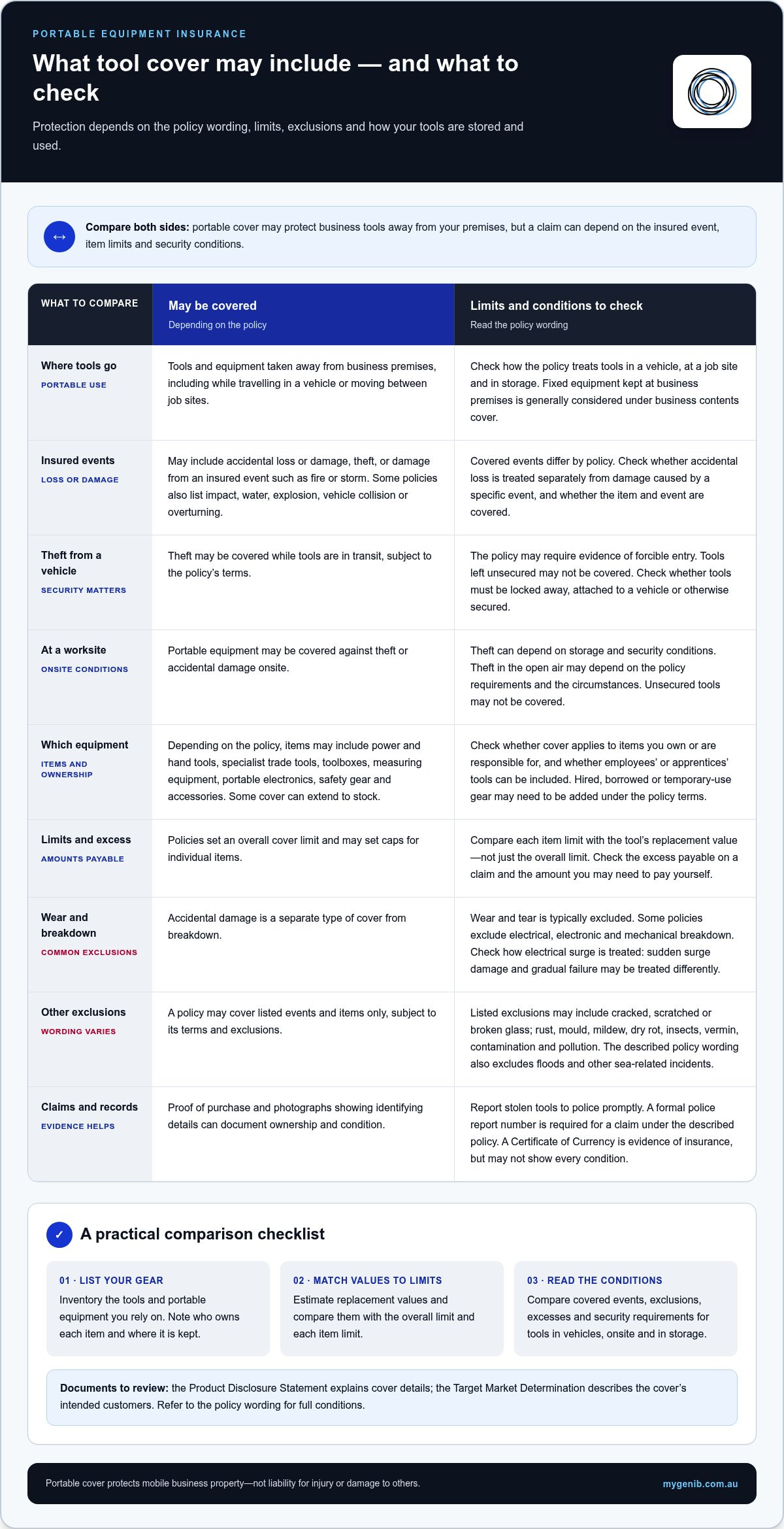
Portable cover is designed for tools and equipment taken away from business premises, whether they’re travelling in a vehicle or moving between job sites. Compare policies based on covered events, security conditions and limits for individual items.
Optional Tools Cover
Some tradies’ insurance policies let you add optional cover for valuable tools of trade. Check whether the wording covers items you own or are responsible for, and whether employees’ or apprentices’ tools can be included. Compare each item limit with its replacement value, not just the overall limit. The Product Disclosure Statement and Target Market Determination explain the cover and its intended customers.
Cover in Transit and Onsite
Portable equipment cover may protect tools against loss, theft or accidental damage in transit or onsite, subject to the policy wording. Theft from a vehicle may require evidence of forcible entry, while unsecured tools may not be covered. Theft at a job site can also depend on storage and security conditions. Home contents insurance typically doesn’t extend to tools used for business, so don’t assume household cover protects them.
Buying Cover and Getting a Certificate
To compare policies in Australia, make a tool inventory, estimate replacement values, then compare covered events, exclusions, security requirements and limits. Check how each policy treats tools in a vehicle, at a job site and in storage. Once cover is arranged, request a Certificate of Currency as evidence of insurance. For full details, refer to the policy wording, as the certificate may not show every condition.
Suitable Trades and Businesses
This cover may suit qualified tradies, apprentices, subcontractors, mobile mechanics, technicians, landscapers, outdoor maintenance crews and specialist contractors. It’s particularly relevant when tools and equipment regularly move between a vehicle, worksite and storage. Consider which items you rely on every day, who owns them and where they’re kept. These details can help you decide whether portable cover suits your work and what limits you need.
What does portable equipment insurance cover?
Portable equipment insurance may cover tools of trade against accidental loss or damage, subject to policy terms, limits and exclusions. It may include equipment you own or are responsible for; hired or temporary-use gear may need to be added.
Accidental Loss or Damage
Cover may apply if a tool is dropped or crushed onsite, or damaged by an insured event such as fire or storm. Some policies also list impact, water, explosion, vehicle collision or overturning. Read the policy wording to see which damage is covered, how limits apply to individual items and whether accidental loss is treated separately from damage caused by a specific event. Portable cover applies to mobile business property, not liability for injury or damage to others.
Securing Tools and Supporting Claims
Use a locked vehicle or secure toolbox, and keep tools organised when travelling between jobs. Save proof of purchase and photographs that show identifying details, to document ownership and condition. If tools are stolen, report it to police promptly. A formal police report number is required for a claim under the described policy. These records can help explain what was lost and support your claim.
Tools and Equipment Included
Depending on the policy, covered items may include power and hand tools, specialist trade tools, toolboxes, measuring equipment, portable electronics, safety gear and accessories. Some cover can extend to stock. Hired or borrowed equipment may be included when added under the policy terms, so identify it when arranging cover. Fixed tools and equipment kept at business premises are generally considered under business contents cover; machinery breakdown insurance is more relevant to fixed industrial machinery. Check the target market determination and wording to understand the cover’s intended target and limits. Consider how your wider business risks fit alongside equipment protection.
Wear and tear, electrical surge and breakdown exclusions
Tool insurance typically excludes gradual wear and tear, even if a worn tool eventually stops working. The policy sets the limits, excesses and item sub-limits, so compare the overall limit, caps for individual items and excess payable on a claim.
Some policies list electrical, electronic and mechanical breakdown as exclusions. Read the Product Disclosure Statement to understand how it treats electrical surge damage: a sudden surge and a tool’s gradual failure may be covered differently. Cracked, scratched or broken glass can also be excluded.
Other exclusions may include rust, mould, mildew, dry rot, insects, vermin, contamination and pollution. Employee theft, dishonest acts by someone entrusted with an insured item, and unexplained stock shortages may also be excluded. Floods and other sea-related incidents are excluded under the described policy wording.
Theft conditions matter. A claim may be refused if there’s no evidence of forcible entry or if tools were left unsecured. Theft in the open air can depend on the policy’s security requirements and the circumstances. Check whether tools must be locked away, attached to a vehicle or otherwise secured.
Portable electronics need careful review. The listed exclusions include electronic breakdown, while accidental damage is a separate type of cover. Check whether the policy covers the device itself, its accessories and the event that caused the damage.
Before choosing cover, compare exclusions and conditions with how you store and use each tool. Keep the Product Disclosure Statement handy, and note the covered events, excess, item limits and security requirements. This makes it easier to understand what a claim may involve.
The policy sets the overall cover limit, caps for individual items and the excess payable when you claim. Compare these with each tool’s value and the amount you would need to pay yourself.
MyGen Insurance Brokers: Business Insurance
MyGen Insurance Brokers can help tradies consider Business Insurance as part of a wider review of business risks. If you’re reviewing how tools, vehicles and day-to-day operations fit into your protection, a broker can help assess your needs and explain the cover options. Protection for tools depends on the specific policy wording, limits, exclusions and security conditions, so distinguish portable equipment cover from other business protections.
Bring an inventory of your equipment, note how it’s used and stored, and identify the risks that matter most to your trade. This gives the conversation a practical starting point, whether you’re arranging cover or reviewing an existing policy. Contact MyGen Insurance Brokers to discuss your business insurance needs.
Make your next cover review count
Your tools and work can change over time, so include an insurance review in your business planning. When equipment, storage arrangements or travel between jobs changes, update your inventory and reconsider whether your insurance reflects the risks you face. Portable equipment insurance for tradies is one part of that broader review, alongside your business, professional work and vehicles.
MyGen Insurance Brokers offers Business Insurance, Professional Indemnity Insurance and Commercial Motor Insurance. These options can support a wider discussion about business risks, while the policy wording remains essential to understanding what each type of cover does. A clear inventory and focused list of concerns can make that discussion more useful.
Start a discussion about your business insurance needs, and take the next step with greater clarity.
Frequently Asked Questions
How can I get tool insurance?
Start by listing your tools, who owns them and how you use them, then arrange cover that reflects those risks. Ask about general property protection for tools of trade and equipment within Business Insurance. MyGen Insurance Brokers can discuss your business risks and insurance needs, and help you understand cover options and policy terms before you decide.
What is covered?
Cover depends on the policy, but portable equipment insurance for tradies may protect eligible business tools against insured loss or damage away from the main premises. For example, a policy may cover a trade-specific measuring device damaged during a job. Check whether the item is insured, which events are covered and whether its value is within the policy’s item limit.
Are second-hand or older tools covered?
Second-hand or older tools may be insured if you can show proof of ownership, subject to the policy’s terms and conditions. Keep a record of the make, model, serial number and purchase details, including for tools bought privately. If you no longer have a receipt, other ownership records and clear photographs can help document what you own.
Can I claim the premium on my tax?
Business-related insurance premiums may be tax-deductible, but the treatment depends on your circumstances and how the policy relates to your business. Keep invoices and policy documents with your business records, and separate business cover from personal insurance. Ask an accountant or tax professional for advice tailored to your situation before claiming a deduction.
How do I prove the stolen tools were mine?
Use receipts, invoices, bank records, photographs and serial numbers to show ownership and identify stolen tools. A dated equipment register can make records easier to organise. Report theft to police promptly and keep the police report number, which is required for a claim under the described policy. Store copies of your records separately from the tools.