
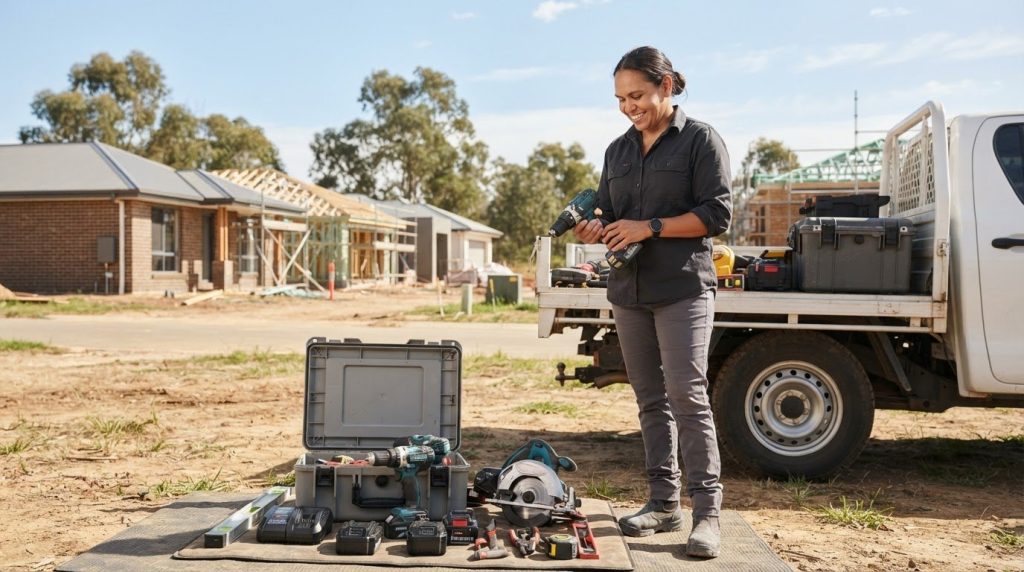
A stolen tool kit can leave a tradie without essential gear and the ability to earn. To arrange portable equipment insurance for tradies, list the tools and equipment you want covered, set limits that reflect their value, and compare policy terms and exclusions. Depending on the policy, cover may include loss, theft or accidental damage while tools are in transit or at a worksite.Look beyond the headline cover: how tools are stored, how theft is defined and which claims are excluded can all affect whether a policy suits your work. This guide explains what portable equipment insurance may cover, how to arrange it and what to look for in the Product Disclosure Statement and Target Market Determination.You’ll also learn why wear and tear, electrical surge and mechanical breakdown may be excluded, so you can understand the limits before choosing cover for your gear. Key Takeaways Make an inventory of the tools and portable gear you rely on, then set cover limits with their replacement value in mind. Cover can depend on where equipment is kept and how it is secured, particularly when it’s left in a vehicle overnight. Read the policy wording for exclusions such as wear and tear, electrical or mechanical breakdown, and damage linked to unsecured storage. Compare the protection you need with the policy limits and exclusions so you can choose cover that fits the way you work. Table of Contents Cover for tools and portable business assets used by tradies What does portable equipment insurance cover? Wear and tear, electrical surge and breakdown exclusions MyGen Insurance Brokers: Business Insurance Cover for tools and portable business assets used by tradies Portable cover is designed for tools and equipment taken away from business premises, whether they’re travelling in a vehicle or moving between job sites. Compare policies based on covered events, security conditions and limits for individual items.Optional Tools Cover Some tradies’ insurance policies let you add optional cover for valuable tools of trade. Check whether the wording covers items you own or are responsible for, and whether employees’ or apprentices’ tools can be included. Compare each item limit with its replacement value, not just the overall limit. The Product Disclosure Statement and Target Market Determination explain the cover and its intended customers.Cover in Transit and Onsite Portable equipment cover may protect tools against loss, theft or accidental damage in transit or onsite, subject to the policy wording. Theft from a vehicle may require evidence of forcible entry, while unsecured tools may not be covered. Theft at a job site can also depend on storage and security conditions. Home contents insurance typically doesn’t extend to tools used for business, so don’t assume household cover protects them.Buying Cover and Getting a Certificate To compare policies in Australia, make a tool inventory, estimate replacement values, then compare covered events, exclusions, … [Read more...] about Portable equipment insurance for tradies and their gear

What is Not Covered by Public Liability Insurance? Australian Guide 2026
Last month, a local business owner discovered that while their policy covered a customer slip, it wouldn't pay a cent for the A$50,000 in property damage caused by a sub-contractor. It’s a devastating situation many Australians face because they’ve relied on an automated, "tick and flick" policy without looking beneath the surface. We understand how frustrating it is to sift through jargon only to remain unsure about your actual protection. To truly secure your livelihood, you must understand what is not covered by public liability insurance before a crisis occurs. We believe you deserve more than a generic certificate; you need the peace of mind that comes from knowing exactly where your safety net ends. In this guide, we'll strip away the complexity to reveal critical gaps, from employee injuries to professional negligence. You'll gain a clear roadmap to identify your specific risks and the methodical steps needed to ensure your Australian business isn't left under-insured in 2026. Key Takeaways Learn why standard policies focus strictly on third-party damage and why your own business assets or employee injuries require separate, specialised protection. Gain a clear understanding of what is not covered by public liability insurance, specifically focusing on the "Care, Custody, and Control" limits that often leave trades and service businesses exposed. Discover how to navigate complex contractual liabilities and identify when your policy might fail to cover risks you've legally agreed to shoulder in commercial agreements. Understand the value of a deep-dive risk review to identify your unique "potholes" and learn how to close protection gaps with tailored add-ons like Cyber or Professional Indemnity insurance. Table of Contents Common Exclusions in Australian Public Liability Policies The Grey Areas: Where Small Businesses Often Feel Exposed Closing the Gaps with a Consultative Risk Review Common Exclusions in Australian Public Liability Policies Many Australian business owners feel a sense of relief once they've secured a policy, yet the reality is that public liability isn't a catch-all safety net. It's built to protect you against claims for third-party injury or property damage, but it won't reimburse you for your own business losses, stock damage, or equipment theft. Understanding what is not covered by public liability insurance is the first step toward genuine security. For instance, injuries to your staff are strictly excluded because they fall under mandatory state-based WorkCover or Workers Compensation schemes. Similarly, damage to property you own, lease, or occupy requires a separate property or business assets policy. Even motor vehicle accidents, which are a daily risk for many, are typically handled by Compulsory Third Party (CTP) or specialised commercial motor insurance rather than your general Liability insurance cover. To better understand this concept, watch this helpful video: The Advice and Professional … [Read more...] about What is Not Covered by Public Liability Insurance? Australian Guide 2026

Common Business Insurance Exclusions: What Your Policy Won’t Cover in 2026
Would your business survive a major claim if your insurer pointed to a single sentence on page forty-two to deny your payout? We understand the deep sense of unease that comes from relying on generic, automated policies that often fail to grasp the unique risks of your specific industry. It is frustrating to feel like you are just another number in a "tick and flick" system, especially when you realise that many common business insurance exclusions are tucked away in language designed to be overlooked. You deserve to have total clarity regarding the boundaries of your protection. Our goal is to help you discover these hidden gaps and learn how to avoid the pitfalls that lead to denied claims during critical times. We will provide a clear list of what your policy likely won't cover in 2026, from evolving cyber threats to shifting professional liabilities, and offer a methodical framework to evaluate your current insurance with the confidence of a seasoned expert. By looking beneath the surface of your current cover, we can ensure your business remains a stable and secure force in your local community. Key Takeaways Understand why exclusions exist as necessary boundaries to keep your cover sustainable while protecting against uninsurable risks like general wear and tear. Recognise the hidden danger of contractual liability and how signing certain agreements can leave you personally responsible for claims your insurer won't touch. Identify the most common business insurance exclusions for 2026, including the universal refusal to cover dishonest acts or intentional damage by staff. Learn why generic "tick and flick" automated quotes often lead to restrictive cover and how a personalised, deep-dive assessment provides true security. Gain a practical framework to evaluate your current policy, allowing you to move from a state of anxiety to one of professional confidence. Table of Contents Understanding Business Insurance Exclusions: The Boundaries of Your Protection The Big Three: Common Exclusions Australian Small Businesses Face How to Bridge the Gap: Why Personalised Brokerage Beats Automated Quotes Understanding Business Insurance Exclusions: The Boundaries of Your Protection When you open your policy document, the list of inclusions usually feels like a safety net; however, it's the exclusions that define the true shape of your protection. In simple terms, exclusions are the specific circumstances or events where your insurer will not pay out. We see these boundaries as essential for keeping premiums affordable for everyone. By removing high-certainty risks like general wear and tear or intentional damage, insurers can maintain a sustainable pool of funds for the genuine accidents that threaten your livelihood. Understanding these Commercial general liability insurance fundamentals is the first step toward moving from uncertainty to total clarity. You'll typically find two types of hurdles within your paperwork. General exclusions … [Read more...] about Common Business Insurance Exclusions: What Your Policy Won’t Cover in 2026

Business Insurance for the Hospitality Industry in Australia: Navigating Exclusions in 2026
What if the insurance policy you rely on to protect your restaurant is actually designed to stay silent when you need it most? You've likely spent hours squinting at dense Product Disclosure Statements, only to feel that these automated, generic policies don't truly understand the heat of your kitchen or the specific risks of your front-of-house team. It's a common frustration in our industry. You want to focus on your guests, yet the fear of a rejected claim during a crisis remains a heavy weight on your shoulders. We're here to help you find clarity and pull back the curtain on the critical exclusions within business insurance for hospitality industry australia for 2026. This guide will show you how to identify the hidden gaps in your coverage, from navigating evolving regulatory changes and rising operational costs across the sector to managing new biosecurity and public health risks. By the end of this article, you'll have a clear roadmap to move from policy confusion to absolute confidence, ensuring your cafe, bar, or restaurant is protected by more than just a standard template. Key Takeaways Understand why specific exclusions are built into your policy to keep premiums manageable while still protecting your venue from catastrophic losses. Learn to distinguish between sudden, accidental damage and standard wear and tear so you can manage your kitchen maintenance and insurance claims effectively. Discover how the right business insurance for hospitality industry australia can be tailored to cover gaps that generic, automated policies often overlook. Identify the universal exclusions around staff negligence and intentional acts to better protect your restaurant or bar from internal risks. Explore the vital role of a specialist broker in negotiating "write-backs" to restore essential coverage that is typically removed in standard contracts. Table of Contents Understanding Hospitality Insurance Exclusions in the Australian Market The Most Common Exclusions in Hospitality Policy Types Bridging the Hospitality Coverage Gap with a Consultative Broker Understanding Hospitality Insurance Exclusions in the Australian Market In the Australian hospitality sector, an insurance exclusion is a specific provision within your policy that removes coverage for certain hazards. While it might feel like a "gotcha" moment when a claim is denied, these boundaries actually serve a practical purpose. By removing high-frequency, uninsurable risks, insurers can keep premiums manageable for small cafes and family-run restaurants. Without these limits, the cost of business insurance for hospitality industry australia would likely be out of reach for many local operators. Understanding how Insurance in Australia is regulated helps clarify why the Product Disclosure Statement (PDS) is so vital. This document isn't just paperwork; it's a legal requirement that outlines exactly where your protection starts and ends. You also have a "Duty of Disclosure," which … [Read more...] about Business Insurance for the Hospitality Industry in Australia: Navigating Exclusions in 2026