
A copyright claim can reach a business even if the infringement was inadvertent. Intellectual property infringement insurance may cover loss, damage or liability arising from alleged inadvertent infringement of copyright, patents or other intellectual property rights connected with professional services, subject to the policy’s terms and limits.
It is understandable to expect a policy to respond when a claim arrives, but the wording matters. The cover must apply to the type of infringement alleged, relate to the insured’s professional business and be current when the claim is made. This article explains how Professional Indemnity Insurance may address infringement claims, what cover can include and which conditions affect whether a policy responds. It also looks at the consequences of using protected material without permission, helping you understand the risks before a dispute escalates.
Key Takeaways
- Using an image in client work without permission or a licence can expose a business to a copyright claim, even when the mistake was inadvertent.
- Consider how a claim could affect legal costs, finances and business reputation when assessing the level of cover needed.
- Review whether professional indemnity cover addresses alleged inadvertent infringement linked to your services, and understand its limits and settlement conditions.
- MyGen Insurance Brokers can help businesses consider Professional Indemnity Insurance as part of a tailored approach to business risk.
Copyright infringement claims involving images
A graphic designer may face a damages claim after using a copyrighted image without permission or a licence. An advertising agency may face similar action if a client campaign includes protected content. While dedicated wall art for workplaces can be sourced safely through specialists like Panther Print, incorporating digital imagery into client work carries strict licensing responsibilities. The claim may concern the image itself, even if the mistake was not deliberate. Intellectual property infringement insurance can help cover legal costs when defending infringement claims against a business, its customers or licensees.
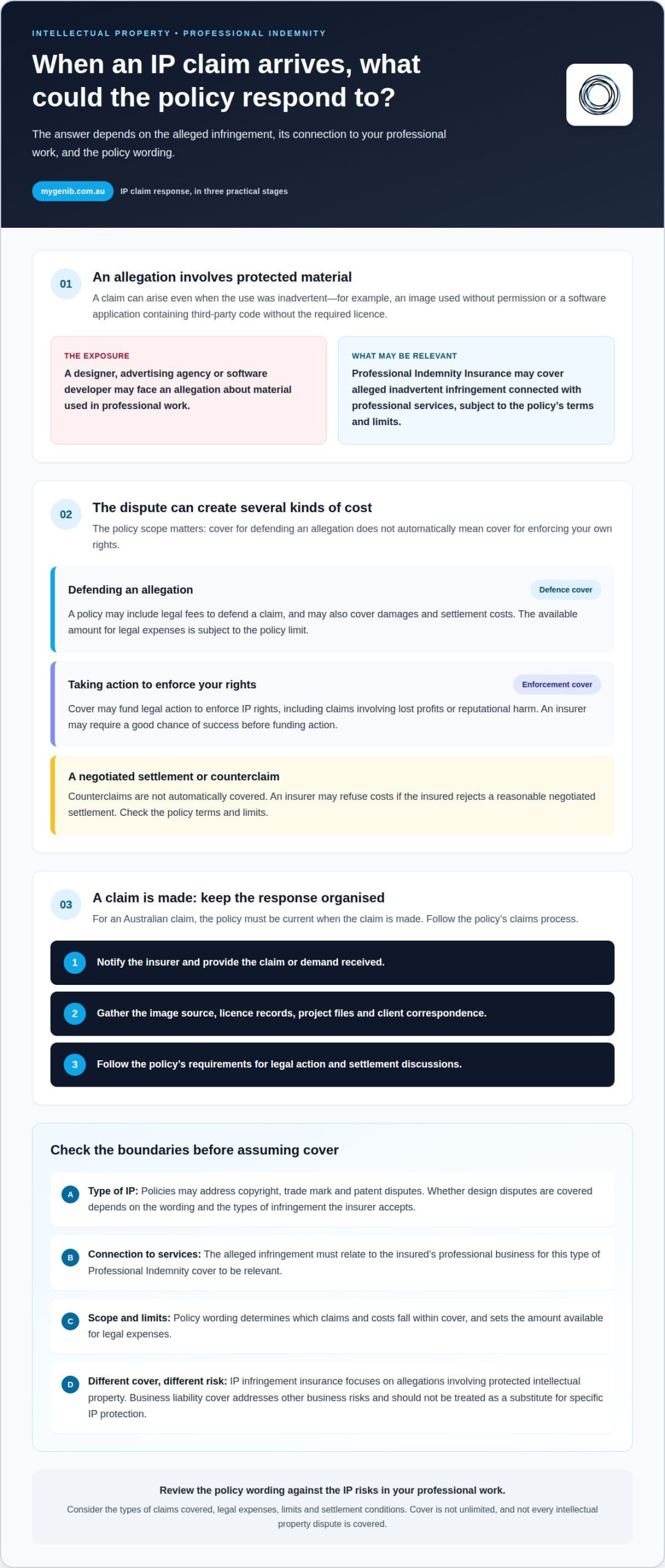
IP infringement insurance may cover both defending allegations and pursuing alleged infringers. “IP defence insurance” usually refers to cover for defending claims, but policy labels and scope vary. Policies may cover copyright, trademark and patent disputes. Prior to rolling out new branding, conducting clearance searches with intellectual property specialists such as Henry Goh & Co can help businesses mitigate the risk of conflicting marks. Whether design disputes are covered depends on the wording and the types of infringement the insurer accepts.
Cover may include legal fees to defend a claim, as well as damages and settlement costs. It may also fund legal action to enforce rights, including claims involving lost profits or reputational harm. Counterclaims are not automatically covered: the policy’s terms and limits determine whether related costs are included.
For an Australian claim, the policy must be current when the claim is made. Cover is not unlimited, and the policy sets the amount available for legal expenses. Insurers may require a strong chance of success before funding enforcement action, and may refuse costs if the insured rejects a reasonable negotiated settlement.
If a claim arrives, follow the policy’s claims process and keep the relevant records together:
- Notify the insurer and provide the claim or demand received.
- Gather the image source, licence records, project files and client correspondence.
- Follow the policy’s requirements for legal action and settlement discussions.
Legal, financial and reputational consequences
An IP dispute can lead to legal expenses, financial losses and reputational harm. The impact depends on the claim and the response required.
Costs of enforcing IP rights
Enforcing IP rights means taking legal action to stop infringement and seek a remedy. For a business whose work or creative assets are being used without permission, legal expenses can make it harder to protect those rights. Cover may fund enforcement costs, including claims for lost profits or reputational harm, and settlements. Insurers may require a good chance of success before funding action. The strength of the evidence and the claim’s prospects are therefore important considerations.
Financial and reputational consequences
Financial consequences can include legal expenses, settlement costs and lost profits. Reputational damage can affect how customers view a business. A business pursuing an alleged infringer may face costs before securing a remedy, while a business defending a claim can come under financial pressure as the dispute continues. A prolonged dispute can also take time away from client work or operations. Understanding the potential exposure helps businesses assess whether their cover limits align with possible legal costs.
Review the policy’s scope, limits and conditions against the kinds of IP rights your business creates or uses. Consider both defence and enforcement costs, since protection against one does not automatically mean protection against the other. For businesses assessing their broader risk arrangements, business insurance considerations can form part of that review. Clear records of ownership, permissions and communications can also help explain the circumstances behind a dispute.
Copyright infringement cover under professional indemnity insurance
Professional Indemnity Insurance can respond to claims connected with professional services. Cover may include loss, damage or liability from alleged inadvertent infringement of copyright, patents or other intellectual property rights.
For example, a software developer could face a copyright allegation if an application includes third-party code without the required permission or licence. The key link is between the alleged infringement and the professional business. Policy wording determines which claims and costs fall within cover, while the limits set the amount available for legal expenses.
How does this compare with business liability insurance? Intellectual property infringement insurance focuses on allegations involving protected intellectual property. Business liability cover addresses other business risks, so it should not be treated as a substitute for specific IP protection.
Australian businesses providing professional services can consider cover for infringement risks connected with their work. A designer, consultant or software developer may face different exposures depending on the material, ideas or code used to deliver services.
Insurers decide which types of infringement a policy covers and how much it pays towards legal expenses. When assessing an application, relevant factors include the professional activities, the IP risks those activities create, the types of claims covered and the requested level of cover. For enforcement claims, insurers may require a good chance of success before funding legal action. The practical takeaway is to match the policy scope and limits to the work and potential legal costs.
To explore cover suited to professional risks, review professional indemnity insurance options.
MyGen Insurance Brokers: Business Insurance
MyGen Insurance Brokers can help businesses consider insurance for risks connected with their professional work. If your services involve creating designs, using licensed material or developing software, Professional Indemnity Insurance may be relevant to your broader risk review. Read the policy wording carefully, including how it treats alleged inadvertent infringement, legal expenses, limits and settlement conditions. Do not assume every intellectual property dispute is covered.
MyGen takes a tailored approach to Business Insurance, considering the risks a business needs to manage and the cover that may suit its circumstances. This can bring professional risks into focus alongside other business exposures, without treating one policy as a substitute for another.
For a considered discussion about your business insurance needs, contact MyGen Insurance Brokers.
Make your next insurance review count
At your next policy review, relate your intellectual property exposure to the work your business actually performs. Consider the material you create, adapt or supply, and how a dispute could affect day-to-day operations. Clear records of permissions and ownership can also support a more informed discussion about your risks.
MyGen Insurance Brokers offers Business Insurance, Professional Indemnity Insurance and Commercial Motor Insurance. These options can help you consider professional exposures alongside other business needs, with attention to how each policy fits your circumstances. The aim is a clearer view of the cover you are arranging, not an assumption that one policy addresses every risk.
Take the next step by contacting MyGen Insurance Brokers to discuss your business insurance needs. A considered review can help you move forward with greater clarity.
Frequently Asked Questions
What are the conditions?
The policy must be current when the claim is made, and the allegation must fit its wording. For Professional Indemnity Insurance, the alleged infringement needs to connect with the insured’s professional business. Enforcement claims may also need a good chance of success before an insurer funds legal action. Settlement requirements and notification procedures can affect how a claim is handled.
What is IP insurance?
IP insurance helps a business manage legal action involving intellectual property rights. Depending on the policy, it may support a business defending an infringement allegation or pursuing someone it believes has infringed its rights. Intellectual property can include copyright, trademarks, patents and trade secrets. For example, a business might need to respond to a claim about protected material used in its work.
What should I look for in a policy?
Compare the policy’s covered IP rights with the assets and services your business actually uses or creates. Look for a clear distinction between defending claims and enforcing your own rights, then review legal expense limits, how settlements are treated and claim notification requirements. Check whether the wording addresses work performed for customers or licensees, especially on projects involving third-party material.
What does intellectual property infringement insurance cover in Australia?
In Australia, cover depends on the policy wording and may include legal costs, damages or settlement costs for specified infringement claims. Professional Indemnity Insurance may address alleged inadvertent infringement of copyright, patents or other IP rights connected with professional services. A software developer facing an allegation about third-party code is one example. The insurer determines which types of infringement and legal expenses are covered.
What policy limits, excesses and coverage periods are available?
Limits, excesses and coverage periods are set out in the individual policy. Compare the schedule and wording rather than assuming standard amounts or durations. The limit shows the maximum available for covered expenses, while the excess is the amount the policyholder contributes to a claim. Consider whether the limit aligns with potential legal costs and when the policy responds to a claim.